How Much Does Timing Chain Replacement Cost? Labor, Parts, and Price Drivers
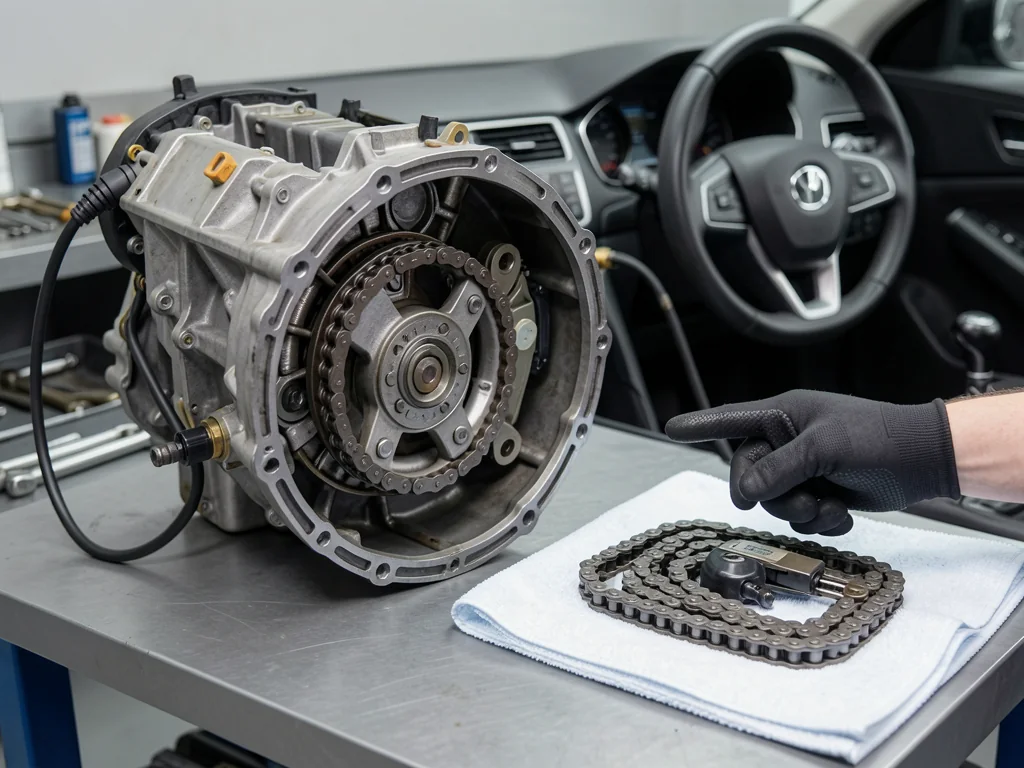
Timing chains are built to last a long time, so a replacement quote often comes as a surprise, and the number can vary more than owners expect. The chain itself matters less to the bill than how deep into the engine a technician has to go. What else gets replaced along the way matters too, and so does any damage that has already happened. This guide explains how those pieces add up.
What a Timing Chain Replacement Actually Involves
The timing chain links the crankshaft to the camshafts so the valves open and close in step with the pistons. That relationship is the engine timing, and it has to be exact for the engine to run properly. A rubber timing belt usually runs outside the engine, but a timing chain is oiled by engine oil and sits inside the engine behind a sealed timing cover. To reach it, a technician usually has to remove belts, brackets, and pulleys, and sometimes engine mounts, before the cover can come off. That is why the job takes hours rather than minutes.
A typical job starts with draining the oil and coolant and removing the accessories and the timing cover. The technician then replaces the chain along with its tensioners and guides, carefully lines up the timing marks, and reseals the cover with a new timing cover gasket. When people ask what a timing chain costs, they may mean the part alone or the finished job, and those numbers are far apart. Many engines also use more than one chain. A transverse engine tucked against the fender can require much more removal than an engine mounted lengthwise.
Typical Cost Ranges for Timing Chain Replacement
As a rough general range, not a current price for any specific vehicle, a complete timing chain replacement at an independent shop often costs about $1,000 to $2,500 on simpler engines. Complex engines and dealership work can go well past $3,000. Labor is usually the largest share of the total. Even a complete kit is typically a smaller part of the bill than the hours spent taking the engine apart and putting it back together. This article does not give model-specific figures, so treat these numbers as a starting point for comparing quotes.
Quotes for the same job can vary widely. Shops charge different hourly rates, costs differ by region, and some engine layouts require much more disassembly than others. The only reliable number for your car is a written repair estimate based on its exact engine. Be cautious with a quote that looks unusually low. It may cover only the chain, with tensioners, guides, seals, gaskets, coolant, and oil added once the engine is already apart. At that point you have little leverage to take the car elsewhere.
Parts Cost: Chain, Tensioners, Guides, and Complete Kits
A timing chain kit generally includes the chain or chains, the tensioners, and the guide rails. Depending on the engine, it may also include sprockets and the cover gaskets and seals needed to put everything back together. Shops usually recommend replacing the tensioners and guides along with the chain, and for good reason. Plastic guides harden and wear with age, and a tensioner that can no longer hold pressure lets the chain slap, which is a common cause of timing chain rattle. A new chain running against worn guides is likely to bring the noise back.
Original-equipment kits tend to cost more, while aftermarket kits range from reputable to questionable. Either way, confirm fitment against the exact engine code rather than the model name alone. Because the front of the engine is already open, many shops also suggest replacing the water pump if it is driven there and the front crankshaft seal. Some also recommend replacing variable valve timing parts, such as cam phasers, if they show wear. These additions raise the parts total, but doing them now can cost less than paying for a second teardown later.
What Drives the Price Up or Down
Book labor hours are the standard time estimates shops use to price a job, and they vary enormously by engine design. A simple inline four with a single chain at the front of the engine may be a fairly contained job. A transverse V6 or V8 with multiple chains can require removing much more of the front of the engine, and some designs require supporting or lowering the engine. The shop multiplies those hours by its labor rate, which differs by region and between independent shops and dealerships. That calculation drives most of the variation between quotes.
The biggest jump in cost comes from damage that has already happened. In an interference engine, the valves and pistons move through some of the same space at different moments. If the chain jumps a tooth or breaks, they can collide. Bent valves or damaged pistons turn a chain job into cylinder head work or a full engine rebuild. Older vehicles bring their own surprises, such as rusted or seized fasteners, brittle hoses, and worn mounts. A technician may not find these problems until the job is already underway.
Timing Chain Repair Versus Full Replacement
Timing chains are not usually repaired as individual parts. What shops call a timing chain repair generally means replacing the chain along with the worn tensioner or guides that caused the problem. Replacing only a tensioner or a single guide can cost less than a full kit, and that can make sense if the chain still measures within specification. Once timing chain stretch has set in, though, a partial fix often leads to a second teardown. The two jobs together usually cost more than doing the full replacement once.
Owners often seek a quote because of a brief rattle at cold start, a check engine light for cam and crank correlation, a rough idle, or reduced power. Each of these symptoms has other possible causes, such as low oil, a faulty sensor, or a variable valve timing problem. A stored code is a clue to interpret, not proof that the chain has failed. Correlation codes and their thresholds vary by manufacturer, so check the definition for your specific vehicle. Owners can safely note when a noise happens and how long it lasts, but should leave inspection and timing checks to a professional.
Getting an Accurate Quote and Deciding Whether It Is Worth It
A complete written estimate should itemize the labor hours, the kit contents, gaskets and seals, oil and coolant, and any related parts the shop recommends replacing while the engine is open. Ask whether the price includes a check after the repair, such as confirming timing correlation with a scan tool and checking for leaks after a test drive. It also helps to ask in advance how the shop will handle problems it finds, such as valve damage. In particular, ask whether they will stop and call you before doing any additional work.
To decide whether the repair is worth it, weigh the total cost against the vehicle's value, its expected remaining life, and its overall condition. A solid car with a healthy transmission and little rust often justifies the expense. A car facing several other major repairs may not, and no single cutoff applies to every car. Getting more than one quote helps, as long as each shop confirms the engine code before pricing the job. Vehicles with the same model name can use different engines, with different chain kits and labor times.