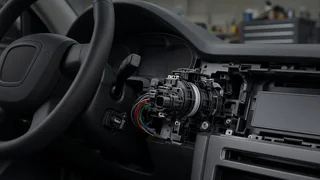
Audi A5/S5 steering angle sensor

When an Audi A5 or S5 begins to behave oddly through corners, the steering angle sensor is often one of the first components worth understanding. This sensor reports steering wheel position to the vehicle's stability and steering systems, helping the car interpret driver intent. For owners researching an audi a5 steering angle sensor or the related audi s5 steering angle sensor, the essential distinction is not usually the part itself but how it is mounted, calibrated, and diagnosed within the platform. A fault code or warning light is a starting point, not a verdict, because several inputs and mechanical conditions can affect what the sensor reports.
Essential answer
The steering angle sensor in an A5 or S5 is a rotational position sensor that measures how far and in which direction the steering wheel is turned from a calibrated center reference. That data informs electronic stability control, steering feel, and driver assistance functions. The essential answer is that this is a diagnostic signal source, not a self-contained repair. When the sensor reading is implausible, the vehicle may flag a module fault, disable certain stability aids, or alter steering assist behavior. The same underlying concern can appear under searches for an audi a5 steering angle sensor or an audi s5 steering angle sensor because both models share a common vehicle architecture and diagnostic approach, though trim and equipment differences can affect component packaging.
A meaningful reading must be interpreted alongside other chassis measurements. Wheel alignment, joint play, and mounting points can create a plausible mechanical offset that the sensor simply reports. If the steering rack or column position changes after an alignment, the calibrated straight-ahead value may no longer match the actual direction of travel. In that situation the sensor is not necessarily faulty. Instead, its baseline reference may need to be relearned. Knowing the difference between an electronic failure and a sensor reporting an accurate but unexpected position is the most useful starting point for diagnosis.