68RFE Torque Converter Shudder Diagnosis
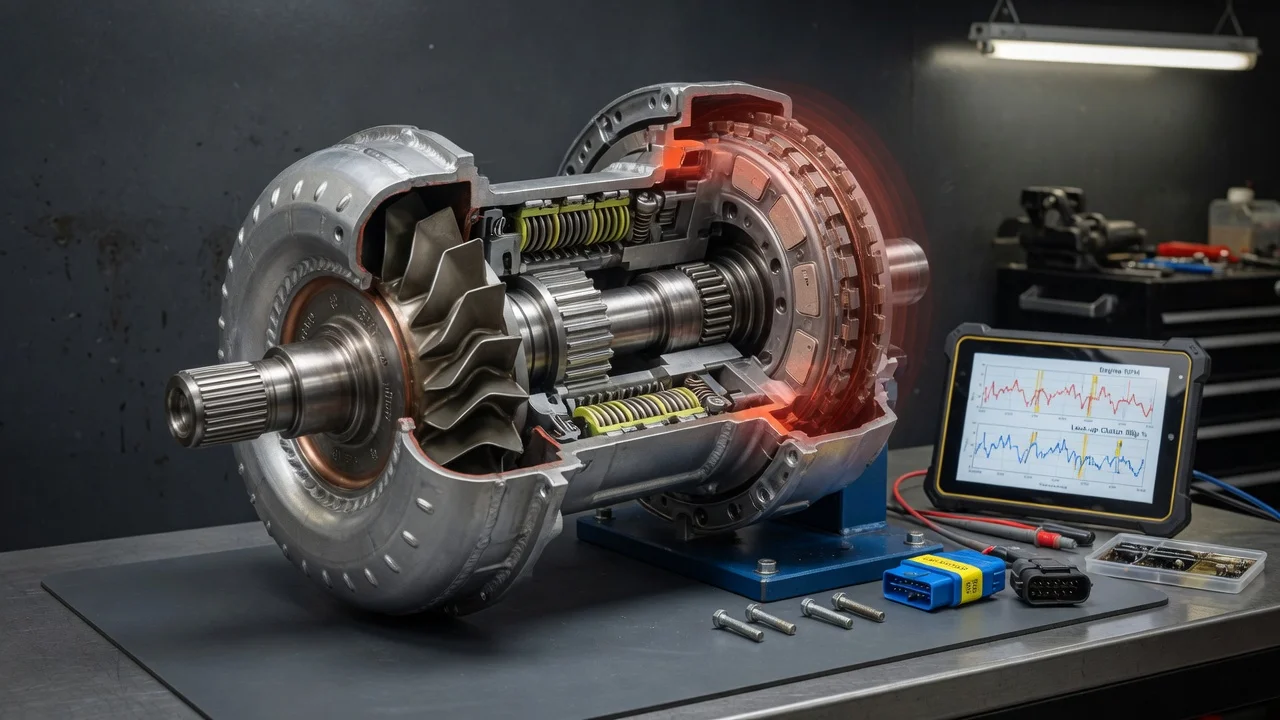
A shudder that feels like driving over rumble strips at steady speed is a common complaint on Ram heavy-duty trucks with the 68RFE six-speed automatic. The torque converter clutch is a frequent suspect, but engine misfires, driveline faults and fluid condition can feel very similar. This guide covers how to record the symptom, weigh the competing causes, check them in a sensible order and decide what to do next, without treating a symptom as proof that the converter has failed.
Establish the symptoms
Start by confirming the transmission type. The 68RFE is a six-speed automatic used mainly in Ram 2500, 3500 and chassis cab trucks, behind the Cummins diesel and some gasoline engines. Depending on year, engine and rating, heavy-duty Rams can also be built with a different six-speed or an eight-speed automatic, and those units have their own fluid specification, control strategy and diagnostic path. The transmission identification tag, the build information tied to the VIN or a dealer lookup will settle the question before any advice is applied.
Next, write down exactly when the shudder happens. Note the road speed, the gear if your display shows it, throttle position, whether the truck is loaded or towing, whether you are climbing a grade and whether the transmission is cold or fully warm. Describe the feel: a rapid rumble that comes and goes, or a constant vibration that rises with speed. Note whether it stops when you lightly touch the brake pedal or change throttle slightly, because on many trucks those actions release converter lockup. Record any warning lights, stored diagnostic codes and recent changes such as a fluid service, new tires, a lift kit, engine tuning or driveshaft work.
Distinguish plausible causes
The most direct explanation is the converter clutch itself. When lockup is applied, worn, glazed or contaminated friction material, or fluid that has lost its friction properties, can make the clutch grab and slip in rapid cycles. Observations that support this include a shudder that appears at light throttle once lockup is commanded, disappears when lockup releases and shows up in scan data as fluctuating converter slip. A shudder that persists with lockup off weakens this explanation.
The control side can produce the same feel without a damaged converter. Low fluid level, the wrong fluid, a sticking valve in the valve body, a weak or failing converter clutch solenoid, wiring faults or outdated control software can all cause unstable apply pressure. Converter clutch circuit or performance codes, erratic slip readings and high transmission temperature point in this direction. An engine misfire, from a weak injector on a diesel or an ignition fault on a gasoline engine, is felt most under load and often becomes more noticeable when the converter locks, so misfire counters and cylinder contribution data matter. Driveline problems, including worn U-joints, incorrect driveshaft angles after a lift, a failing center support bearing, wheel balance or tire defects, usually track road speed rather than lockup state. Worn engine or transmission mounts can amplify any of these.
Checks in a useful order
Begin with observations any owner can make safely. Check the fluid level using the procedure in the service information for your truck, which for this transmission is done on level ground with the engine running and the fluid at operating temperature; a cold reading can mislead. Note the color, smell and any visible debris. The factory fluid specification for the 68RFE is ATF+4, so review the service history and receipts for what was actually installed and when. Read stored and pending codes from both the engine and transmission modules, and look under the truck for leaks, torn U-joint seals, loose driveshaft hardware and collapsed mounts.
The next layer needs a capable scan tool and ideally a helper, since one person should drive while another watches data. Useful live values include commanded converter clutch state, converter slip speed, transmission temperature and engine misfire or cylinder balance data. Logging a road test that reproduces the shudder lets you compare the moment it starts against lockup status. Some scan tools can command lockup on or off, which is a cleaner test than relying on the brake pedal. Line pressure testing, valve body inspection, pan removal to inspect debris, driveshaft angle measurement and software updates are best left to a qualified technician with the correct specifications.
Interpret the findings
If the shudder happens only while lockup is commanded, slip readings fluctuate during the event and there are no misfires, the evidence points to the converter clutch circuit, but not yet to a failed converter. The fluid and the controls that apply the clutch still have to be ruled out. Fluid that is low, burnt or not the correct specification should be corrected first and the truck retested after enough driving to judge the result. A fluid service may improve shudder caused by degraded fluid, but it cannot restore worn friction surfaces. Fine friction material or metal particles in the pan suggest internal wear and justify a closer inspection.
Converter clutch circuit codes call for wiring, connector and solenoid testing before any hard parts are ordered. Misfire evidence means the engine should be repaired first and the shudder reassessed afterward. A vibration that continues regardless of lockup state belongs to the driveline or tires. Before replacing a converter, confirm that apply pressure and solenoid control are normal, that available calibration updates have been considered and that the replacement unit matches the engine and transmission fitment. A converter replacement after internal wear is usually paired with cooler and line flushing so debris does not return.
Urgency and next action
A mild shudder with normal shift behavior, no warning lights and clean fluid is generally a diagnosis priority rather than an emergency, but it is not a reason to keep driving indefinitely. Stop using the truck and arrange inspection if you notice slipping between gears, flaring engine speed, harsh or delayed engagement, a transmission temperature warning, a reduced-power or limp mode, a burning smell, a significant leak, new mechanical noises or metallic debris. Avoid heavy towing until the cause is found, because heat accelerates converter and clutch wear. No fixed remaining mileage can be predicted from the symptom alone.
Bring the shop the VIN, engine type and confirmed transmission, all diagnostic codes with freeze-frame data if available, your written description of when the shudder occurs and any logged scan data. Include the service history with fluid type and dates, along with modifications such as tuning, tire size changes or a lift. That information helps a technician choose among repair options ranging from a fluid service, software update or wiring repair to valve body work, converter replacement or a full rebuild, based on confirmed findings rather than the symptom.