6.2L Engine Oil Capacity: Why the Answer Depends on Which Engine You Have
The Short Answer
There is no single oil capacity for a 6.2-liter engine. Several manufacturers have built unrelated engines with this displacement, and even within one brand the figure changes with the engine family, model year, vehicle type and lubrication system. Commonly published figures for popular 6.2L V8s fall roughly between 6 and 8 quarts including the filter, but some performance applications hold noticeably more. The only reliable number for a specific vehicle is the one in its owner's manual or the manufacturer's service information.
Displacement, the total swept volume of the cylinders, says nothing direct about how much oil the engine holds. Capacity is set by the oil pan design, the filter size, oil cooler plumbing and whether the engine uses a wet-sump or dry-sump system.
Commonly Published Figures for Widely Used 6.2L Engines
The values below are frequently cited capacities with a filter change. They were not supplied as verified manufacturer documentation for this article, so treat them as a starting point and confirm them against the owner's manual for the exact model year and vehicle before buying oil or doing a change.
Engine | Typical applications | Commonly cited capacity with filter; GM 6.2L L92 / L9H (Gen IV) | Late-2000s to early-2010s GM full-size trucks and SUVs | About 6 quarts; GM 6.2L L86 (Gen V) | 2014 to 2018 GM full-size trucks and SUVs | About 8 quarts; GM 6.2L L87 (Gen V, updated) | 2019 and later GM full-size trucks and SUVs | About 8 quarts; Ford 6.2L gasoline V8 | Super Duty trucks; earlier F-150 and Raptor applications | About 7 quarts; Stellantis 6.2L supercharged HEMI | Hellcat-badged and related high-output models | About 7 quarts
What Changes the Number
Engine family and generation: GM's older Gen IV 6.2L truck engines and the newer Gen V engines use different oil pans and are commonly listed with different capacities. Vehicle platform: The same engine code can be fitted with a different pan or oil cooler in a car versus a truck, changing capacity. Wet sump versus dry sump: A wet-sump engine stores oil in a pan under the crankshaft. A dry-sump system, used on some high-performance versions such as certain Corvette packages, stores oil in a separate tank and typically holds substantially more. Owners of dry-sump cars should also follow the specific fill and check procedure in the manual, as it differs from a conventional dipstick check. Filter and cooler: A larger filter or an auxiliary oil cooler adds to the total volume. Market and model year: Running changes and regional variants can alter the specification, so a figure for one year should not be assumed for another.
How to Confirm Your Exact Capacity
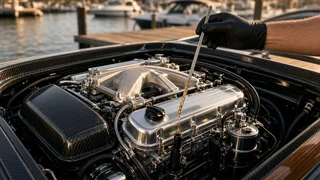
Check the owner's manual, usually in the capacities and specifications section, which also lists the required oil viscosity and approval standard. Identify the engine by its code, often found on an underhood label or decoded from the vehicle identification number, rather than relying on displacement alone. Use manufacturer service information or a dealer parts department if the manual is unavailable. When refilling, add slightly less than the listed amount, run the engine briefly, let it settle, then check the dipstick or electronic level reading and top up as needed. Both underfilling and overfilling can cause problems.
Gaps in This Guide
No manufacturer documentation was supplied for this article, so the capacities above are commonly reported values rather than verified specifications. Figures for dry-sump performance variants, European or other non-V8 6.2-liter engines, and specific model-year exceptions are not covered here. Required oil grade and change intervals also vary by engine and are outside the scope of this capacity question; consult the owner's manual for those details.