4L60E transmission fluid
Choosing the right fluid for a 4L60E matters because this electronically controlled four-speed automatic depends on precise hydraulic pressure and friction characteristics. Many owners ask what transmission fluid 4L60E applications require after noticing shift flare, delayed engagement, or simply approaching a scheduled service. The answer is not a single universal product. It depends on the transmission’s production era, the original fill specification, any updates from General Motors, and how the vehicle is used. Using an incompatible fluid can alter torque-converter lockup feel, shift timing, and long-term clutch life.
Essential answer
The most common fluid specified for later 4L60E transmissions is DEXRON VI, which superseded earlier DEXRON III guidance in most service applications. DEXRON VI is a lower-viscosity automatic transmission fluid with improved shear stability and oxidation resistance. For stock street-driven 4L60E units, it is generally the appropriate replacement fluid and is widely available. It mixes acceptably with previous DEXRON III fills in most normal service situations when doing a drain-and-fill or top-up.
Earlier 4L60E transmissions, especially those built in the 1990s, were originally filled with DEXRON III under the standards current at the time. The later DEXRON VI specification was designed to be backward compatible for automatic transmissions calling for the older fluid. However, a heavily worn unit or a performance-built 4L60E may respond differently to fluid viscosity. Always confirm the dipstick marking and any builder-specific requirement before final selection.
How it works
The 4L60E relies on transmission fluid to do several jobs at once. It transmits hydraulic force through the valve body to apply clutches and bands, cools the torque converter and planetary gearset, and lubricates bushings, bearings and seals. The fluid also provides the friction balance that allows clutch packs to engage smoothly rather than grabbing abruptly. Shift behavior therefore depends heavily on the fluid’s friction modifiers and viscosity.
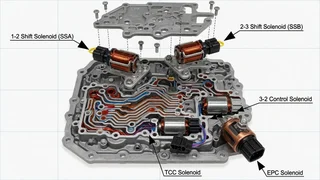
Because the 4L60E uses electronic shift solenoids rather than a mechanical governor, fluid condition affects how quickly the valve body responds to commands from the powertrain control module. Aerated, overheated or excessively thick fluid can delay solenoid response and change shift timing. The torque-converter clutch is also sensitive to fluid friction. A fluid with incorrect friction characteristics may produce shudder during lockup or a soft, slipping feel at highway speed.
Strengths, limitations and suitability
DEXRON VI is a strong general choice because its improved formulation resists viscosity breakdown better than older DEXRON III fluids. This helps maintain more consistent shift feel over a longer drain interval. For daily driving, towing within factory ratings, and stock 4L60E calibration, DEXRON VI typically supports smooth part-throttle shifts and predictable converter lockup. Its availability also makes it practical for owners who prefer an easy-to-find service fill.
The limitation is that fluid alone will not correct an existing hydraulic or mechanical problem. A transmission with worn boost valves, leaking accumulators, or tired clutch packs may still shift poorly with fresh fluid. Some rebuilt or high-stall 4L60E applications may require a non-synthetic conventional fluid, a specific friction-modified fluid, or a different viscosity depending on the builder’s setup. In those cases, the transmission’s shift behavior and service history should guide the choice more than the latest general specification.
Procedure
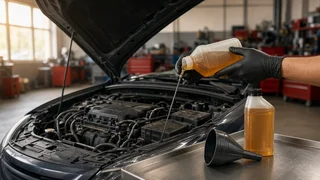
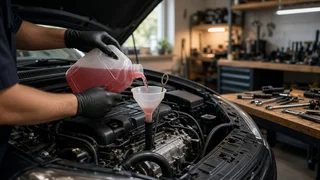
Before adding any fluid, check the transmission at operating temperature on a level surface with the engine running and the shifter in Park. Pull the dipstick, wipe it clean, reinsert it fully, and read both sides. The difference between the cold and hot marks is significant on a 4L60E, so avoid overfilling. Add fluid in small increments through the dipstick tube and allow it to settle before rechecking.
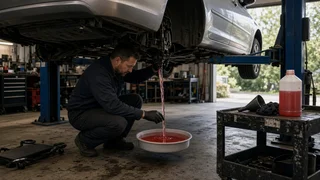
For a drain-and-fill, allow the pan to drain completely and inspect the magnet for normal fine friction material. A reusable pan gasket can be replaced at the same time. After refilling to the approximate level, start the engine, shift through each gear with the brake applied, and return to Park. Recheck the level while the engine is running. A complete fluid exchange or filter service may require removing the pan and should follow the applicable service information for the vehicle.
Diagnosing a problem
Shift flare, delayed reverse, or a shudder under light throttle can be caused by low fluid level, aerated fluid, incorrect fluid, or internal wear. Check the level and condition first. Fluid that is dark brown with a burnt odor indicates overheating, while a milky appearance suggests coolant contamination. Diagnostic codes related to shift solenoids or gear ratio errors are evidence to investigate, not proof that a specific part has failed.
If the transmission shifts acceptably when cold but slips when hot, the fluid may be thinning beyond specification or the pump may be losing pressure. A shudder that appears only during converter lockup can point to degraded fluid friction characteristics. In these cases, a fluid condition check and a comparison against the correct fluid specification are useful early steps. Persistent noise, harsh engagement, or loss of specific gears may require professional diagnosis before further driving.