4L60E Torque Converter Shudder Diagnosis
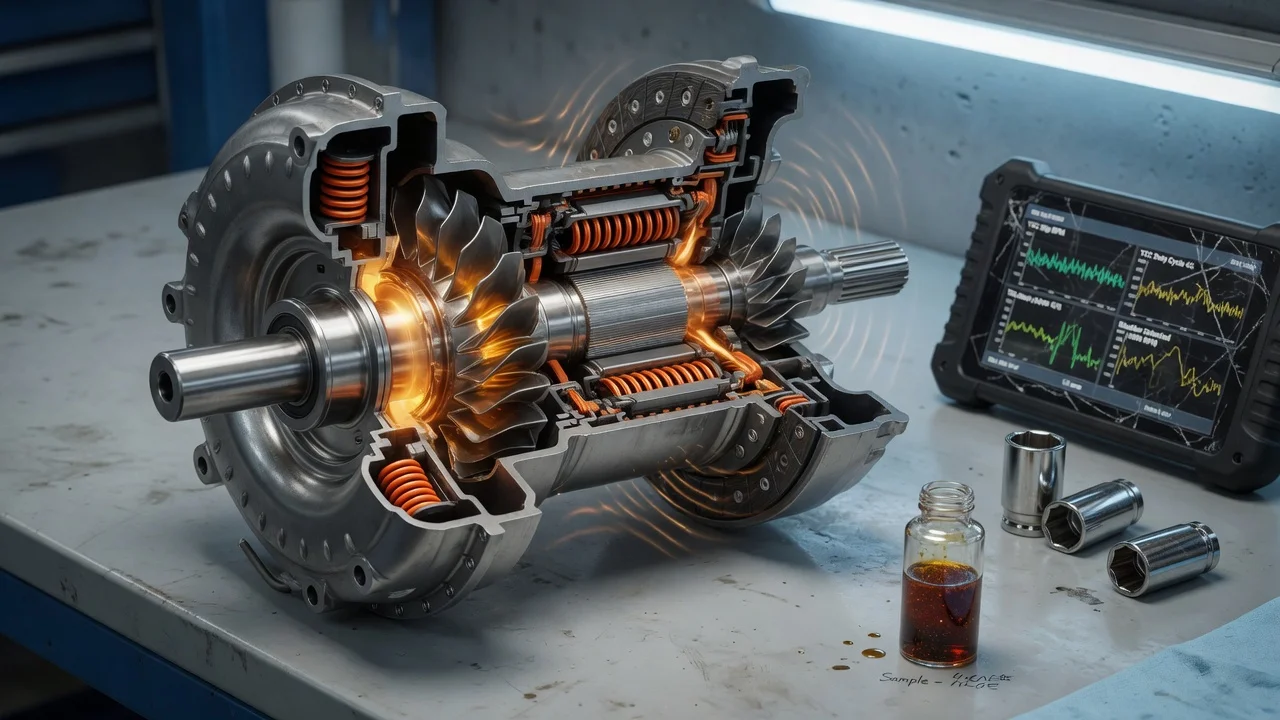
A vibration that feels like driving over rumble strips at steady cruising speed is a common complaint on GM's 4L60E four-speed automatic. It often appears when the torque converter clutch applies, but engine misfires, driveline faults and worn fluid can feel almost identical. This guide explains how to describe the shudder accurately, sort the plausible causes and collect the evidence a shop needs before any parts are replaced.
Establish the symptoms
Start by confirming the transmission type. The 4L60E was fitted to many GM trucks, SUVs, vans and rear-wheel-drive cars, and it closely resembles its 4L65E and 4L70E derivatives. Check the RPO code label, usually in the glovebox or on a door or trim panel (M30 identifies the 4L60E), or the identification tag on the transmission itself. Valve body revisions, converter fitment, converter clutch control strategy and fluid specification vary by model year and application, so the exact configuration affects every later step.
Then record when the shudder happens. Converter clutch shudder typically appears once the transmission is warm, at light and steady throttle in third or fourth gear, when the clutch is applying or holding lockup. Note the approximate speed where it starts, whether it gets worse on a slight incline or with a load, whether it stops when you accelerate harder or lift off the throttle, and whether the tachometer needle wavers slightly during the episode.
Associated signs matter just as much. Write down any check engine light, harsh or delayed shift behavior, flare between gears, slipping, unusual noise, burning smell or fluid leaks. Also list recent changes: a fluid service, a different fluid brand, engine work, a replacement converter, a lift kit, new tires or a change in tire size. A shudder that started right after one of these events points the investigation in a specific direction.
Distinguish plausible causes
The first group of causes involves the converter clutch apply system. A glazed or worn clutch lining, fluid whose friction properties have degraded, inconsistent apply pressure from worn valve body bores, or a sticking or erratic converter clutch solenoid can all make the clutch grab and release rapidly instead of applying smoothly. Evidence that supports this group includes shudder that occurs only while lockup is commanded, disappears the moment the clutch releases, and fluctuating converter slip readings on a scan tool. Diagnostic codes such as P0741 or GM's P1870, transmission component slipping, indicate that the computer detected excessive slip, but they do not identify which part is responsible.
An engine misfire is the most frequent impostor. When the converter locks, it no longer cushions engine pulses, so a light-load misfire from a weak coil, worn spark plug, injector problem or vacuum leak can feel exactly like converter shudder. Rising misfire counters, P0300-series codes or a rough idle support this explanation. Releasing the converter clutch can soften a misfire too, so a shudder that stops when lockup releases does not by itself rule the engine out.
Driveline and chassis faults form the third group. Worn universal joints, an incorrect driveshaft angle after a lift, a damaged or unbalanced driveshaft, failing engine or transmission mounts, and tire problems usually tie the vibration to road speed rather than throttle or lockup state. If the shudder persists regardless of throttle position and converter status, this group becomes more likely and the converter less likely.
Checks in a useful order
Begin with safe observations any owner can make. Check fluid level and condition using the procedure in the owner's manual, typically with the transmission at operating temperature, the engine running, the vehicle on level ground and the selector in park. Look for a low or overfilled level, dark or burnt-smelling fluid, and visible debris on the dipstick. Review the service history for the last fluid change and the fluid used; 4L60E units call for GM Dexron-specification fluid, with later service information specifying Dexron VI, so confirm the correct fluid specification for your vehicle. Read stored and pending codes with an OBD-II reader.
Next, try a brake-switch test where traffic and road conditions allow it safely. While the shudder is occurring at steady speed, press the brake pedal just enough to turn on the brake lights without meaningfully slowing. On most applications this releases the converter clutch, and engine speed rises slightly. Note whether the shudder stops immediately, continues unchanged or fades gradually.
Further testing requires tools, specifications or a qualified technician. That includes monitoring live scan tool data for converter clutch command, slip speed, solenoid duty cycle, transmission temperature and per-cylinder misfire counters during the shudder; a line pressure test with a gauge; electrical checks of the solenoid and its circuit; a driveline and mount inspection on a lift; and, if indicated, a valve body inspection.
Interpret the findings
If the shudder stops when the converter clutch releases, slip speed oscillates while lockup is commanded and misfire counters stay at zero, the evidence points toward the converter clutch apply system. It still does not separate a worn converter from a valve body, solenoid or fluid problem. A fluid service with the correct fluid sometimes reduces mild shudder caused by degraded fluid; if the shudder returns quickly, mechanical wear becomes more likely. Additives are not a substitute for that diagnosis.
If misfire counters climb during the episode, repair the engine fault first and then retest before judging the transmission. If the vibration continues regardless of lockup state or throttle, inspect the driveline, mounts and tires. Keep in mind that worn valve body bores can cause converter slip, so replacing the converter alone may not cure the shudder and can expose the new unit to the same faulty apply pressure.
Fluid findings change the scope. Burnt fluid, heavy friction material or metal debris in the pan suggests internal damage beyond the converter clutch, and the decision may shift from a targeted repair to a rebuild or replacement transmission.
Urgency and next action
Mild shudder limited to lockup is not always an emergency, but it creates heat and wear, and there is no reliable way to predict how long the transmission will last. Stop driving and arrange inspection if the transmission slips or flares, the check engine light flashes, which can indicate a severe misfire that may damage the catalytic converter, you notice a burning smell, fluid is leaking, a temperature warning appears, engagement becomes harsh or delayed, or the vehicle fails to move in a gear.
Bring the shop the VIN, the RPO code, current mileage, the service history including the fluid used, all codes with freeze frame data if available, the conditions under which the shudder occurs, the brake-switch test result and any modifications such as tire size or gearing changes. Repair options range from a fluid service or electrical repair to valve body work, converter replacement or a full rebuild. Ask the technician which evidence supports the recommended repair, and confirm converter fitment for your exact application, since converters differ by year and configuration.