48RE Transmission Valve Body Identification
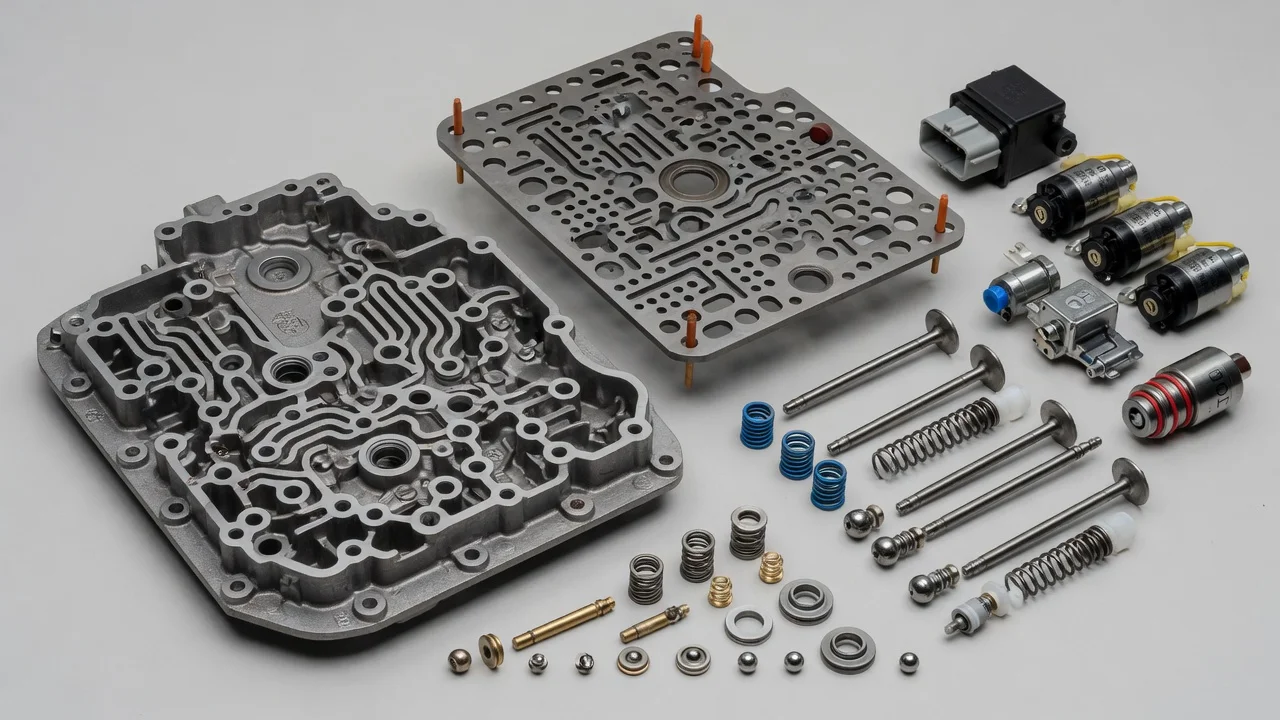
The 48RE is a four-speed automatic used mainly behind the 5.9-liter Cummins diesel in heavy-duty Ram pickups. Its valve body is the hydraulic control center that decides when and how firmly the transmission shifts. You need to identify it correctly before ordering parts, choosing an upgrade or chasing a shift complaint, because the 48RE shares its basic layout with older RE transmissions. This guide covers how to confirm what you have and what can change the answer on your truck.
Short answer: how to identify a 48RE valve body
Start with the transmission, not the valve body. A 48RE valve body is only correct for a 48RE, so confirm the transmission type first. Factory 48RE units are generally found in Ram 2500 and 3500 diesel trucks from the 2003.5 through 2007 model years. After that, the 6.7-liter engine came with a six-speed automatic. The vehicle identification number, the original build data or a dealer parts lookup can confirm what the truck had when it left the factory. The identification stamping or tag on the transmission case can confirm what is installed now. These trucks have been in service for many years, and transmissions are often swapped or rebuilt, so the installed unit and the factory record do not always match.
Once the transmission is confirmed, identify the valve body by its components and markings, not by its appearance alone. An original-style unit carries the governor pressure solenoid and sensor, the converter clutch and overdrive solenoid assembly, the transmission range sensor, and the throttle valve lever that connects to the throttle valve cable. A parts supplier will ask for the casting numbers on the upper and lower housings, or the part numbers and labels on aftermarket and remanufactured units. Looking like a 47RE or 46RE valve body does not prove fitment. These families look alike but differ in calibration and internal parts.
How the valve body works in a 48RE
The valve body is a maze of passages, spring-loaded valves and check balls. It routes pressurized fluid from the pump to the clutches, bands and torque converter. In a 48RE, shift timing comes from a balance between two pressures. Governor pressure rises with vehicle speed. Throttle pressure rises with throttle opening, through the throttle valve cable. When governor pressure overcomes the opposing pressure on a shift valve, the valve moves and the next gear is applied. Line pressure is set by the regulator valve and influenced by throttle pressure, and it determines how firmly the clutches and bands engage.
Electronics play a supporting role. The powertrain control module reads the governor pressure sensor and commands the governor pressure solenoid. It also controls overdrive and torque converter clutch application through the solenoid assembly. As a result, shift behavior depends on both hydraulic condition and electrical inputs. Any of these can change how the transmission shifts: a worn valve bore, a stuck valve, a misadjusted throttle valve cable, a weak sensor signal or incorrect band adjustment. That is why a shift symptom alone does not point to one failed part.
What changes the identification and fitment
Factory valve bodies were calibrated for the original application. Remanufactured and aftermarket valve bodies may use modified springs, separator plates or valves to raise line pressure and firm up shifts. A truck with a performance or towing valve body can behave very differently from a stock one. Some of these units have their own installation requirements, such as a specific band adjustment or throttle valve cable setup. Previous owners do not always leave a record of these changes, so check the service history before assuming the unit is original.
Fitment also depends on the rest of the drivetrain. Engine power modifications, torque converter changes and rebuild parts can all influence which valve body a supplier recommends. A 47RE swapped into a truck that originally had a 48RE changes everything downstream. The fluid specification for the 48RE is ATF+4, and the wrong fluid can affect shift quality, so confirm the fluid type before judging how a valve body performs.
What the owner can do
Begin with records and observation: • Look up the truck by its VIN. • Read any transmission tag or case stamping. • Note whether the transmission has been rebuilt or replaced. • Check the fluid level and condition under the conditions the service information specifies. Note whether the fluid smells burnt or contains debris. • Have the diagnostic codes read with a scan tool that can access transmission-related data. Codes involving the governor pressure, overdrive or converter clutch circuits narrow the search, but they do not confirm a specific failed component.
Describe the shift behavior precisely before deciding on repair options. Write down when the problem appears: cold or warm, light or heavy throttle, loaded or empty, and which shift is affected. Useful clues for a technician include harsh or delayed shifts, flare between gears, missing overdrive and erratic converter clutch engagement. If the pan is dropped for service, a technician can inspect the valve body for casting markings, aftermarket labeling and damaged solenoid connectors, and check for debris in the pan. This helps confirm both the unit's identity and its condition.
When ordering a replacement or upgrade, give the supplier the model year, engine, transmission identification, any casting or part numbers, and a description of modifications. The main options are reconditioning the existing unit, a remanufactured stock replacement or an upgraded valve body. Choose based on how the truck is used, not on a single symptom.
Limitations and next step
Identification based on appearance, a seller's listing or a forum description can be wrong. Calibrations vary between production periods and suppliers. The dependable references are the factory service information for the specific truck, a dealer parts lookup and the markings on the installed unit. Without them, treat any conclusion about fitment as provisional.
Removing the valve body means disconnecting linkage and electrical connectors and handling small parts that are easy to misplace. Incorrect reassembly can create the very shift problems you were trying to solve. Have a transmission specialist perform a full diagnosis before replacing the valve body if the transmission slips, overheats, sets severe codes or has badly contaminated fluid. The problem may lie in the clutches, bands, torque converter, pump or electrical inputs, and a new valve body will not correct those.