2015 Range Rover Evoque Transmission Fluid

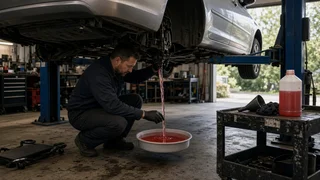
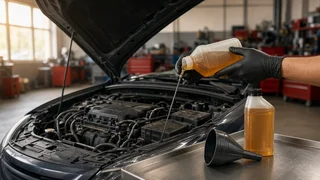
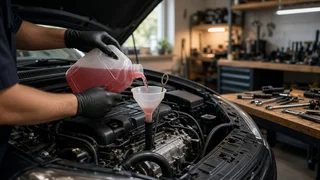
Transmission fluid questions for a 2015 Range Rover Evoque usually begin with a simple need—checking level, choosing a replacement, or understanding a shift concern—but the useful answer depends on which transmission the vehicle has. The Evoque platform was offered with different drivetrain configurations, and those configurations affect transmission type, fluid specification, fill procedure, and how shift behavior should be interpreted. This overview explains the essential answer about the transmission fluid question, why fitment matters, how fluid condition and diagnostic codes fit into diagnosis, and how to approach a fluid-related service without guessing.
Essential answer
For a 2015 Range Rover Evoque, the essential transmission fluid answer is that the correct fluid is determined by the specific transmission fitted to the vehicle, not by the model year alone. Front-wheel-drive and all-wheel-drive Evoque variants can use different transmission families, and each transmission type has its own fluid specification and service expectations. Before buying fluid or scheduling a drain-and-fill, the owner should confirm the transmission type from the vehicle identification or build information. Treating the fluid as a generic automatic transmission fluid can lead to poor shift behavior, because modern automatic and automated transmissions are sensitive to viscosity, friction modification, and additive chemistry.
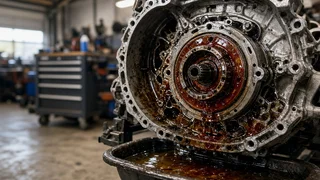
Service history is also part of the essential answer. If the transmission has never had a fluid change, the fluid may be darkened or worn even when the odometer reading is not extreme. Dark fluid indicates heat cycling and clutch material suspension, but it is not by itself proof of internal failure. A diagnosis should connect fluid condition, transmission type, stored diagnostic codes, and the specific shift behavior the driver observes. When those observations point toward a low or degraded fluid condition rather than a mechanical fault, confirming the correct fluid specification and a careful fill procedure usually protects the unit better than an immediate replacement decision.