2008 Honda Fit Battery: Size, Fitment Checks and Replacement
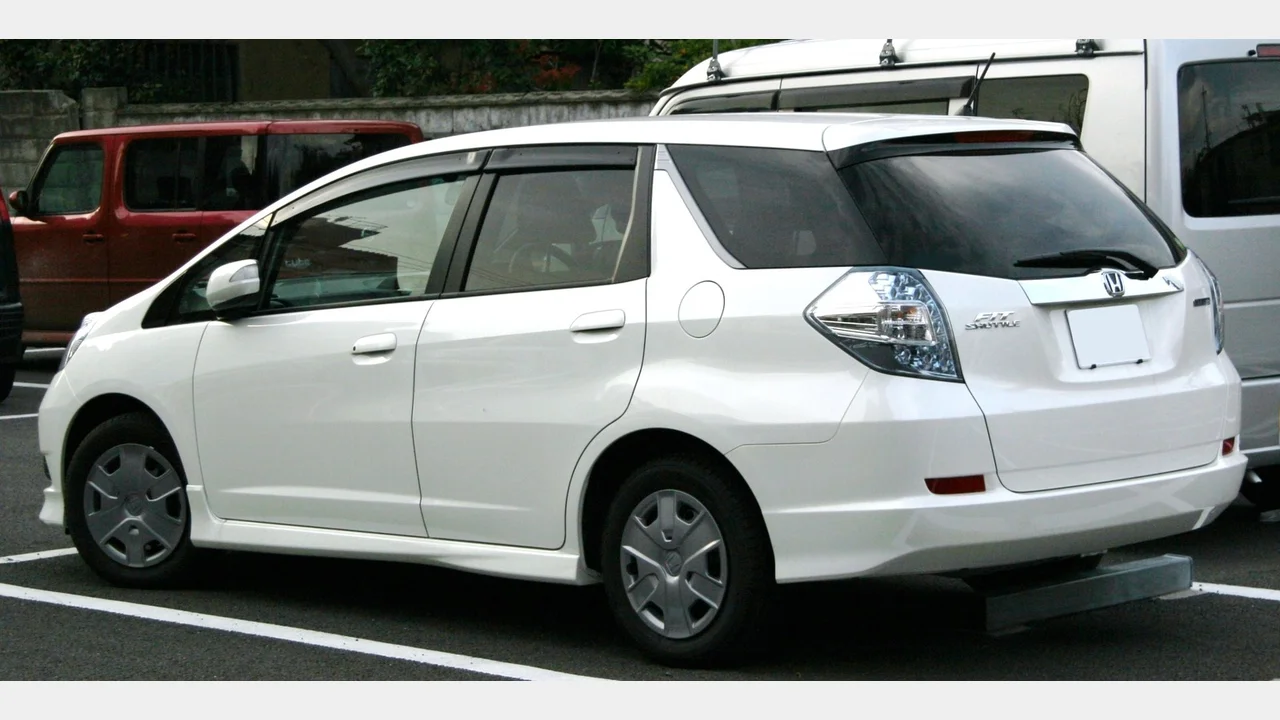
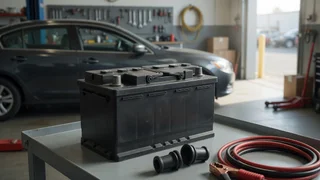
Replacement fitment guides commonly list a Group 51R battery for the 2008 Honda Fit. In the US market, the 2008 Fit belongs to the first generation, which covers the 2007 and 2008 model years. Treat 51R as a starting point, not a guarantee. A previous owner may have fitted a different size, and fitment databases are not always consistent. Check the label on the battery that is in the car now, then compare it with the owner's manual or a retailer's fitment lookup for your exact year and trim. Before you buy, also confirm that the old battery is actually the problem. A weak alternator, a corroded connection or a constant electrical drain can flatten a new battery just as quickly as the old one.
What Group 51R Means
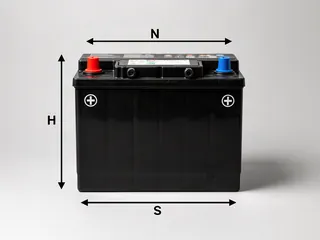
A battery group size is an industry code for the battery's outer dimensions, terminal type and terminal layout. Batteries in the same group should fit the same tray and hold-down. The R means the terminals are reversed: the positive and negative posts are on opposite sides compared with a standard Group 51.
Terminal position matters in a compact engine bay like the Fit's. If the posts are on the wrong side, the battery cables may not reach, or they may sit under strain. A reversed layout can also put the positive terminal near metal it should not touch. Do not buy a plain Group 51 for a car that needs a 51R, even if the case dimensions look the same.
How to Confirm the Right Battery for Your Car
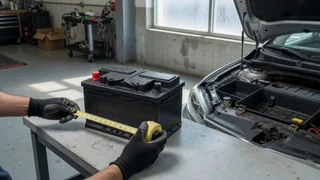
Read the top or side label of the current battery for the group size and cold cranking amps (CCA) rating. Check the battery section of the owner's manual for the recommended specification. Use a parts retailer's fitment lookup with the exact model year, trim and engine entered. Note which side the positive terminal (red, marked +) sits on, so you can match the layout. Note the hold-down style. The new battery needs to sit firmly in the tray under the existing clamp or bracket.
If the label is missing or the current battery looks like the wrong size, rely on the manual and a fitment lookup rather than copying what is already installed.
What to Compare When Buying
Factor | What it means | What to look for; Group size | Case dimensions and terminal layout | Matches the size listed for your car, commonly 51R for this model; Cold cranking amps (CCA) | Starting power in cold conditions | Meets or exceeds the original specification; Reserve capacity | How long the battery can run accessories without the engine charging it | Equal to or higher than the original; Battery type | Flooded (conventional) or AGM | Flooded suits a car built for flooded; AGM is optional for this car; Manufacture date | How long the battery sat before sale | Recent stock; check the date code; Warranty | Free-replacement period, plus any prorated period | Longer free-replacement coverage adds value if you plan to keep the car
A higher CCA rating than the original is generally fine and can help in cold climates; going below it is not recommended. AGM batteries usually cost more and tolerate deep discharge and vibration better. On a car designed for a conventional battery, AGM is an upgrade you can choose, not one you need.
Check the Charging System Before Blaming the Battery
A battery that keeps going flat is not always worn out. A few meter checks can show whether the fault lies with the battery, the charging output or something draining the system.
Resting voltage: with the engine off for a few hours, a fully charged 12V battery typically reads about 12.6 volts. A reading well below that suggests the battery is discharged or failing. Running voltage: with the engine idling and the alternator working, system voltage generally sits roughly between 13.5 and 14.5 volts. A reading close to battery resting voltage points to a charging output problem. Load test: many parts stores test batteries and alternators at no charge. A load test shows whether the battery holds up under cranking demand, not just whether it shows surface voltage. Voltage drop: a noticeable voltage difference between the battery post and the cable end means resistance in the connection. Corroded or loose battery terminals are a common cause of slow cranking.
If the battery and alternator both test well but the car still goes flat after sitting, suspect parasitic draw: current that keeps flowing after the car is shut off. It is measured with a meter placed in series with the battery after the car's modules have gone to sleep. The circuit can be isolated by pulling fuses one at a time, using the fuse box label or a wiring diagram. If you replace a fuse, use the same fuse rating as the original and never fit a higher one. Aftermarket accessories, interior lights left on and faulty modules are common sources of drain.
Replacing the Battery
Battery replacement on the Fit is a basic job for most owners with common hand tools. Work with the engine off and the key removed, and wear eye protection.
Find any radio security code before you start, in case the audio unit asks for it after power is restored. Disconnect the negative terminal first, then the positive terminal. Remove the hold-down clamp or bracket and lift the battery out carefully; it is heavy and contains acid. Clean the battery tray and cable ends, removing any terminal corrosion with a terminal brush. Set the new battery in the same orientation, with the positive post on the same side as before. Refit the hold-down so the battery cannot shift. Connect the positive terminal first, then the negative, and tighten both snugly without overtightening. Start the car and confirm that the warning lights clear and the idle settles.
After a battery disconnect, the idle may be uneven for a short time while the engine computer relearns its settings, and the clock and radio presets may reset. If the battery warning light stays on after the new battery is installed, have the charging system checked.
Disposing of the Old Battery
Lead-acid batteries should be recycled, not put in household trash. Most retailers that sell car batteries accept old ones, and many add a core charge that is refunded when you return the old unit. Keep the old battery upright during transport.