Diagnose a 2008 Chevy Impala dash brake warning
The short answer
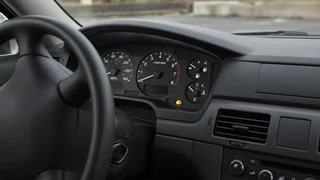
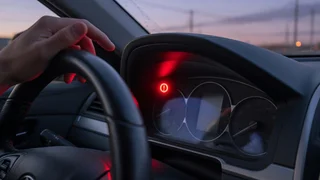
On a 2008 Chevrolet Impala, a red BRAKE warning light that stays on after the engine starts most often points to one of three things: the parking brake is applied or its switch is not fully released, the brake fluid level in the master cylinder reservoir is low, or the brake or anti-lock braking system (ABS) has detected a fault. Because the brake light is a red warning, treat it as a safety concern until you have confirmed a harmless cause such as the parking brake.
This guide covers the red brake warning light on the 2008 Impala, part of the generation sold from the 2006 through 2013 model years. The amber ABS light is a separate indicator, although the two can interact, as explained below. No model-specific service documentation was supplied for this article, so wiring details, sensor locations and exact dash messages should be confirmed in the owner's manual or a factory service manual for your car.
First, rule out the normal bulb check
Most warning lights briefly illuminate when the ignition is switched on as a self-test, then go out. A brake light that turns off within a few seconds of starting is normal. The checks below apply when the light stays on, comes on while driving, or flickers.
Likely causes and what to check next
1) Parking brake applied or switch stuck
Check: Fully release the parking brake, then apply and release it again firmly. Watch whether the light goes out.
What it indicates: If the light goes out, the parking brake was partly engaged. If the light only goes out when you push or pull on the parking brake control, the switch that tells the dash the brake is applied may be misadjusted, sticking or failing. If the light stays on regardless, move on to the fluid check.
2) Low brake fluid
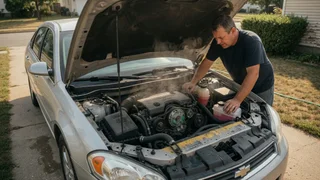
Check: With the engine off and the car on level ground, locate the brake master cylinder reservoir under the hood, typically on the driver's side near the firewall. Compare the fluid level with the MIN and MAX marks on the translucent reservoir without opening it if you can see the level clearly.
What it indicates: The reservoir contains a level sensor that triggers the warning light when fluid drops too low. There are two common reasons for a low level.
Worn brake pads: As pads wear, the caliper pistons sit farther out and hold more fluid, so the reservoir level drops gradually. A slightly low level with no visible leaks often points to pads that need inspection. A leak: A noticeably low level, a level that keeps dropping, wet spots near the wheels, damp brake lines or fluid on the inside of a tire suggest a leak in a line, hose, caliper or the master cylinder.
Topping up the fluid may turn the light off, but it does not fix the reason the fluid was low. Use only the fluid type printed on the reservoir cap or listed in the owner's manual, and do not mix in other fluids. Brake fluid can damage paint, so wipe up spills promptly.
3) Faulty fluid level sensor or wiring
Check: If the reservoir is clearly between MIN and MAX, the parking brake is fully released, and the light is still on, inspect the electrical connector on the reservoir sensor for looseness, corrosion or damage.
What it indicates: A light that stays on with correct fluid level and normal braking may come from the sensor, its connector or the circuit to the instrument cluster. This is less urgent than a hydraulic problem, but it should still be diagnosed, because a failed sensor can no longer warn you of genuinely low fluid.
4) ABS or brake control system fault
Check: Note whether the amber ABS light is also on, and whether the instrument cluster's message area shows any brake-related message. ABS availability varied by trim on some Impala model years, so confirm whether your car has it.
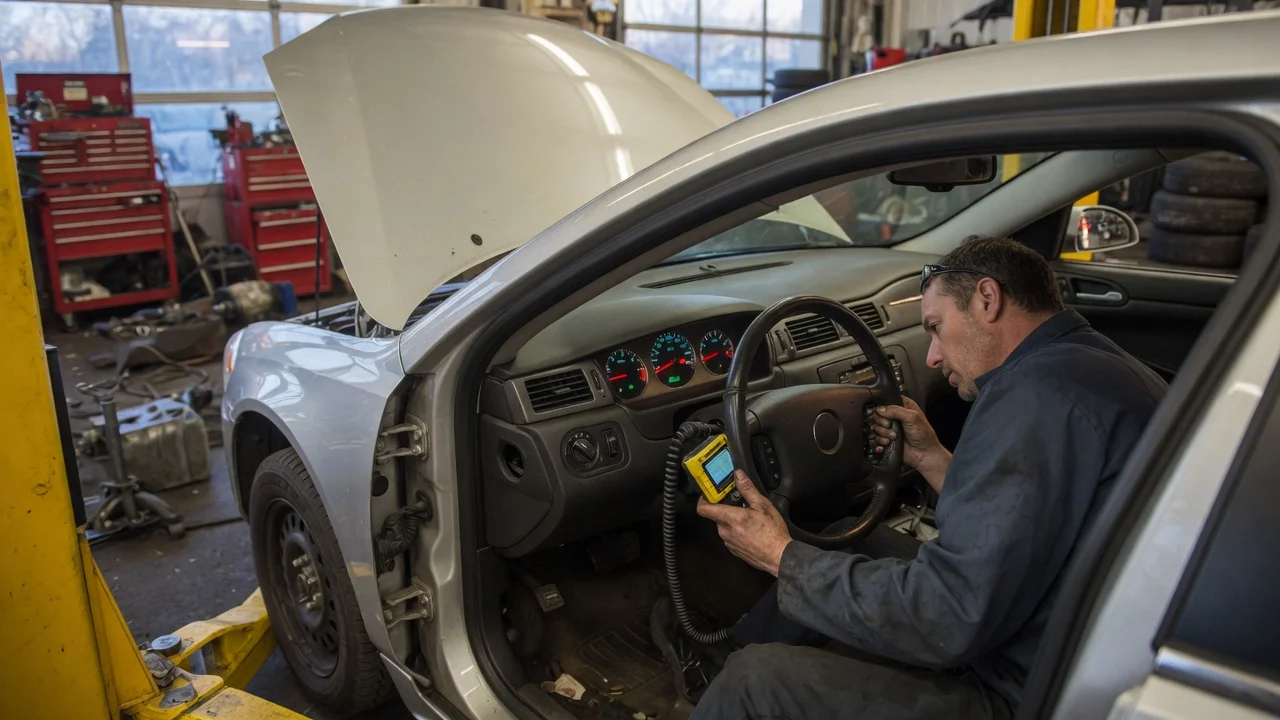
What it indicates: On many GM vehicles of this era, the red brake light can illuminate alongside the ABS light when the system detects a fault that affects how braking force is distributed between the front and rear wheels. Wheel speed sensor problems, wiring damage near the wheels, low system voltage and control module faults are among the possibilities. A scan tool capable of reading ABS and brake codes is needed here; a basic engine code reader may not access this system.
Treat any stored code as a lead to investigate rather than proof that a specific part has failed. A wheel speed sensor code, for example, can come from the sensor itself, its wiring, its connector or a damaged reluctor ring, so confirm with testing before replacing parts.
Quick reference
Observation | Most likely meaning | Next step; Light goes out after releasing parking brake | Parking brake was engaged | No further action if it stays off; Light changes when moving the parking brake control | Parking brake switch issue | Inspect or adjust the switch; Fluid slightly low, no leaks | Worn pads likely | Inspect pads and rotors; Fluid well below MIN or dropping | Possible leak | Stop driving; have the system inspected; Fluid correct, braking normal, light on | Sensor or wiring fault possible | Check connector; diagnose circuit; Red brake and amber ABS lights together | Brake or ABS control fault possible | Scan ABS and brake codes; limit driving until diagnosed
When to stop driving and get professional help
Do not continue driving, and arrange a tow or roadside inspection, if any of the following apply with the brake light on:
The brake pedal feels soft, spongy, or sinks toward the floor. The car takes noticeably longer to stop or pulls to one side. You see fluid leaking near a wheel, under the engine bay or on the inside of a tire. The reservoir is empty or well below MIN. You hear grinding or metal-on-metal noise when braking. Both the red brake light and the amber ABS light are on and braking feels different.
If the only finding is a sensor or switch issue and braking feels completely normal, the situation is less urgent, but a qualified technician should still confirm the hydraulic system is sound. Brake repairs that involve opening lines, bleeding the system or replacing ABS components are best left to a professional unless you have the tools and experience to do them correctly.
What this guide could not confirm
No factory service data, technical service bulletins or test findings for the 2008 Impala were supplied. As a result, this guide does not cover specific diagnostic trouble codes, exact component locations, wiring diagrams, fluid capacities or any known model-specific defects. For those details, consult the owner's manual, a factory service manual, or a dealer or independent shop that can check your vehicle identification number for applicable bulletins and recalls.