2-Stroke Lower Unit Oil: What Actually Goes in the Gearcase
The Short Answer
The lower unit of a 2-stroke outboard does not take 2-stroke oil. The gearcase is the submerged housing below the engine that contains the gears driving the propeller. It is lubricated by marine gear lube, a thick oil designed for gear contact. 2-stroke oil is a different product. It is either mixed into the fuel or fed by an oil-injection system to lubricate the powerhead, which is the engine itself. The two are not interchangeable.
People often search for "2-stroke lower unit oil" because 2-stroke engines use oil in a way 4-stroke engines do not, so it is easy to assume the gearcase needs something special too. In practice, the gearcase on a 2-stroke outboard works the same way as one on a 4-stroke. It holds its own sealed supply of gear lube, separate from anything that goes into the engine.
Two Oils, Two Jobs
Oil type | Where it goes | What it does; 2-stroke engine oil | Mixed with fuel or held in an oil-injection reservoir | Lubricates the powerhead's internal parts and is burned during combustion; Marine gear lube (lower unit oil) | Sealed inside the gearcase, filled through drain and vent plugs | Lubricates and cools the gears and bearings that turn the propeller shaft
Putting 2-stroke oil in the gearcase would leave the gears without the film strength they need. Putting gear lube in the fuel or the injection tank would harm the engine. If either mix-up has happened, drain the affected system and refill it with the correct product before running the motor.
What to Look For in Lower Unit Gear Lube
Marine lower unit lubricants are usually sold as hypoid gear oil. "Hypoid" refers to a gear design that creates high sliding pressure between the teeth, so the oil contains extreme-pressure additives. Common viscosity labels include 80W-90 and straight 90 weight. Marine-specific formulas are also made to tolerate small amounts of water contamination better than general-purpose gear oils.
The correct grade and the gearcase capacity depend on the manufacturer, model, horsepower and model year. Some manufacturers specify a particular branded lube or a high-performance grade for certain motors. No model-specific specifications were available for this guide, so confirm the following in your owner's manual or service manual before buying oil.
The required viscosity grade and any performance classification; The gearcase capacity, so you buy enough to fill it completely; Whether the manufacturer requires or recommends a specific product; The recommended change interval for your model and how you use it
How the Gearcase Is Typically Filled
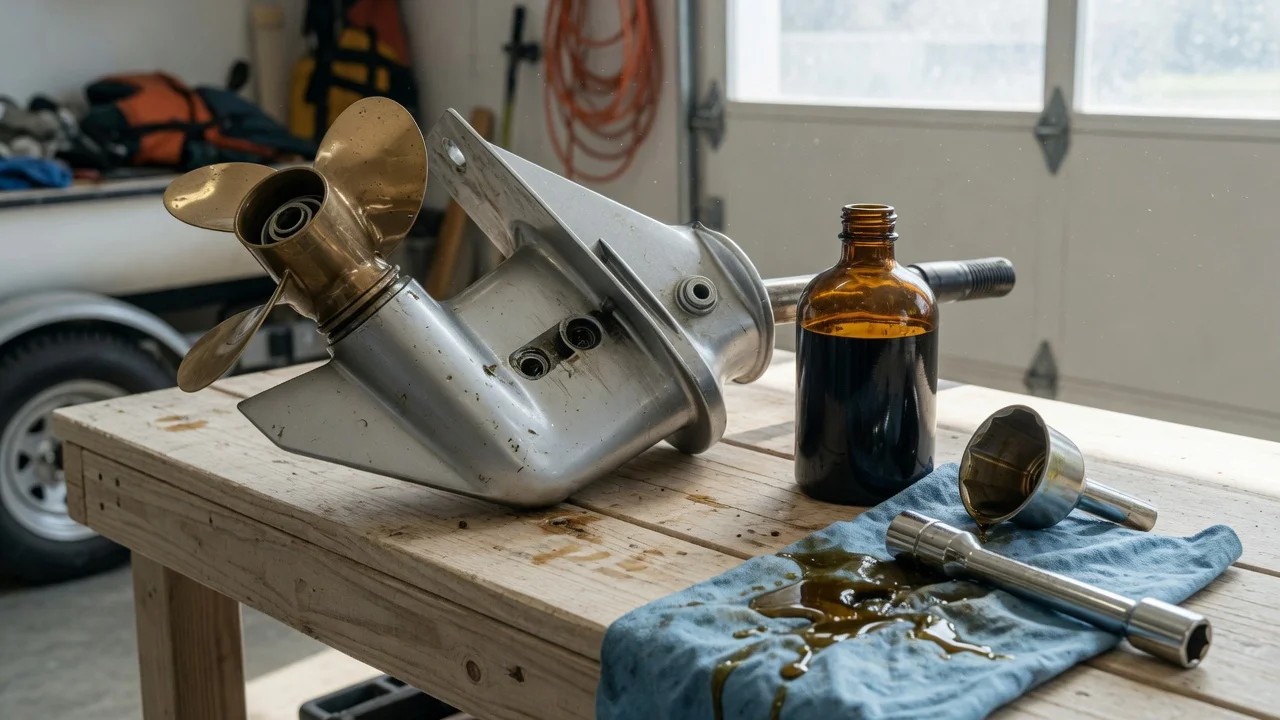
Most outboard gearcases have two screw plugs: a drain/fill plug near the bottom and a vent plug higher up. The usual method is to pump gear lube in through the bottom hole until it flows out of the vent hole. Filling from the bottom pushes air out ahead of the oil. While keeping the pump attached, install the vent plug first. Then remove the pump and quickly install the bottom plug. Plug locations, sealing washers and torque values vary by model, so follow the service manual for your engine.
What the Old Oil Can Tell You
Draining the gearcase is also a chance to check its condition. Milky or creamy oil usually means water has entered the gearcase, often through worn seals. Fine metal particles or larger flakes can point to gear or bearing wear. Either finding is worth having inspected before the motor goes back into regular use. A dry or low gearcase with no visible leak also deserves a closer look.
Bottom Line
For a 2-stroke outboard, use 2-stroke oil only in the fuel or the oil-injection system. Fill the lower unit with marine gear lube that matches the grade your manufacturer specifies. The exact viscosity, capacity and service interval depend on the specific motor, so the owner's manual is the deciding reference.