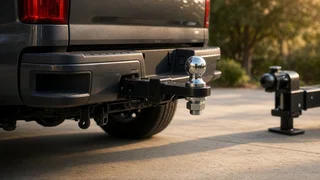
2-15/16 Trailer Hitch Ball
Choosing a 2-15/16 trailer hitch ball means matching the ball diameter to a heavy-duty coupler, often found on larger agricultural, industrial, or specialized trailers. This size is less common than 2-inch and 2-5/16-inch balls, so buyers should confirm the coupler stamping, shank dimensions, and load ratings before purchase. A mismatch can create dangerous coupling slack or interfere with the latch, so the immediate answer depends on verifying your trailer's marked requirements and the receiver's platform capacity.
The direct answer
If your trailer coupler is stamped for a 2-15/16-inch ball, that is the diameter you need; do not substitute a smaller 2-5/16-inch ball to save money or because it is easier to find. The coupler latch and socket are contoured to a specific sphere, and an undersized ball lets the coupler rock, hammer, and possibly release under dynamic load. Check the coupler body, data plate, or owner's documentation for the exact size, and match it to a ball with a shank diameter and length that fit the ball mount hole.
The appropriate purchase is not just about diameter. The ball's gross trailer weight and tongue weight capacity must meet or exceed what the trailer imposes at the hitch. For heavy applications, the shank's diameter, thread length, and nut torque matter because a long shank can bend or loosen if the platform hole is oversized. Verify the ball mount's hole size and the receiver, ball mount, and vehicle ratings. When all those values align, a 2-15/16-inch hitch ball becomes a secure, straightforward choice.