Wiper Controls Explained: Symbols, Intermittent Settings and Washer Spray
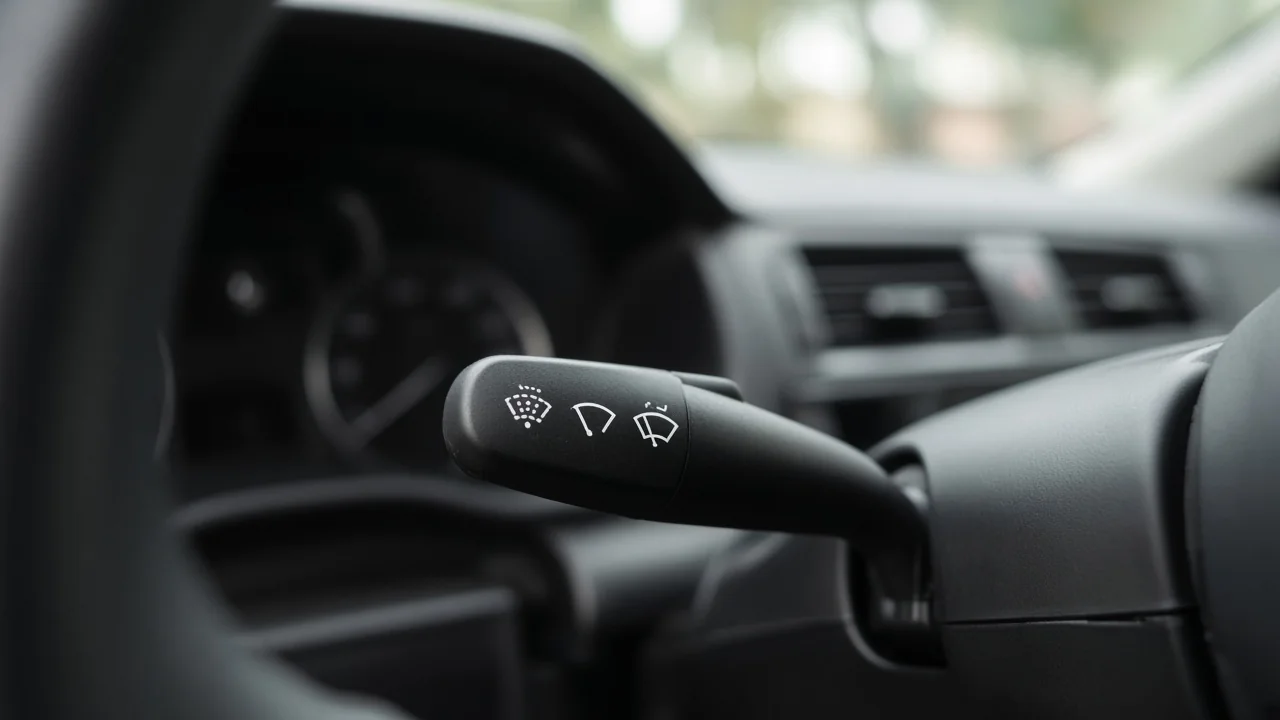
Knowing how to turn on windshield wiper controls before rain or road spray arrives makes driving calmer and safer. Most vehicles group wiping, washer spray, intermittent delay and sometimes automatic rain sensing into one control. The layout, symbols and movements still differ between makes and models. Learning how to use windshield wiper settings, read the icons and spray washer fluid ahead of time helps when visibility suddenly drops.
Locate the Wiper Controls Before Driving
In many cars, the wipers are operated through a wiper stalk mounted on the steering column. It is often on the side opposite the turn signal lever, although placement varies and some designs combine functions. Other vehicles use dashboard switches, buttons on the stalk tip, or settings inside a touchscreen menu. Movement also varies: one car may rotate a band to change speed, while another moves the whole lever up or down. If you assume the control works like the one in your previous vehicle, you may end up fumbling for it at exactly the wrong moment.
While parked, take a few minutes to find the front windshield control by its markings, then confirm each position in the owner's manual. Many vehicles power the wipers only when the ignition is in a specified power mode, such as accessory or on. A lever that seems dead may simply need the correct mode. Before testing anything, make sure the blades are not frozen to the glass and that snow, leaves or heavy debris are cleared. Forcing loaded blades can strain the wiper motor and linkage.
Recognize Windshield Wiper and Washer Symbols
The typical windshield wiper symbol shows a curved windshield outline with an arced line representing a blade. The washer icon usually adds droplets or a spray fan to show that fluid will be pumped onto the glass. Artwork differs by manufacturer, so a windshield wiper sign in one vehicle may look slightly different in another. Position labels are also common. These include OFF, MIST for a single pass, INT for intermittent, LO and HI for continuous speeds, and AUTO where rain sensing is fitted. Not every vehicle uses all of these labels.
Front and rear markings help you tell controls apart. A rear window wiper icon usually shows a more rectangular glass shape and often sits on a separate switch or rotating band. The owner's manual confirms which control operates which window. It is also important to tell markings printed on the control apart from an illuminated windshield wiper signal on the instrument cluster. A lit washer-related indicator may mean low fluid in the washer fluid reservoir. Its exact meaning depends on the vehicle, so check the manual rather than guessing.
Select a Single Wipe or Continuous Wiping
A momentary setting, frequently marked MIST or shown with a single-wipe symbol, usually produces one sweep and returns the blades to rest. It suits light drizzle or spray from a passing truck. Continuous settings such as LO and HI keep the blades moving steadily until the control is changed. To choose a setting, move the control to the labeled position shown by its markings. Do not rely on a universal direction or a set number of clicks, because stalks move up or down or rotate depending on the design.
To switch off, return the control to OFF and let the blades finish traveling to their parked position at the base of the windshield. Interrupting them or moving them by hand can leave them stuck mid-glass. Pick the setting that keeps the view consistently clear, not the slowest one that barely keeps up. If even the highest speed cannot handle a downpour or heavy road spray, slow down smoothly and increase your following distance. Then stop somewhere safe until conditions improve.
Adjust Intermittent Delay and Automatic Wipers
An intermittent windshield wiper setting gives repeated wipes separated by a pause. It is useful when rain is too light for continuous wiping but too steady for single wipes. The intermittent delay is often adjusted with a rotating ring or dial on the stalk, while some vehicles use a menu instead. Adjustment direction varies, so a longer bar or larger dot may mean either shorter or longer pauses depending on the design. Confirm the markings in the owner's manual before relying on the windshield wiper intermittent adjustment in traffic.
Where equipped, AUTO engages a rain sensor, often located behind the glass near the rearview mirror, which triggers the automatic wipers when it detects moisture. In this mode, the same ring or dial may control sensitivity rather than a fixed delay. Dirt, cracks, stickers or fog over the sensor area can affect how well it works. Fine mist or light moisture may not register the way you expect. Keep watching visibility, and switch to an intermittent or continuous setting whenever automatic operation falls behind.
Activate Washer Spray and the Cleaning Wipe
To spray windshield wiper fluid, first find the front washer control using its spray icon and the owner's manual. Many vehicles activate it by pulling the stalk toward the driver. Others require pushing it away, pressing a button on the stalk end, or using a dashboard switch. Hold the control only briefly, since a short activation usually delivers enough spray to loosen dust or bug residue. Depending on the vehicle, the wipers often make several automatic passes afterward to clear the fluid and leave a clean sweep.
People asking how to turn on windshield wiper fluid are sometimes thinking about refilling it, but spraying and refilling are separate actions. The washer control simply draws fluid from the washer fluid reservoir. Topping up is done at the reservoir, usually under the hood, with an appropriate fluid. Using windshield wiper fluid well also takes restraint. If nothing sprays after a couple of attempts, stop triggering the pump. In freezing weather, avoid washing if fluid could ice over on cold glass and suddenly block your view.
Respond Safely When Wiping or Spray Does Not Work
When the wipers or washer stop working, pull over and park safely before investigating. Confirm the control position and the required power mode, because a switch left in the wrong setting or a vehicle in an inactive state can look like a fault. Then note what you see: no spray, weak spray, streaking, or no blade movement at all. These symptoms are useful clues, but they do not identify a failed part on their own. Weak spray might come from low fluid or a blocked nozzle, while streaking often points to worn blades or dirty glass.
With the vehicle off, you can check the fluid level as described in the owner's manual. Keep your hands clear of the blades and linkage in case the wipers move unexpectedly. On vehicles that record a fault code, treat it as evidence to interpret, not proof that a part has failed. Have a professional inspect the vehicle if failures persist, if you hear grinding or clicking, or if the blades stop mid-sweep or move erratically. If you cannot see well enough to drive safely, do not continue until the problem is fixed.