How to Add or Change Windshield Washer Fluid: Reservoir, Capacity and Steps
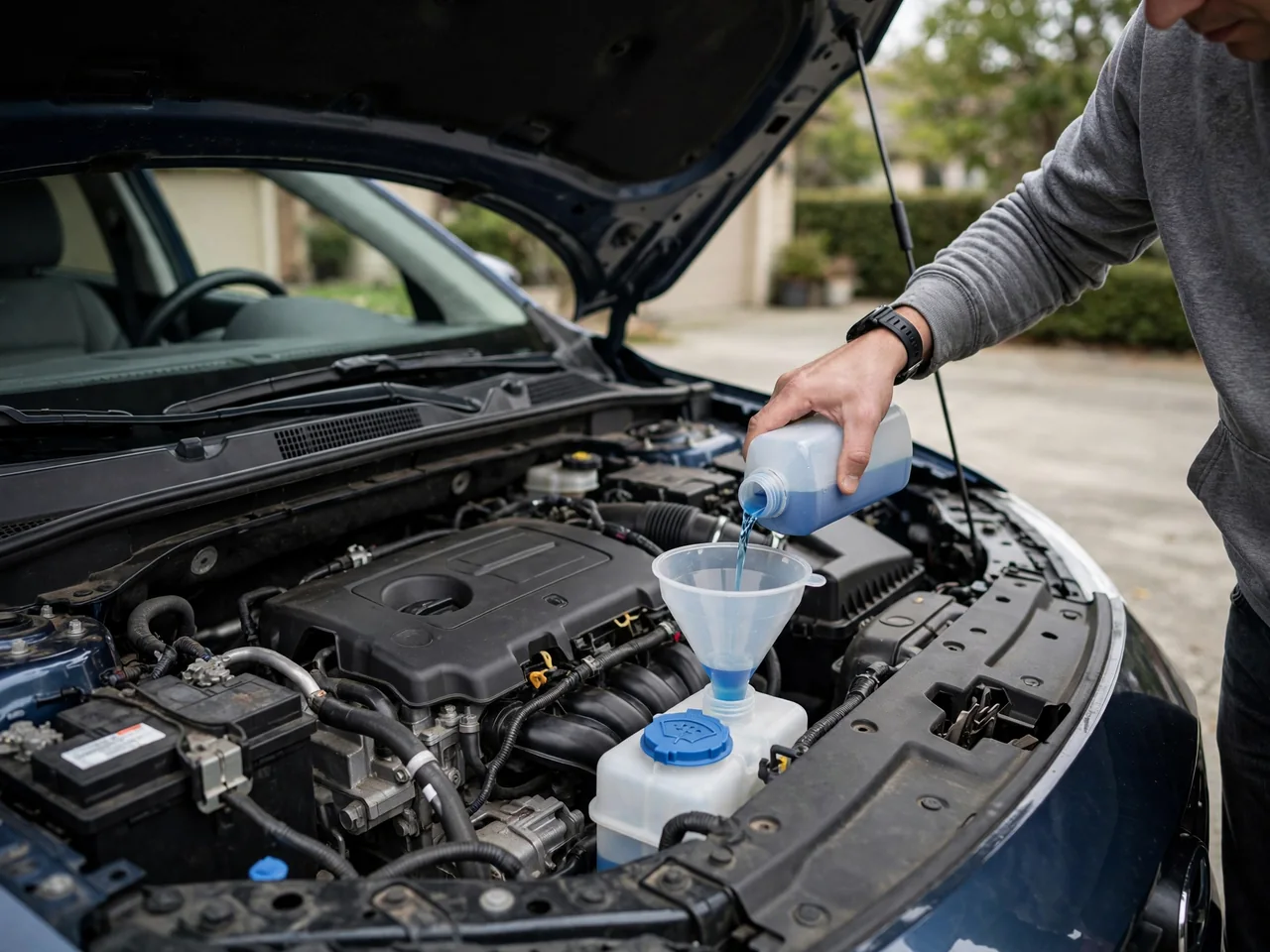
If you are wondering where to put windshield wiper fluid, the answer is its dedicated washer fluid reservoir, never any other opening under the hood. Finding that container, recognizing its cap, pouring without spills, judging how much is needed, and knowing when changing or draining the fluid makes sense all take only a little care and the right information for your vehicle.
Find the Washer Fluid Reservoir and Identify Its Cap
Windshield wiper fluid goes into its own washer fluid reservoir, a plastic container that feeds the pump and spray nozzles. On many vehicles, what you see under the hood is only the reservoir filler neck and its cap, while the tank itself is hidden behind a fender liner, bumper cover, or other bodywork. That is why the windshield wiper container can seem surprisingly small or even missing. Reservoir location varies widely by vehicle, so the engine-compartment diagram in your owner's manual is the most dependable way to find it.
The windshield wiper fluid reservoir cap usually carries a windshield spray symbol: a curved windshield outline with a fan of spray across it. Caps come in various colors, but color alone is unreliable because manufacturers use similar shades for other fluids. If the symbol is worn or you are unsure, confirm with the manual before opening anything. Never pour washer fluid into an unidentified opening. If it goes into the wrong reservoir, such as coolant or brake fluid, stop, do not start or operate the affected system, and get professional guidance.
Prepare the Correct Fluid and a Clean Funnel
Before you refill windshield wiper fluid, park on level ground, switch off the engine, and give hot components time to cool, because parts near the filler neck can stay hot after driving. Open and secure the hood exactly as the vehicle instructions describe, whether it uses gas struts or a prop rod set into its designated slot. Then check both the owner's manual and the product label for suitability, and choose a fluid whose freeze protection matches the lowest temperatures you expect to drive in.
Ready-to-use washer fluid is premixed and goes straight into the tank with no dilution. Washer fluid concentrate is different: it must be mixed according to the label's instructions, and diluting it beyond those directions can reduce freeze protection. A clean funnel reserved only for washer fluid prevents contaminating the system with oil or coolant residue and keeps fluid off paint. Follow any handling precautions on the bottle, and store the product away from children, pets, heat, and ignition sources, since washer fluids can be harmful if swallowed and some are flammable.
Add Washer Fluid Without Spills or Overfilling
To fill windshield wiper fluid cleanly, first wipe loose dirt and leaves from around the identified cap so debris cannot fall into the tank and clog the pump inlet or nozzles. Open the washer fluid cap, then seat the funnel firmly in the filler neck so it will not tip as fluid weight builds. Pour slowly and pause often to check the level. Follow the fill mark, level indicator, or manual instructions rather than filling to the brim, which leaves no room for expansion and invites spills.
When you reach the correct level, lift the funnel out carefully, letting it drip into the neck before moving it away from the engine bay. Secure the cap until it seats fully, then clean up any spills as the product label directs rather than leaving fluid on paint, belts, or the ground. Close the hood and, with the vehicle parked, briefly operate the washer as the manual describes. If nothing sprays after a short try, stop testing; prolonged dry pump operation can cause damage, and the cause needs checking.
Determine How Much Fluid the Reservoir Needs
How much windshield wiper fluid you need depends on two separate figures: total reservoir capacity and the amount already inside. A tank that still holds some fluid needs only a partial refill, so a full jug may be more than necessary. Passenger-vehicle reservoirs commonly hold several liters, yet there is no universal windshield wiper fluid capacity or bottle quantity that fits every car, truck, or SUV. Features such as rear-window or headlight washers on some models can share the same tank, which is why no single number answers the question.
For your specific model, the owner's manual or service information lists reservoir capacity and the approved way to check the level, whether through a translucent tank, a gauge attached to the cap, or a marked filler neck. A low washer fluid warning on the dashboard indicates that the level has dropped below a sensor point, but it does not reveal exactly how much remains. Add fluid gradually, watch the level rise, and stop at the specified mark. Depending on the vehicle, the warning may take a restart or short drive to clear.
Decide Whether a Fluid Change Is Necessary
For most drivers, routine windshield wiper fluid replacement simply means topping up with a suitable product whenever the level drops. A full change generally follows vehicle guidance or a specific need, such as contamination with dirt or the wrong liquid, or a summer blend that lacks adequate freeze protection. Before switching products, read both labels and the vehicle guidance for mixing restrictions. Fluid color does not establish compatibility, because different brands dye similar formulas differently and unlike formulas can share the same color.
Changing windshield wiper fluid for winter takes more thought than emptying a new bottle into the tank. Whatever remains in the reservoir, plus any plain water added earlier, dilutes the new product, so the mixture will not automatically carry the freeze rating printed on the winter-rated bottle. Fluid sitting in the hoses and nozzles also matters, because a weak summer blend there can freeze even when the tank is protected. Make seasonal changes before freezing weather arrives, and when the existing mixture is unknown, follow vehicle guidance or ask a service professional.
Handle Unwanted Fluid and Know When to Seek Service
How to drain or empty windshield wiper fluid depends on reservoir access and vehicle design. Some tanks are reachable from above, while others sit low behind bodywork, so universal advice to disconnect hoses, remove the tank, or work beneath the vehicle does not apply. Never siphon by mouth, since washer fluid can be toxic, and avoid running the pump continuously to empty the tank. When no safe, approved method exists, have a shop remove the fluid. Collect removed fluid in a suitable labeled container and follow local disposal guidance rather than pouring it onto the ground or into drains.
After any refill, a few safe observations show whether the system is behaving normally. Look for visible leakage or a damp patch beneath the vehicle, note whether the low-fluid warning stays on after the reservoir is full, and check whether the nozzles spray when the washer is operated. Any of these symptoms calls for further diagnosis rather than proving a specific part has failed. A persistent warning could involve the level sensor or its wiring, while absent spray might trace to a frozen line, blocked nozzle, electrical fault, or pump problem.