Windshield Wiper Blade Types Explained: Beam, Conventional, Hybrid and Silicone
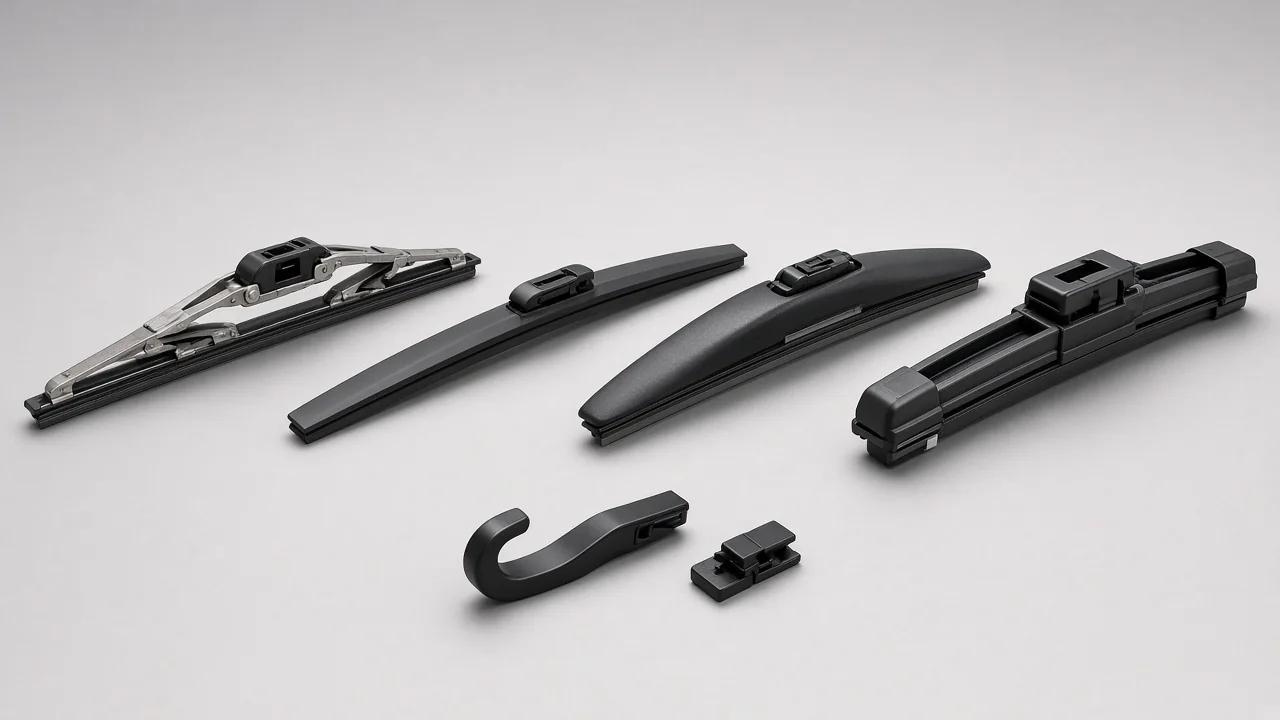
A windshield wiper looks simple, but the blade clipped to each arm is a carefully engineered part that decides how clearly you see in rain, sleet and road spray. Blades differ in frame design, edge material and the way they attach to the arm. Understanding those differences makes it easier to choose a replacement that suits your weather, your windshield and your vehicle.
What a Windshield Wiper Does and Why Blade Design Matters
The wiper system has one job: drag a flexible edge across the glass firmly and quickly enough to sweep away water, snow, bugs and road film. An electric motor drives a linkage that swings each arm back and forth, and spring tension in the arm presses the blade against the windshield. The blade does the real work. Its squeegee edge, made of rubber or silicone, must flip over at each reversal and stay sealed to the glass along its entire length.
Design matters because windshields are curved, and that curve changes as the blade sweeps. A blade that spreads pressure evenly keeps the edge in full contact; one with weak spots leaves streaks or dry strips. At highway speed, air flowing up the windshield can lift a poorly shaped blade. Blades are wear items, so streaking, chatter or skipped zones usually point to the blade before the arm or motor. Design type, edge material, climate and connector fit are the main factors to weigh.
Parts of a Windshield Wiper Blade and Arm
A blade assembly has four main parts. The squeegee, often sold separately as a refill, is the rubber or silicone strip that touches the glass. Behind it sits a metal or plastic spine, or in frameless blades a tensioned spring steel strip, that distributes pressure. Conventional blades add a hinged frame, while beam and hybrid blades use a spoiler or outer shell. Finally, a connector or adapter links the blade to the arm and largely determines whether a given blade will fit.
On the arm side, the wiper arm ends in a hook, pin or other mount, and a spring near the pivot holds it against the glass. The pivot shaft connects the arm to the linkage and motor. Most drivers replace the whole blade, though some designs accept a refill alone; that depends on how the blade is built. For a safe inspection, look for cracked or torn rubber, corroded frame hinges, a bent arm and a loose adapter, and avoid prying against the arm spring.
Conventional, Beam, Hybrid, Aero and Heavy-Duty Blade Designs
Conventional, or bracket, blades use a hinged metal frame that presses the refill against the glass at several points. They are inexpensive and widely available, but the open frame can pack with ice and snow, stiffening the hinges and lifting sections of the edge. A beam blade addresses that weakness with a frameless design: an internal tensioned spring curves the blade to hug the windshield and spreads pressure evenly along the whole edge. With no exposed joints, there are fewer places for ice to build.
Hybrid blades place a beam-style core inside an aerodynamic shell, combining even pressure with a look similar to a conventional blade. Aero blades feature an integrated spoiler shape intended to use airflow to hold the blade down at speed, though the term is often a marketing label applied to beam or hybrid designs. Heavy-duty blades use sturdier frames or wider refills for trucks, large vehicles and commercial use. Whatever the design, the vehicle's arm and connector still dictate which blades actually fit.
Silicone Versus Rubber Wiper Blade Edges
Most blades use natural or synthetic rubber, frequently coated with graphite or a PTFE-type finish that helps the edge glide and reduces noise. Rubber performs well when fresh, but sunlight, ozone and heat gradually harden it. A hardened edge no longer flips cleanly at each reversal, so it skips, squeaks and leaves streaks. Silicone edges generally resist UV and temperature extremes better, tend to leave a water-repelling film that helps rain bead off the glass, and typically cost more upfront.
Silicone is not automatically the better choice. On some glass or with certain washer fluids it can chatter, and windshields with factory coatings or aftermarket water-repellent treatments may change how either material behaves. A driver who parks outdoors under strong sun may find silicone holds up longer, while someone who garages the car in a mild climate might see little benefit over quality coated rubber. In freezing winters, blade design often matters as much as edge material, so judge by your conditions rather than the label.
Wiper Connector Styles: J-Hook, Pin, Bayonet and Clip Mounts
The J-hook is the most common connector. The end of the arm curls into a U-shaped hook, and the blade's adapter slides inside and locks in place. Hooks come in more than one width, so the adapter must match the arm. Other styles include the pin arm, where a side pin passes into the blade; bayonet mounts with a flat tongue; top-lock arms that latch from above; and pinch-tab mounts released by squeezing. A close look at the arm's tip usually identifies the type.
Universal blades often ship with several clip-on adapters to cover different arms, and each depends on a small locking clip. If that clip is loose, cracked or missing, the blade can detach mid-wipe and let the bare arm scratch the glass. When fitting, support the arm or lay a folded towel on the windshield so a released arm cannot snap onto the glass. Confirm a positive click, then tug gently. Match the length and connector listed for your vehicle instead of guessing.
Choosing the Right Blade Type for Your Climate and Vehicle
Climate should guide the design choice. In snow and ice, beam blades or dedicated winter blades with a protective boot resist packing and keep pressure more consistent. In hot, sunny regions, silicone or well-coated rubber may resist UV and heat damage better. Trucks, vans and commercial vehicles can benefit from heavy-duty designs. Then confirm fit using the owner's manual or a fitment lookup, checking driver and passenger lengths, connector type, and whether the rear wiper uses a different blade.
Before blaming the wrong type, rule out ordinary wear. Streaks, squeaking, missed strips and rubber that feels hard or shows splits usually mean the blade has aged, even if it was the correct design. Clean the glass and the edge first, since road film can mimic a worn blade. Seek professional help if the arm is bent or damaged, the arm spring feels weak, the motor or linkage grinds or clunks, or a correctly fitted blade still lifts off at highway speed.