Why Your Serpentine Belt Squeaks or Squeals and How to Stop It
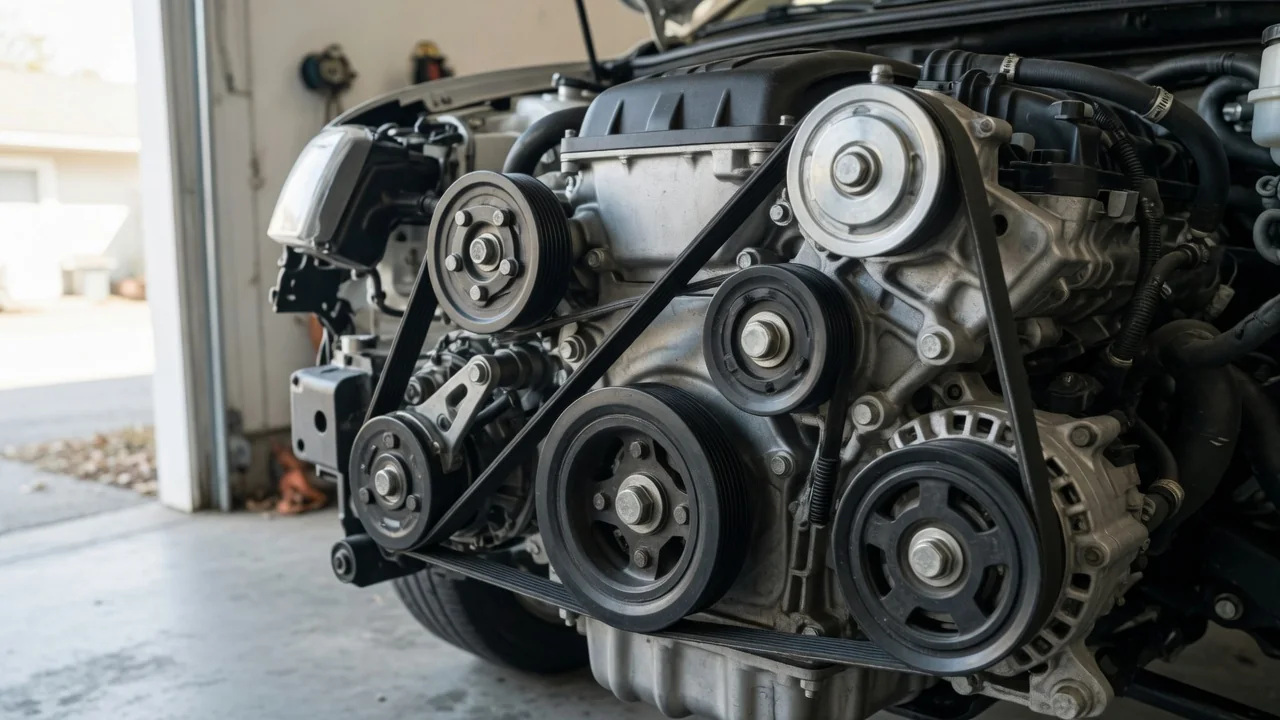
When a serpentine belt is squeaking or squealing, the sound is a symptom, not a diagnosis. A squeaky serpentine belt can point to belt wear, weak belt tension, poor pulley alignment, moisture, contamination, or a tired accessory pulley. Knowing why the noise happens at cold starts, during acceleration, or even after a new belt goes on helps you describe the problem clearly and choose a fix that lasts.
What Serpentine Belt Noise Can Tell You
A squealing serpentine belt means something in the accessory drive is slipping or rubbing. It does not prove that the belt itself has failed. Tension, pulley alignment, idler and tensioner bearings, and driven accessories such as the alternator, power steering pump, or air conditioning compressor can all play a part. From the driver's seat, note when the noise starts, how long it lasts, what the weather is like, and whether the pitch rises and falls with engine speed. These details help a technician narrow down the cause quickly.
In some cases you should pull over safely and shut the engine off instead of driving on. A rising temperature gauge, smoke, a burning rubber smell, a battery warning light, or suddenly heavy steering can mean the belt has slipped badly or come off. On engines where the belt drives the water pump or steering assist, those systems stop working. Before any look under the hood, turn the engine off, let it cool, and secure the vehicle. Keep hands, clothing, and tools away from belts and fans, because electric cooling fans can start without warning.
Wear, Tension, Alignment, and Pulley Problems
Belt wear shows up as worn ribs, a shiny glazed surface, frayed edges, or chunks of missing material. A glazed belt grips poorly, so it squeals as it slips over the pulleys. Many modern belts wear by gradually losing rib material rather than by cracking, so a belt without cracks is not necessarily in good condition. Rib depth and surface condition matter as much as general appearance, and a technician can judge wear against the manufacturer's criteria.
When belt tension is too low, the belt slips under load. On most modern engines, an automatic tensioner supplies that tension. A weak spring, a sticky pivot, or a worn damper can cause squeaks and chirps even when the belt is good. Tension should be checked with the vehicle-specific procedure, never by tightening to a guess, because too much tension can overload bearings. Misaligned accessory pulleys make the belt track poorly and cause repeat noise and edge damage. A dry pulley bearing or a dragging accessory can sound much the same, so the noise alone can't tell you which part needs replacing.
Why Noise Appears at Cold Starts or During Acceleration
Serpentine belt squeal when cold is common because rubber stiffens at low temperatures, and morning dew or humidity reduces grip on the pulleys. A marginal drive with slight glazing or weak tension may slip for a few seconds, then go quiet once parts warm up and the moisture evaporates. If the noise keeps coming back, it still deserves attention even though it fades after warm-up. It often means the drive is barely holding on, and that margin will shrink as parts age.
Serpentine belt noise when accelerating comes from quick changes in belt speed and accessory load. These changes can reveal slippage, a tensioner that can't keep up, or a pulley problem, but they don't prove which one is at fault. Oil or coolant on the belt reduces friction and can make the rubber swell. Still, residue near the drive doesn't confirm a leak until someone traces where it comes from. Note the conditions as they happen during normal driving. Don't accelerate hard on purpose, run the engine to watch the belt, or spray water on it.
Why a New Serpentine Belt Still Squeals
A common question is why a serpentine belt squeals after replacement. Often the new belt is fine, and the old tensioner, a misaligned pulley, a noisy bearing, or a dragging accessory was simply never fixed. A new belt can also squeal if it has the wrong length or rib count for the engine and accessory setup, is routed incorrectly, or isn't fully seated in every pulley groove. Before looking elsewhere, confirm the specified part, the routing, and the seating.
A fresh belt can turn noisy almost immediately if it gets contaminated during installation, for example from greasy hands, fluid drips, or cleaner on the pulleys. An oil or coolant leak that was never fixed will do the same over time. If the noise continues, go back to the installer and describe exactly when it happens, how long it lasts, and the weather or driving conditions. Don't accept ongoing squealing as normal break-in. It usually means something in the drive still needs work.
Safe Fixes That Address the Source of the Squeal
The reliable way to fix a squeaky serpentine belt is to match the repair to what has actually been found. A worn or glazed belt needs replacing, a leak that is contaminating the drive needs fixing, and a faulty tensioner or pulley needs proper service. With the engine off, an owner can safely look over the visible parts of the belt and check for oily or crusty residue nearby. Don't remove guards, release belt tension, or reach into tight spaces around the drive.
Stopping a squealing serpentine belt also means avoiding shortcuts. Belt dressing, lubricants, and household sprays don't fix anything. They can contaminate the drive, attract dirt, and hide the symptoms for a while. Professional testing should check the belt's condition and fit, how the tensioner works, pulley alignment, bearing condition, and how much drag each accessory creates. After the repair, confirm the fix under the same conditions that caused the noise, such as a cold morning start or normal driving. Don't run risky tests at home.
Choosing a Belt for Quiet Operation
If you're shopping for the quietest serpentine belt, know that no belt can guarantee quiet running while tension, alignment, contamination, or pulley problems remain. A quiet serpentine belt starts with the correct part, chosen from the vehicle manufacturer's specification and verified fitment information for your exact engine and accessory setup. Equipment differences, such as whether the vehicle has air conditioning or which alternator it uses, can change belt length or routing. Matching by engine size alone may not be enough.
The correct length, rib count, and rib profile let the belt seat fully and share the load across every groove. The specified material and construction let it grip and wear the way the drive was designed to. Instead of chasing brand claims, check the belt and the other drive parts together, because a new belt on a tired tensioner or noisy idler pulley may soon squeal again. Follow the inspection guidance for your vehicle, and have the drive checked whenever the squeaks return.