Why Your Car Makes a Whining or Whirring Noise While Driving or Accelerating
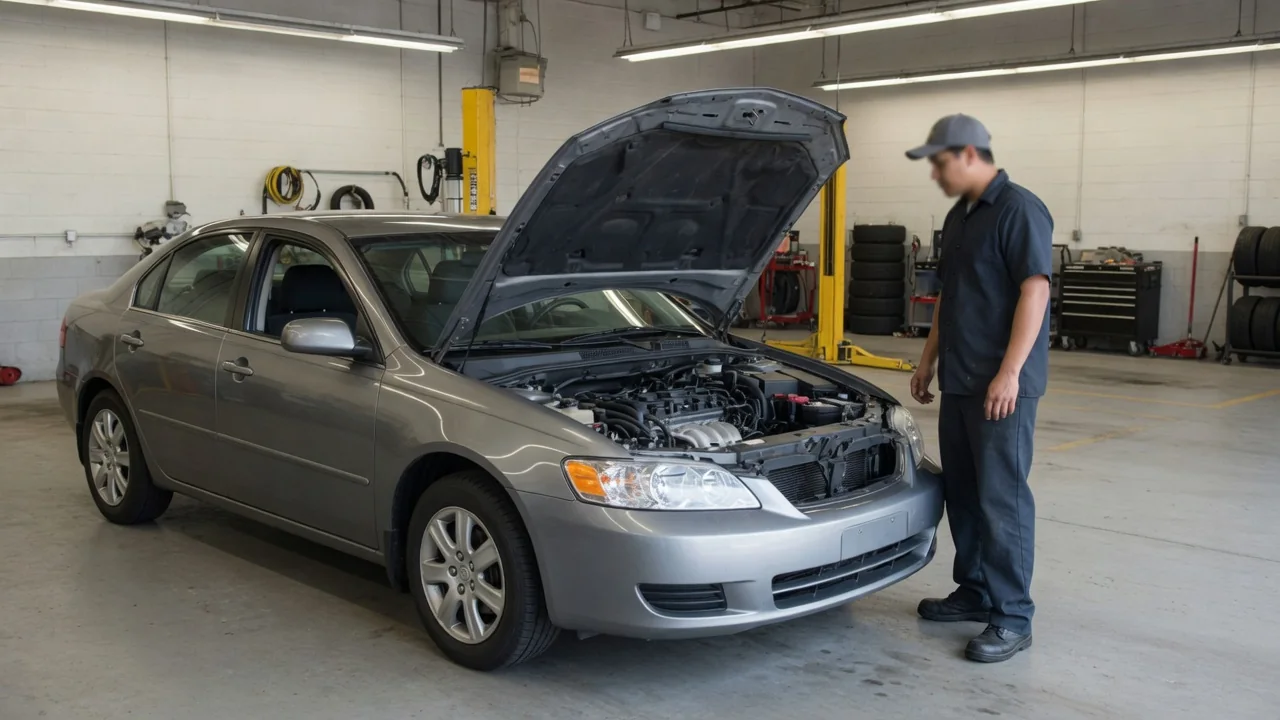
A whining noise when your car accelerates is unsettling, but the sound alone doesn't tell you which part is responsible. A whine or whir can come from the accessory drive, the power steering, the transmission, the differential or the wheel bearings. The quickest way to narrow it down is to work out whether the noise follows engine RPM, road speed or drivetrain load. Then note the other symptoms that come with it, because they show how urgent the problem is.
Record When and Where the Whine Appears
Whine and whir describe a sound. They don't confirm a fault. A high, steady tone might come from a spinning bearing, meshing gears or a hydraulic pump, and pitch alone can't tell these apart. Start by noting when your car makes the whining noise: at idle in park, only when you accelerate, at a steady cruise, or during ordinary turns into parking spaces and around corners. Each situation loads different components, so a careful record narrows the list far better than guessing which part sounds guilty.
Next, note the history. Is the whining noise new, louder than it was a few weeks ago, or only there on cold mornings? Does it come with vibration, a warning light, or a change in how the car steers, shifts or charges? Keep in mind that sound travels through the subframe, body panels and cabin. A whine that seems to come from behind the rear seat may start under the hood. Treat the apparent location as a starting clue, not a verdict.
Identify What Changes the Noise During Acceleration
Pressing the accelerator changes several things at once. Engine RPM climbs, road speed rises, and the transmission and differential carry more torque. That's why a car making a whining noise when accelerating could point to the accessory drive, the gearbox or the axle. A good first check is simple. Park outdoors, never in a closed garage, set the parking brake and listen from the driver's seat at idle. Notice whether the whine is there and whether it follows the idle speed as it settles after a cold start. Don't rev the engine hard.
On the road, keep your attention on traffic and let a passenger listen and take notes. If the pitch rises and falls with each upshift, just as the tachometer does, something turning with the engine is likely. If it keeps building with speed regardless of gear, the driveline or wheels become more likely. If it fades as soon as you ease off the accelerator, it may be load-sensitive, which often means gears. Treat each pattern as a clue, not proof. Skip coasting in neutral, hard launches and swerving, and don't drive a car with serious symptoms just to test it.
Investigate Accessory Drive and Power Steering Clues
The serpentine belt drives the alternator and other accessories, running over idler pulleys and a tensioner. Worn alternator bearings, dry pulley bearings, a weak tensioner or a glazed, misaligned belt can all make a whine that rises and falls with engine RPM. Because several components share one belt, the noise alone can't tell you which part needs replacing. A technician may use a mechanic's stethoscope, briefly isolate components and test the charging system before recommending parts.
A steering-related whine only applies if the vehicle has hydraulic power steering. Many newer cars use electric power steering, which has no conventional hydraulic pump, so a pump diagnosis doesn't fit them. On a hydraulic system, notice whether the whine grows during normal parking maneuvers and whether the steering feels heavier. Don't hold the wheel against its stops. Limit your own checks to what you can see with the engine off and cool: a cracked belt or fluid seeping around the pump or hoses. Check the fluid level only as your owner's manual describes.
Recognize Transmission and Differential Clues Under Load
Transmission and differential gears mesh under torque, so their noise often changes with acceleration, gear selection and load. A whine that appears only in certain gears, or only when you're on or off the throttle, points toward the drivetrain. Sound alone still can't identify which internal gear set, bearing or pump is at fault. Write down any other symptoms: harsh or late shifts, slipping where the revs rise without a matching gain in speed, delayed engagement into drive or reverse, vibration, or fresh fluid spots under the car.
Some drivetrains make a faint hum as part of their normal operation, so what matters is whether this whine is new or getting worse for your particular vehicle. A professional assessment usually includes a controlled road test and a fluid level and condition check using the manufacturer's procedure. It can also include a review of scan data where it applies, plus pinpointing the noise on a lift. Any stored codes are evidence to interpret, not proof that a part has failed. Avoid generic top-ups or additives, because the wrong fluid can make the problem worse.
Assess a Whir That Continues While Driving
When your car makes a whining noise while driving at a steady speed with light throttle, the sound is probably tied to road speed rather than engine load. That points toward the wheel bearings, the tires or the final drive. A hum or whir that grows as speed climbs and doesn't change through gear shifts fits this pattern. However, unevenly worn tires or aggressive tread can sound a lot like a bearing, so the source stays uncertain until someone inspects it.
Notice whether the whir continues on smooth pavement, changes on coarse surfaces, or shifts through normal highway curves. Never weave on purpose to bring out the noise. Wheel bearing noise travels through the suspension and body, so it can seem to come from the wrong corner. A change in the noise while turning can't reliably tell you which side has failed. Technicians check tire wear and feel for bearing play and roughness with the vehicle properly supported on a lift. Never raise the car at the roadside or run the driven wheels on improvised supports.
Decide When to Stop Driving and What to Tell the Shop
Pull over safely and arrange roadside assistance if the whine comes with lost steering assist, severe vibration, grinding, smoke, a rising temperature gauge or loss of drive. These combinations suggest a component that could affect control or leave you stranded. A charging warning light, fluid leaks, shift problems or a noise that is getting worse quickly all need prompt professional attention. Let your symptoms, the owner's manual and any dashboard messages guide whether you keep driving.
A mild whine with no other symptoms can't tell you how long the car is safe to drive, and no reliable mileage figure exists. Give the shop useful details. Include the year, make, model, engine and mileage, when the sound started, and whether it follows RPM or road speed. Say how accelerating, easing off or turning changes it, and mention any warning lights and recent work such as new tires or a new belt. A recording made by a passenger or with the car parked helps the technician hear exactly what you hear.