Whirring Noise From Your Car: Causes and Next Steps
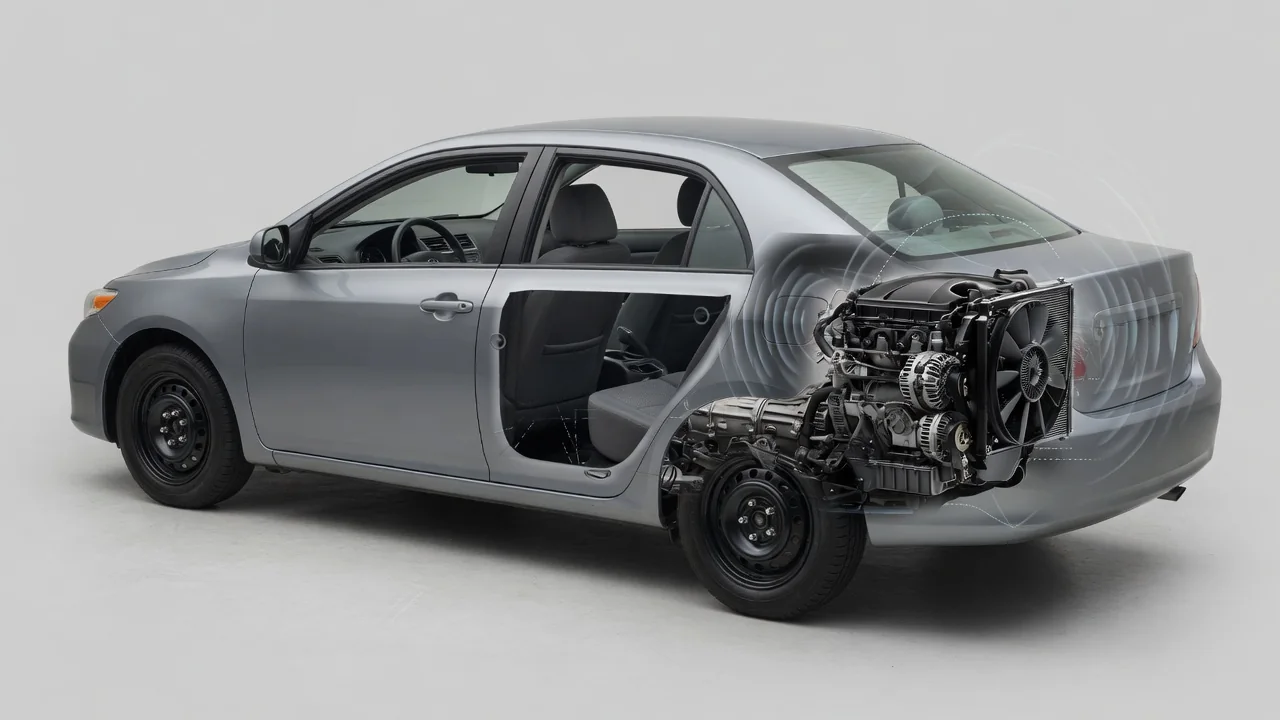
A whirring noise in a car is a sustained, rotating, motor-like sound that often tracks road speed or engine RPM. Drivers notice it while parked, after startup, or when driving, and the same tone can come from a wheel bearing, tires, a cooling fan, the cabin blower, the transmission, or an accessory pulley. A new, persistent, or worsening whir is worth documenting even if the vehicle still feels normal.
What a Whirring Sound Can Tell You
When a car is making a whirring noise, the tone usually stays in a fairly steady pitch rather than ticking, knocking, or popping. Many people call the same event a whine, a hum, or a fan-like buzz, so the label is a starting point rather than a diagnosis. The sound often comes from something that spins: a wheel bearing, tire tread, a cooling fan, a cabin blower, gears in the transmission, or an accessory pulley on the engine. Pitch and volume can change with speed, but that pattern still does not name the part.
A car making whirring noise can still steer, stop, and idle as usual, which makes it easy to wait. The reason to pay attention is change: a whir that was not there last week, that grows louder, or that stays after the engine or the road should have gone quiet. Rotating parts can wear gradually, and early notes help a technician compare conditions later. Sound alone cannot prove a failure, yet a persistent whir is evidence that something in the rotating path is working harder or differently than before.
Details to Note When the Noise Appears
Why a car makes whirring noise is often clearer from timing than from the pitch itself. Note whether the sound appears while the vehicle is parked, during ordinary driving, shortly after startup, or after shutdown when the engine is already off. If it follows road speed, wheels or tires are more plausible; if it follows engine RPM, belt-driven accessories or internal rotating parts rise on the list. Climate-control settings also matter, because a cabin blower or cooling fan can run independently of how fast you are traveling.
A car making a whirring noise when driving can seem loudest near a door, the dashboard, or a wheel well, yet sound travels through the body and can mislead localization. Write down any vibration in the steering wheel, floor, or seat, and whether a warning light came on at the same time. Keep attention on the road while moving; make notes only after you have parked safely. Ordinary acceleration is enough context; hunting the sound with extra speed or aggressive maneuvers is unnecessary and distracting.
Whirring That Follows Road Speed
A whirring noise in a car that tracks road speed rather than engine RPM often comes from parts that turn with the wheels. Wheel bearings and tire tread can both produce a rotational tone that gets higher as speed rises. A coarse surface can amplify tread roar, and an existing whir may change slightly in a normal corner, but those observations do not prove a bearing has failed or show which hub is involved. Uneven tread wear on more than one tire can create a similar steady sound that simply follows how fast you are traveling.
Owner checks should stay visual and parked. With the vehicle securely stopped, look for obvious tire damage or unusual tread wear. Do not lift the vehicle, spin a wheel, or swerve to test a suspected bearing. A technician can inspect the tires, hubs, and other rotating driveline components under controlled conditions, using the speed relationship you noted as a starting point. That visit is warranted when the whir stays with road speed at a steady engine RPM, pointing away from belt-driven accessories.
Whirring Linked to Engine RPM or Accessories
A car making a whirring noise that follows engine RPM rather than road speed often involves belt-driven accessories. An accessory pulley, a tensioner, an alternator, a power-steering pump, or an air-conditioning compressor can all contribute a motor-like tone that rises as you rev and falls as the engine settles. Noise during startup, warm-up, or when the air conditioner cycles on can add useful context, but those moments still do not prove which component is responsible. The same pitch can also originate inside the engine or transmission, which is why the RPM link is a clue, not a verdict.
Keep listening from inside the cabin or from a safe distance away from belts and fans. Do not remove a belt, touch rotating parts, or use a screwdriver or hose as a listening tool. Separating accessory noise from internal engine or transmission sources takes inspection under load and at idle, often with the climate system and electrical loads switched in a controlled way. A shop can confirm whether a pulley or tensioner is the source without asking you to improvise tests that put hands near spinning hardware.
Fan and Transmission Clues
A cabin blower often answers the climate fan speed you select and seems concentrated near the dashboard or footwells. If the whir changes with that setting, the interior motor is a plausible source even while parked. A cooling fan can run in traffic or continue after shutdown, depending on the vehicle and conditions, and usually seems to come from the front of the engine bay. Expected fan behavior varies, so a post-shutdown whir is not automatically a fault, yet a new harsh tone then is still worth reporting.
Transmission or driveline whirring may appear during ordinary acceleration or around gear changes, because gears and bearings inside the unit spin with vehicle motion and engine load. Sound alone cannot establish internal damage; a healthy transmission can still make a noticeable tone under some conditions. Seek professional testing when the whir comes with delayed engagement, abnormal shifting, or a loss of drive. Leave fluid checks and service procedures to the shop, since the wrong fluid or an incomplete fill can create new problems that the original noise did not cause.
When to Stop Driving and What to Tell the Shop
If the car is making a whirring noise with overheating, smoke, severe vibration, impaired steering or braking, or loss of propulsion, pull over safely and arrange assistance. An isolated sound cannot establish whether further driving is safe, because the same whir can be a cabin blower or a failing hub. Treat a new or worsening whir as a reason for prompt assessment even without a warning light. Waiting for a grind or a pull to one side only delays inspection of rotating parts that already announced a change.
Tell the shop when the sound started, whether it appears parked or when driving, and how it relates to road speed, engine RPM, ordinary acceleration, and climate settings. Mention warning lights and any recent service, because a new belt, tire, or fluid change can shift which rotating part is most likely. Diagnosis should reproduce the symptom and then inspect the matching area before anyone recommends replacement parts. A whir is evidence to interpret, not proof that a wheel bearing, pulley, or transmission component has failed, and manufacturer-specific behavior still needs vehicle-specific confirmation.