Why Is My Car AC Making a Hissing Noise?
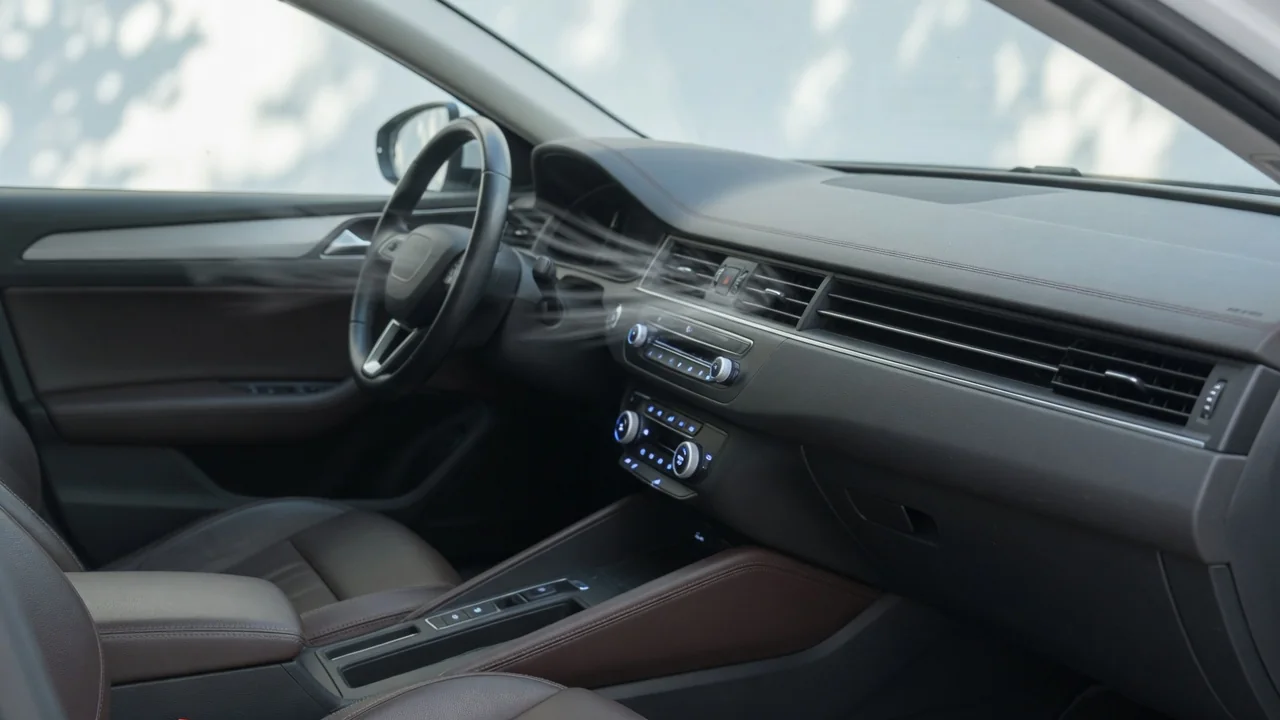
A hissing noise from car AC can appear at the vents or under the hood, when the air conditioner is switched on or after it shuts off. Refrigerant flow, an expansion valve, and pressure equalization can all produce that sound. Some hissing is ordinary; other times a car AC making a hissing noise points toward a leak or a flow problem. Timing, location, and cooling performance help you decide whether the air con needs professional attention.
What a Hissing Sound Can Tell You About Your Car AC
When refrigerant moves through a car air conditioner, it can make an audible hiss at the vents or elsewhere in the system. That sound is evidence of flow and pressure change, not proof that a part has failed. A car a/c hissing noise may be brief or ongoing, faint or obvious, and it may start as soon as the compressor engages. Note when the hissing begins, how long it lasts, where it seems to come from, and whether cabin cooling has changed from what you usually feel.
A familiar, short-lived hiss that has not changed with cooling performance is often less urgent than a new, persistent, or increasingly noticeable sound. When the AC in the car is making a hissing noise and also delivering weaker air, the combination deserves attention even if you cannot name a component. Sound description alone cannot identify an expansion valve, evaporator, leak, or restriction. Treat the hiss as a clue about the air conditioner as a whole, then pair it with timing, location, and how well the system still cools.
Why the AC May Hiss When Switched On
Drivers often notice a car AC makes hissing noise when turned on because refrigerant starts moving and system pressures change as cooling begins. Liquid refrigerant passing a metering device can flash toward a lower-pressure state, and that transition may be heard as a hiss. Some vehicles use an expansion valve; others use a different metering design, so the same sound does not mean every car air conditioner is built the same way. The source may be near the evaporator, yet the hiss can still reach the cabin through the ducts.
Pay attention to whether the hissing noise when AC is on in the car settles after a short run, continues through normal operation, or comes back as the compressor cycles. A brief start-up hiss with strong cooling can be consistent with ordinary refrigerant flow. Persistent hissing with reduced cooling is a reason for AC pressure testing and a proper diagnosis, not a conclusion that refrigerant is low or that the expansion valve has failed. Charge, restriction, and valve condition all require vehicle-specific confirmation rather than a guess from sound.
Why Hissing Can Continue After the AC Shuts Off
After the compressor stops, high-side and low-side pressures in many systems begin to equalize, and refrigerant can still move through the circuit for a time. That pressure equalization may produce a temporary hiss even though cooling demand has ended. The duration depends on design, ambient temperature, recent load, and how the car air conditioner was last used, so there is no universal number of seconds that marks a healthy system. A fading hiss after shutoff is therefore a pattern to compare with your own vehicle rather than a stopwatch test.
If the car air conditioner making a hissing noise after you switch it off has always done so, the sound fades, and cabin cooling has stayed effective, that pattern can be consistent with normal operation. The situation changes when the post-shutoff hiss becomes much louder, lasts far longer than you remember for that vehicle, or appears alongside weaker air from the vents. Those shifts do not by themselves prove a refrigerant leak, but they are useful reasons to have the system evaluated instead of assuming the noise is harmless.
Locating Hissing at the Vents or Under the Hood
A hissing noise from car AC often seems to come from the dashboard vents even when the refrigerant event is happening at the evaporator or a nearby metering device. Ducts and the blower housing carry sound into the cabin, so the apparent location is not a reliable map of the source. The same car aircon making a hissing noise might also be noticed under the hood if you listen from outside. Treat vent-side and under-hood impressions as clues about where the sound travels, not as a parts list.
While the vehicle is safely parked, note whether ordinary fan-speed changes and AC controls alter the hiss. A sound that tracks blower speed may involve airflow through the vents, yet that observation cannot exclude a refrigerant-related issue at the same time. If you listen under the hood, stay at a safe distance and keep hands and objects away from cooling fans, belts, hot surfaces, and refrigerant fittings. Do not probe hoses or service ports to chase the noise. Record what you hear and when it changes, then leave close inspection to a technician.
When Hissing May Signal a Leak or Refrigerant Flow Problem
A refrigerant leak, an incorrect charge, or a flow restriction can all reduce cooling performance and may occur with a car AC making hissing noise. None of those conditions is automatically the most common explanation for the sound. Weak cooling, cooling that comes and goes, and a hiss that is new compared with the vehicle's usual air conditioner character are the observations worth reporting. The car air conditioner makes a hissing noise in some of those cases because refrigerant is moving under unusual pressure or quantity, not because a single part has already been proven failed.
Many leaks never produce an audible hiss, and a hissing noise does not confirm a leak or show where refrigerant is escaping. Dye, electronic leak detection, and pressure readings belong in a shop procedure, not in a conclusion drawn from cabin sound. Replacing an expansion valve or adding refrigerant because the AC is making a hissing noise in the car can leave the real restriction, leak path, or charge problem untouched. Diagnosis should match the vehicle's system and measured conditions rather than a parts swap driven by noise alone.
Safe Next Steps and What an AC Technician Can Check
If you are asking why your car AC makes a hissing noise, start by recording the sound from the cabin and writing down when it happens. Note outdoor conditions, engine running or off, AC and fan settings, how long the hiss lasts, and whether cooling performance still matches what you expect. Persistent new hissing, or hissing with reduced cooling, is a reason to arrange diagnosis rather than waiting for the air conditioner to fail outright. If the noise becomes sudden and severe, switch the AC off and have the vehicle checked.
A technician can measure vent temperature, perform AC pressure testing, look for leak evidence, and evaluate refrigerant charge with equipment and procedures that match the vehicle. Those checks interpret a car A/C making hissing noise as a symptom, not as a parts order. Do not open refrigerant lines, press service valves, vent refrigerant, apply sealant, or recharge the system from sound alone. The car AC making a hissing noise may still be ordinary flow, or it may mark a charge or restriction issue that only measured data can sort out.