Why Is My Car AC Making Noise? Common Sounds and What They Mean
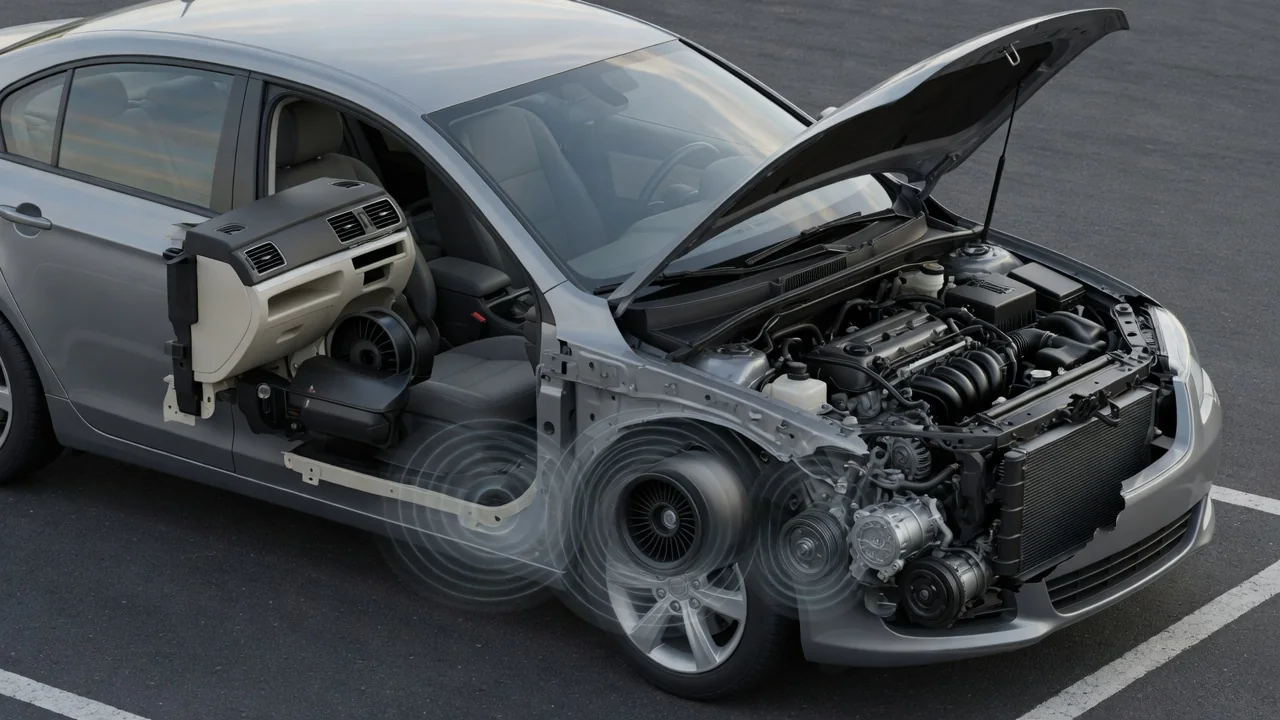
When an AC in a car makes noise, the sound is a clue about airflow, drive parts, or refrigerant flow rather than a finished diagnosis. Air conditioning noise can come from the vents, behind the dash, or under the hood, and it can travel through ducts. Note the sound type, where it seems loudest, and whether the car makes noise when AC is on.
Locate the Noise and Note When It Starts
Unfamiliar AC sounds can start at the vents, behind the dashboard, or under the hood. Sound travels through air ducts and body panels, so a whistle at a register may begin farther back. Organize observations around sound type, apparent location, duration, cooling performance, and the control setting that triggers it. A sound tied to AC operation identifies a condition to investigate, not a confirmed failed part.
From the driver's seat while parked outdoors, change one control at a time. Raise and lower blower speed to see whether vent airflow noise follows the fan. Switch AC demand on and off, then try face, floor, and defrost modes and recirculation. Note whether aircon noise tracks compressor request, fan speed, or a mode change. These parked checks sort noise from the car AC without proving which component failed.
Whistling and Hissing Around the Vents
A car AC making whistling noise often comes from vent airflow through a partly closed louver, a restriction, or a gap in the air ducts. Whistling does not prove which part needs attention. Open accessible louvers, then change blower speed. If the whistle rises with fan speed or fades when a register opens, the air path is a better first suspect than the compressor. A car air conditioner that makes whistling noise can still be a grille seating issue.
If the owner's manual shows a readily accessible cabin air filter, check it for obvious debris or poor seating without dashboard disassembly. A clogged or cocked filter can whistle as air squeezes past. Refrigerant flow can hiss near the evaporator or expansion device, but sound alone cannot establish a leak or charge problem. Persistent hissing with weak cooling warrants professional testing, not adding refrigerant because of noise from the car air conditioner.
Rattling, Ticking, or Humming Behind the Dashboard
Rattles, ticks, or a hum that follow blower speed often involve the blower motor area. Debris in the housing, a wheel that rubs, motor wear, or vibration in the case can sound similar. Before blaming an internal HVAC part, check loose vent trim and cabin objects that can transmit a rattle. A car air conditioner making noise at every fan setting, even with cooling off, fits cabin airflow hardware more than compressor load.
Repetitive clicking during temperature or vent-mode changes can involve a climate control actuator or a binding air door, but that still needs confirmation. Limit owner checks to accessible surfaces and listening; leave blower access, electrical testing, and dashboard removal to qualified service. If the AC is making noise in the car only during mode changes, sound alone does not justify replacing an actuator. Several air doors can share the same path behind the dash.
Squealing, Grinding, or Knocking Under the Hood
When the car makes noise when AC is on, extra demand can reveal a compressor, an applicable drive belt or belt tensioner, or a cooling fan. Squealing, grinding, and knocking overlap as clues rather than reliable diagnoses. A slipping belt, a chattering tensioner, a fan touching a shroud, and a distressed compressor can sound similar from the cabin. Treat car A/C noise as a location and timing clue, not a parts list.
Compressor drive arrangements vary. Many vehicles use a belt-driven compressor with a clutch; others use an electric compressor with no accessory belt at that unit. Belt or clutch explanations apply only where those parts are fitted. Do not reach into the engine bay, touch belts or fans, or hunt the noise with tools while the engine or electric fans run. After shutdown, look only at still, accessible components if the air con noise seemed to come from under the hood.
Why the Noise Appears When AC Is Switched On
Switching on AC demand can engage the compressor and command cooling fans, and on many vehicles it also changes engine load. That is why a car making noise when AC is on may involve more than one system. Record whether the noise begins immediately, repeats in cycles, or continues after AC is switched off. Immediate onset with compressor request points toward drive or compressor activity on applicable cars. Delayed or cycling sound can follow fans, pressure changes, or automatic climate logic.
The cabin blower can run independently of cooling, so fan-related noise may continue after you cancel AC. Automatic climate control and defrost can still request compressor operation even when the AC button looks off. An AC-on trigger does not prove compressor failure, because the cooling fan, belt drive, and refrigerant flow can start together. If the car makes noise when A/C is on but stays quiet with the blower alone, document that split so cabin air noise can be separated from under-hood sources.
Brief Operating Sounds and Signs to Stop Using the AC
Not every AC noise in a car is a fault. Where a clutch is fitted, a brief engagement click can occur when the compressor is requested. Cooling-fan airflow and a short refrigerant-flow sound can also appear in normal operation. Those events are typically brief and do not grow. A new, persistent, or worsening sound is different, especially with weak airflow, lost cooling, or extra vibration. That combination is a reason to arrange inspection rather than keep raising the system.
Switch off AC if severe squealing, grinding, or knocking begins. If the noise continues or drivability is affected, stop the vehicle safely. Smoke, a burning smell, or an overheating warning are reasons to stop and seek assistance. Switching off the air conditioner does not make continued driving safe when those warnings remain. Harsh, sudden air conditioning noise deserves canceling the AC request first, then a safe stop if the sound or temperature warning does not clear.
What to Record for an AC Noise Diagnosis
Record the sound while parked and note climate settings, noise location, duration, vent airflow, and cooling. Write whether the air con noise happens only with AC requested, only with the blower, or in both cases, including recirculation and mode. That log turns a complaint that the car AC makes noise into a pattern a technician can reproduce. Mention any recent filter change, collision, or work near the dash or belts.
A technician may inspect the blower and air doors, check applicable belt-drive parts, and evaluate compressor or cooling fan operation. Refrigerant pressure and leak testing are professional procedures when weak cooling or persistent hissing justifies them; noise alone does not justify adding refrigerant. Repair recommendations should follow a confirmed source, without a promised part replacement or cost. A weird noise from the car AC is explained by locating the sound, then testing the parts that produce it.