Why Does Rain Change Brake Feel After Parking?
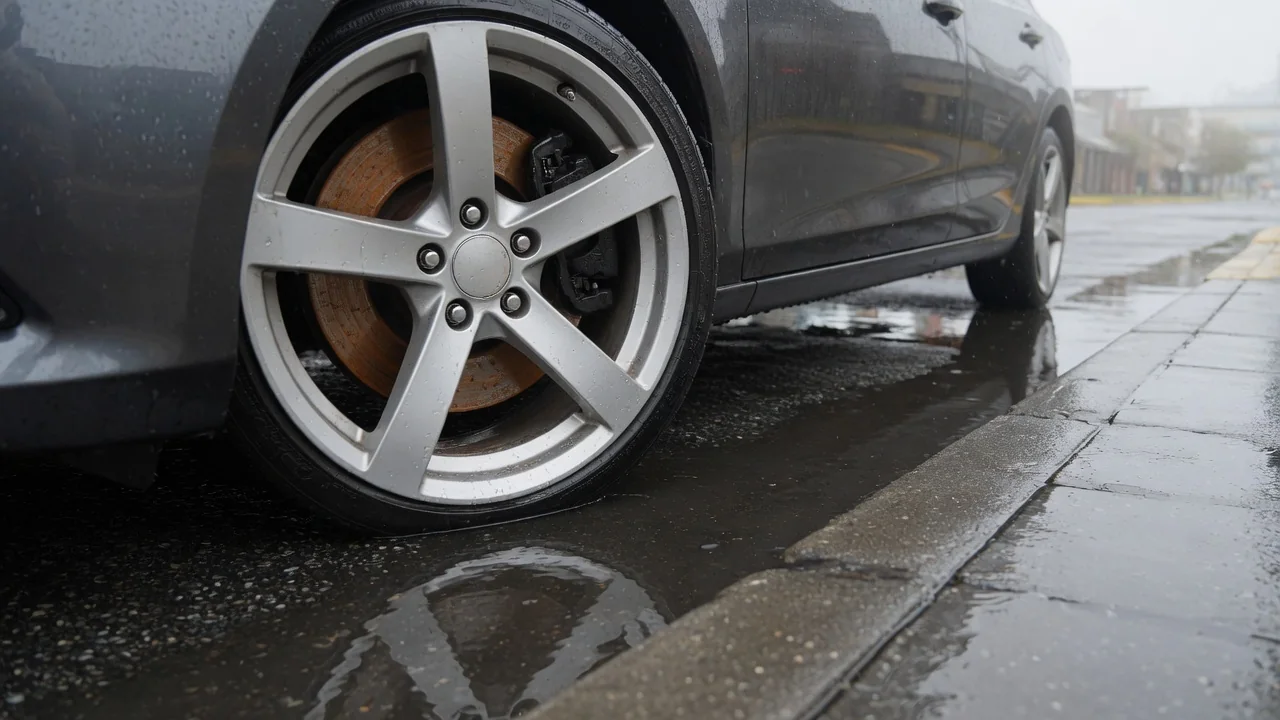
If your car sat outside in the rain overnight, the first press of the brake pedal can feel different. The brakes may feel a little grabby or slightly weak, or you may hear a scraping sound. In most cases this is a normal reaction of bare metal and friction material to moisture, and it fades within a few stops. This guide explains why wet brake surface feel changes after parking, what the first stops typically reveal, and which symptoms point to a fault that rain only made visible.
Surface film
Most modern cars use disc brakes on at least the front axle, and the rotors are usually made of cast iron. The friction faces of those rotors are bare metal with no paint or coating, because the pads need direct contact with the iron. When rain, mist, or even heavy dew settles on that exposed surface, oxidation starts quickly. Within hours a thin layer of surface rust, often called flash rust, can form and give the rotor a brownish tint. Some rotors have coated hubs or edges, but the area where the pads sweep stays uncoated by design.
That oxide layer is not the only thing on the rotor. Water can remain as a film between pad and rotor, and road spray can leave a mix of grime, brake dust, and other residue. Friction material is somewhat porous, so the pads can also hold a small amount of moisture near their surface. Each of these changes the friction between pad and rotor compared with a clean, dry, slightly warm surface. Water tends to act as a lubricant and reduces the initial bite, while a light rust layer can do the opposite and make the first contact feel rougher or more abrupt.
Where the pads rested against the rotor while the car was parked, the metal underneath is shielded differently from the exposed area. After a longer wet period this can leave a visible outline of the pad on the rotor face. On drum brakes, which some vehicles use at the rear, moisture trapped inside the drum can make the shoes stick lightly to the drum surface, especially if the parking brake was applied.
First stops
The first few brake applications after a wet parking period do the cleaning work. As the pads sweep the rotor, they wipe off water and scrape away the thin rust layer. That process explains the common sensations: a scraping or grinding noise for the first stop or two, a light shudder, a slight delay before the brakes bite, or, in contrast, a sharper grab than usual. Which of these you notice depends on how much moisture was present, how long the car sat, the pad compound, and the brake design, so two cars parked side by side may not behave the same way.
Pedal feel itself is governed mostly by the hydraulic system, which is sealed, so a single rainy night does not change the fluid or the normal pedal travel. What changes is the response at the friction surfaces. Drivers often describe this as a different pedal, when the travel is actually normal but the car slows less or more than expected for the same foot pressure. Once the film is wiped off and the surfaces warm slightly, friction usually returns to its familiar level. Brake fluid does absorb moisture over time, but that is a gradual process measured in long service intervals, not something caused by parking in rain.
A car held by the parking brake may release with an audible clunk or a brief hesitation as stuck shoes or pads break free. That is typically harmless if it happens once and the car then rolls freely without any sign of drag.
Persistent fault
The key distinction is duration. Normal wet-brake behavior fades after a handful of moderate stops. If the change is still present after the brakes have had time to clean and dry, rain has likely exposed an existing problem rather than created a new one. Warning signs include pulsation that continues through the pedal or steering wheel, the car pulling to one side under braking, grinding that does not stop, a burning smell, a wheel that stays noticeably hotter than the others, or a pedal that feels soft, sinks, or travels farther than usual.
Several conditions are commonly associated with these symptoms. Caliper slide pins and pistons can corrode and stick, so one pad drags or fails to apply evenly. Heavy, repeated rusting where the pads sat can leave uneven deposits or pitting on the rotor face that normal braking cannot fully remove. Pads worn close to their limit can allow metal-to-metal contact, which may sound similar to rust being scraped off but does not go away. Friction material contaminated by oil or brake fluid performs poorly in any weather. A soft or sinking pedal points toward the hydraulic system and should not be attributed to rain at all.
A brake or ABS warning light, fluid visible around a wheel, or a sudden drop in stopping power are reasons to stop driving and have the vehicle inspected rather than to keep testing it on the road.
Practical implications and limits
After parking in rain, it makes sense to treat the first one or two stops as a check: brake gently at low speed, ideally where no one is following closely, so you learn how the brakes respond before you need them in traffic. Leaving extra following distance for the first part of the drive gives the surfaces time to clean up. Some vehicles include a feature that lightly applies the pads in wet conditions to keep the rotors clear of water; whether your car has one, and how it operates, is vehicle-specific and described in the owner's manual.
Cars that sit outdoors for long stretches tend to show these effects more strongly, and regular driving helps keep rotor faces clean. In freezing weather, wet parking brake components can freeze in place. Recommendations on using the parking brake in those conditions differ between designs, so the owner's manual for your specific vehicle is the right reference.
These explanations describe general mechanisms and cannot diagnose an individual car. Brake hardware, pad compounds, and driver assistance systems vary widely, so identical weather can produce different sensations in different vehicles, and there is no universal number of stops after which every car should feel normal. When a change keeps returning or you are unsure whether what you feel is normal, an inspection by a qualified technician gives a reliable answer that self-testing cannot.