Why Do Some New Cars Receive a Road Test Before Shipping?
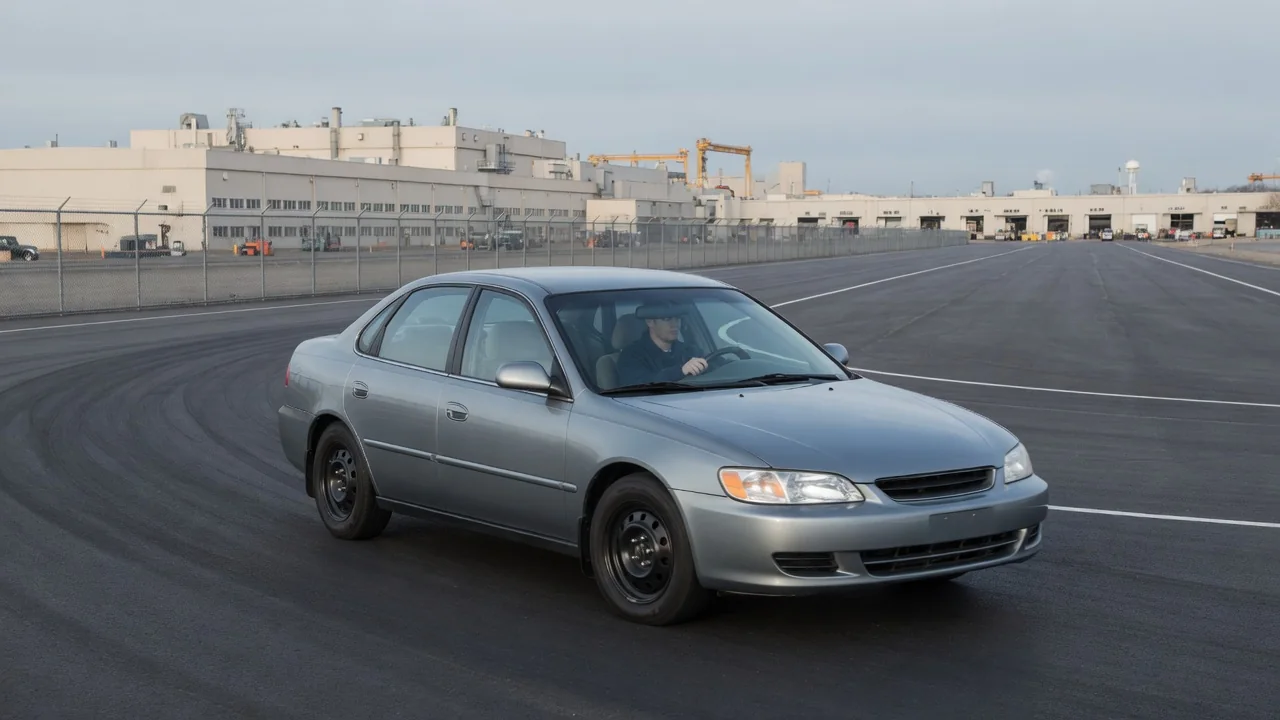
Every new car goes through a series of inspections before it leaves the assembly plant, but some are also driven on a short test route or track first. A new vehicle factory road test exists because certain faults only show up when the car moves under its own power, such as a pull to one side, a brake judder, a wind whistle, or a rattle from a trim panel. Below is what those drives check, why noise gets special attention, and how problems are reworked.
Dynamic Checks That a Stationary Inspection Cannot Fully Cover
Much of end-of-line testing happens on stationary or semi-stationary equipment. Many plants use roller rigs, sometimes called rolls or chassis dynamometers, where the drive wheels spin on drums. This lets inspectors exercise the engine, transmission, speedometer, and brakes without leaving the building. Alignment machines set wheel angles, headlamp aimers adjust the beams, and diagnostic tools read the electronic control units for stored fault codes. These stations are efficient and repeatable, which is why they form the core of final inspection in high-volume production.
A drive on real pavement adds conditions that rollers reproduce only partly. On an actual road, the steering, suspension, and tires interact with bumps, crowned surfaces, and cornering loads. An inspector can feel whether the car tracks straight with the steering wheel centered, whether the steering returns smoothly after a turn, and whether braking from speed stays stable without pulsation. Other items that can be easier to judge during a real drive include transmission shift quality under varying throttle, cruise control engagement, driver-assistance functions that depend on sensing the surroundings, and parking brake holding on a slope.
Whether every vehicle gets this drive, or only some, varies by manufacturer, plant, and model line. Some factories route all units over a short test circuit. Others drive a statistical sample as a quality audit, or reserve road testing for newly launched models, low-volume vehicles, and cars that flagged a concern at an earlier station. The general purpose stays the same: confirm that the assembled vehicle behaves as intended as a whole, not just that each part was installed.
Noise, Vibration, and Rattles
Noise is one of the main reasons a test drive is valued. Buzzes, squeaks, rattles, wind noise, and road noise are issues owners tend to notice quickly, and many of them are hard to detect in a quiet, parked car. A loose wiring clip, a trim panel that was not fully seated, an underbody shield missing a fastener, or a door seal slightly out of position may make no sound at all until the body flexes over uneven pavement or air pressure builds at highway speed.
To provoke these sounds, test routes often include deliberately rough sections such as cobblestones, rumble strips, or speed bumps, along with a stretch where the car can reach a moderate speed. The inspector listens for sounds that change with road texture, speed, or engine load, because that pattern helps locate the source. A rattle that appears only over sharp bumps points toward loose trim or hardware, while a whistle that rises with speed suggests a seal or a panel gap. Gear whine, wheel bearing hum, or an exhaust component touching the body can also reveal themselves this way. Some plants supplement listening with microphones or vibration sensors, but trained human hearing remains central to many audits.
Noise overlaps closely with vibration and harshness. A wheel that was not balanced correctly, a driveline concern, or a component in contact with the body can produce vibration felt through the steering wheel, seat, or floor. Engineers group these effects under the term NVH, short for noise, vibration, and harshness, and a road test is one of the few factory checks that experiences them the same way a driver will.
Rework: What Happens When a Test Drive Finds a Problem
When a road test or any other inspection finds a defect, the car is typically diverted rather than shipped. Assembly plants generally have dedicated repair or rework areas where technicians diagnose the reported concern, replace or reseat the affected part, and document the work. Typical rework after a drive includes tightening or replacing fasteners, refitting trim clips, adjusting door or hood alignment, repositioning seals, correcting wheel alignment, and addressing electronic fault codes.
Rework is not considered complete just because a part was changed. The vehicle usually has to be re-inspected, and for a noise or drivability concern that often means another drive over the same route to confirm the symptom is gone. The defect is also recorded in the plant's quality tracking system. If the same issue appears repeatedly, it can be traced back to an assembly station, a supplier part, or a process step, so the root cause can be corrected upstream instead of being repaired car by car.
This feedback loop is a large part of why road testing exists at all. A drive that catches a recurring rattle in a handful of cars can prevent the same fault from reaching many more, and it gives the plant evidence about which processes need attention. In that sense, the test works both as a final filter for individual vehicles and as a measurement tool for the production line.
Practical Implications and Limits for Buyers
For buyers, factory testing explains something that can otherwise seem odd: a brand-new car may show a small number of miles on the odometer at delivery. That distance can come from plant testing, yard movements, transport loading, and dealer preparation. The exact figure varies, and a low reading on its own is not a sign of a problem. If the number seems unusually high, asking the dealer for an explanation and reviewing the delivery paperwork is reasonable.
The limits matter just as much. A short drive at the plant cannot reproduce every climate, road surface, or driving style. Some noises only appear in extreme cold or heat, after parts settle over many miles, or with a particular load in the cargo area. A car can also pick up issues during shipping and storage after it leaves the factory. A road test reduces the chance that an obvious drivability or noise fault reaches the customer, but it does not guarantee a defect-free vehicle, which is why warranties and dealer pre-delivery inspections still exist.
Owners who notice a new rattle, pull, or vibration early on should note exactly when it occurs: speed, road surface, outside temperature, and whether the car is cold or warmed up. That kind of detail mirrors how factory inspectors isolate faults, and it helps a service technician reproduce the condition and apply the correct repair using the guidance for that specific vehicle.