Where Should I Keep My Car Title?
The Short Answer
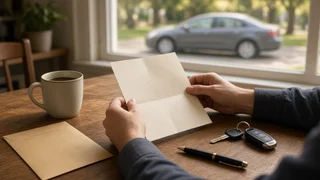
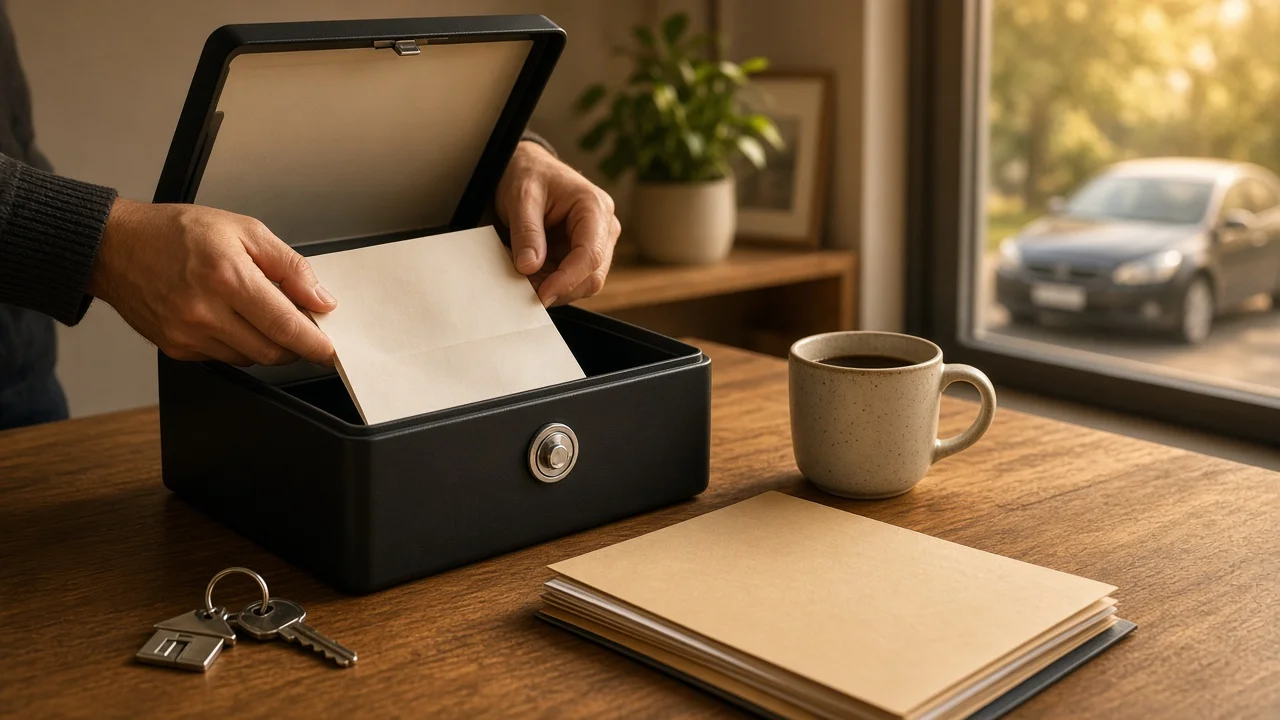
Keep your car title in a secure place outside the vehicle. A fire-resistant and water-resistant home safe, a locked document box, or a bank safe deposit box are the usual choices. As a general rule, the title should not live in the glove box. The documents you normally carry in the car are the registration and proof of insurance.
The answer depends on whether you hold the title at all. If the car is financed or leased, the lender or leasing company typically holds the title until the loan is paid off. Some US states also issue electronic titles, which means there may be no paper document for you to store. Rules differ by state, so check your state motor vehicle agency for the requirements that apply to you.
Title vs. Registration: Which Is Which
These two documents are easy to confuse, and the difference explains where each one belongs.
Title (certificate of title): the legal proof of ownership. It identifies the owner and any lienholder, and it is the document signed over when the vehicle is sold or transferred. It belongs in secure storage. Registration: shows that the vehicle is registered with the state to operate on public roads. It is renewed periodically, and many states require drivers to carry it or present it on request. It generally belongs in the vehicle or with the driver. Proof of insurance: shows the vehicle meets insurance requirements. It is typically carried in the vehicle, on paper or electronically where the state allows.
Should You Keep Your Car Title in Your Car?
Generally, no. If the car is stolen with the title inside, the thief has the ownership document along with the vehicle. That can make it easier to attempt a fraudulent sale or transfer, and harder for you to prove ownership and recover the car.
A title kept in the car is also exposed to everyday risks such as spills, heat, moisture, being thrown out during a cleanout, or being lost in a collision. Replacing it means applying for a duplicate through your state, which takes time and usually involves a fee.
Good Places to Store a Car Title
Option | Advantages | Trade-offs; Fire-resistant, water-resistant home safe | Protected from common household hazards; available whenever you need it, such as when selling | Protection depends on the product's actual rating; a small safe can be carried off unless anchored; Locked file box or document organizer at home | Inexpensive; keeps important papers together and easy to find | Limited protection from fire, flood or theft; Bank safe deposit box | Strong physical security away from home | Access limited to bank hours; inconvenient if you need the title quickly for a sale or transfer
Whichever option you choose, keep the title with other important ownership records, such as the bill of sale and loan payoff paperwork. Make sure at least one other trusted household member knows where it is.
Practical Tips
Make a photocopy or take a photo of the title for your records. A copy is useful for reference, but it is not a legal substitute for the original. Store the copy separately from the original, for example in secure digital storage. Do not sign the title or fill in any transfer sections until you are actually completing a sale or transfer. After you pay off a loan, confirm how the lender will release the lien and how you will receive the title, whether on paper or as an electronic record. If your title is lost, damaged or stolen, contact your state motor vehicle agency about a duplicate.
What This Guide Cannot Confirm
Requirements for carrying registration and insurance proof, the availability of electronic titles, and the process and cost of duplicate titles all vary by state. They can also change over time. This guide does not list state-specific rules, fees or processing times. Confirm those details with your state motor vehicle agency or your lender.