Where is the transmission fluid in a car and where to add it
Finding the transmission fluid fill point can be confusing because it looks different depending on the vehicle's age, transmission type, and whether the transmission is sealed from the factory. The fluid is not simply stored in one universal location, and adding it requires identifying the correct dipstick tube or fill plug rather than guessing at an underhood opening. Getting this wrong can put fluid into a system that is not designed for it, so the first step is understanding how the transmission is configured and which access point applies.
Essential answer
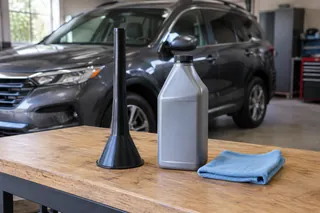
On most older automatic transmissions, you put transmission fluid through the transmission dipstick tube, which is usually located under the hood near the firewall. The dipstick handle is often marked with a transmission symbol or a bright color to separate it from the engine oil dipstick. If the vehicle has a conventional automatic with a serviceable dipstick, the fill point and the level-check point are the same tube, so a narrow funnel fits directly into the tube after the dipstick is removed.
Many newer vehicles do not have a traditional underhood dipstick tube and instead use a fill plug on the transmission case. In these designs, the vehicle may need to be raised safely so the plug can be reached from underneath, and fluid is added until it reaches the edge of the fill hole. A sealed transmission does not mean the fluid never needs attention; it means the service access and level-check procedure are different from the older dipstick method.
Identification and location
To identify the correct fill point, first distinguish the transmission dipstick from the engine oil dipstick and from other underhood reservoirs. The transmission dipstick is typically closer to the rear of the engine compartment on a front-wheel-drive model or toward the passenger side on many longitudinal powertrains. Its cap may be unmarked, or it may carry wording such as transmission, trans fluid, or a gear symbol, while the surrounding area may route past a fill tube that enters the transmission case.
On vehicles without a dipstick, look for a threaded fill plug on the upper or side portion of the transmission case. This plug is often separate from the drain plug, and the area near it may not be obvious until the underbody cover is removed. Because transmission type and engine orientation change where the plug sits, the most reliable way to avoid filling a vent, a transfer case, or a differential is to confirm the component identity against the vehicle's fluid locations and service information before adding any fluid.