What Is a Self-Charging Electric Car?
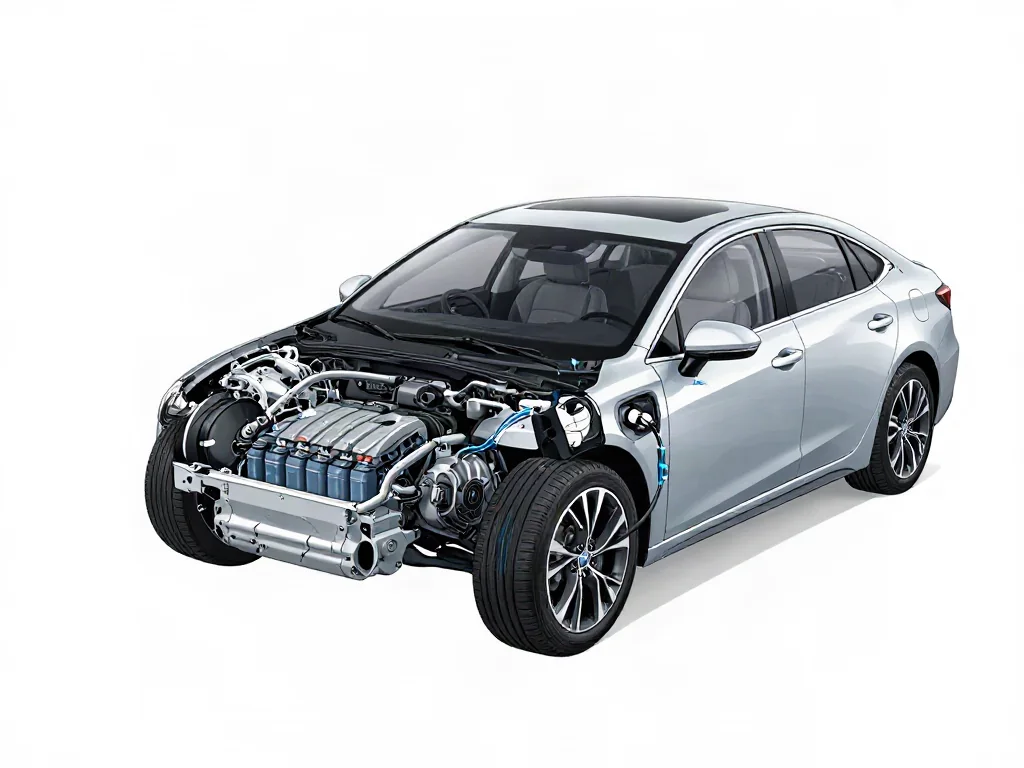
A self-charging electric car is usually a marketing name for a self-charging hybrid, not a battery-only vehicle that makes its own electricity. The phrase describes how a traction battery can receive energy while driving through regenerative braking and, in hybrids, an engine-driven generator. It does not mean a fully electric self-charging car can skip external charging. Two-way charging is a different capability. Checking the powertrain type is the only reliable way to know what the vehicle actually needs.
What the Self-Charging Label Means
The self-charging label is advertising language most often applied to a non-plug-in hybrid that pairs a combustion engine with an electric motor. In that layout, the traction battery is topped up from onboard sources rather than from a wall connector. The wording describes how the pack receives energy, not a claim that the vehicle creates energy from nowhere. Fuel still supplies the engine, and that chemical energy is what ultimately keeps the hybrid moving when stored electricity is insufficient.
Under suitable speed, load, and charge conditions, a self-charging hybrid can propel itself electrically for short stretches using the motor and the energy already in the pack. That electric-only motion does not remove the need for gasoline or diesel, because the engine remains the primary energy source for longer travel and for generating electricity when the control system calls for it. When an advertisement uses ambiguous electric-car wording, confirm the actual powertrain designation in the vehicle specifications rather than treating the self-charging phrase as proof of a battery-electric design.
How the Battery Receives Energy While Driving
Charging an electric car while driving, in hybrid terms, usually means energy recovery rather than a perpetual power plant. Regenerative braking captures some of the vehicle's motion energy during deceleration and stores it in the traction battery instead of wasting all of it as heat in the friction brakes. Separately, a hybrid's engine can drive a generator when the control system needs more electrical energy, converting fuel into electricity that then charges the pack. Those two paths explain why a charge gauge can rise during a trip even though no plug was used.
Energy losses prevent the motor and generator from continually recharging the battery enough to sustain driving without an outside energy source. Conversion between mechanical and electrical energy is never complete, and rolling resistance, air drag, and accessory loads keep consuming power. Battery charge level, pack temperature, and driving conditions can also limit how much energy recovery is accepted; a nearly full pack, a cold pack, or steady highway cruising may recover little. That is why electric car charging while driving cannot replace fuel in a hybrid or external charging for a battery-electric vehicle.
What Self-Charging Claims Mean for a Fully Electric Car
A battery-electric car uses stored electrical energy in the traction battery and normally replenishes that energy through external charging. Marketing that calls the same vehicle a fully electric self-charging car does not change that dependence. Regenerative braking still recovers some energy when the driver lifts off or slows, so the pack can gain charge on a downhill or in stop-and-go traffic. That recovery improves efficiency, but it cannot eliminate the charging requirement for a self-charging all-electric car after ordinary mixed driving.
A rising charge reading on a descent reflects energy recovery from the extra height the vehicle already had, not unlimited generation. Climbing the same grade later spends more energy than the descent returned. Solar panels or specialized powered-road systems, when they exist, still depend on an external energy source and should not be assumed available on a vehicle advertised as self-charging. A self-charging fully electric car without a documented solar array or in-road power pickup still needs a conventional charge session to restore the traction battery after ordinary driving.
What Two-Way Charging Actually Does
Two-way charging, also called bidirectional charging, lets a compatible vehicle receive electricity from an external source and supply stored electricity outward. A two-way charging electric car with the right hardware can feed appliances, a home, or, where allowed, the grid. That export uses energy already in the traction battery; it does not recharge the vehicle by itself. Sending power out lowers the pack's state of charge, so the car still needs a later charge session from a charger or, in a hybrid, from onboard generation tied to fuel.
Usable bidirectional function depends on the vehicle's supported modes, compatible equipment, and any utility requirements. Vehicle-to-load, vehicle-to-home, and vehicle-to-grid are not interchangeable, and a car that can charge from a public station may still lack export hardware. Confirm those details in the specifications and with the equipment maker before assuming the feature is ready. Home electrical connections belong under professional installation guidance; improvised adapters and unlisted wiring are outside safe practice and can damage the vehicle, the building supply, or both.
How to Check a Vehicle’s Real Energy Requirements
A short specifications check separates marketing from energy needs: note the powertrain type, whether fuel is required, whether a charge port supports external charging, and whether energy-export functions are listed. An energy-flow display that shows charging during braking or engine operation only proves that the traction battery is receiving recovered or generated electricity at that moment. It does not prove the journey used no fuel. In a self-charging hybrid, engine-driven generation can look like the car is charging itself while gasoline is still being consumed.
Electric-only operation depends on the vehicle and on speed, grade, climate control, and remaining charge; no single distance or speed applies to every model. A plug-in hybrid may cover some local trips electrically after a charge, while a non-plug-in hybrid typically uses the motor in brief assists. Read the owner's manual for normal charging behavior, including how regenerative braking and any engine-driven generator interact with the pack. If charging warnings appear, treat them as a reason to seek qualified service support rather than as proof that a specific part has already failed.