What Is Regenerative Braking and How Does It Work?
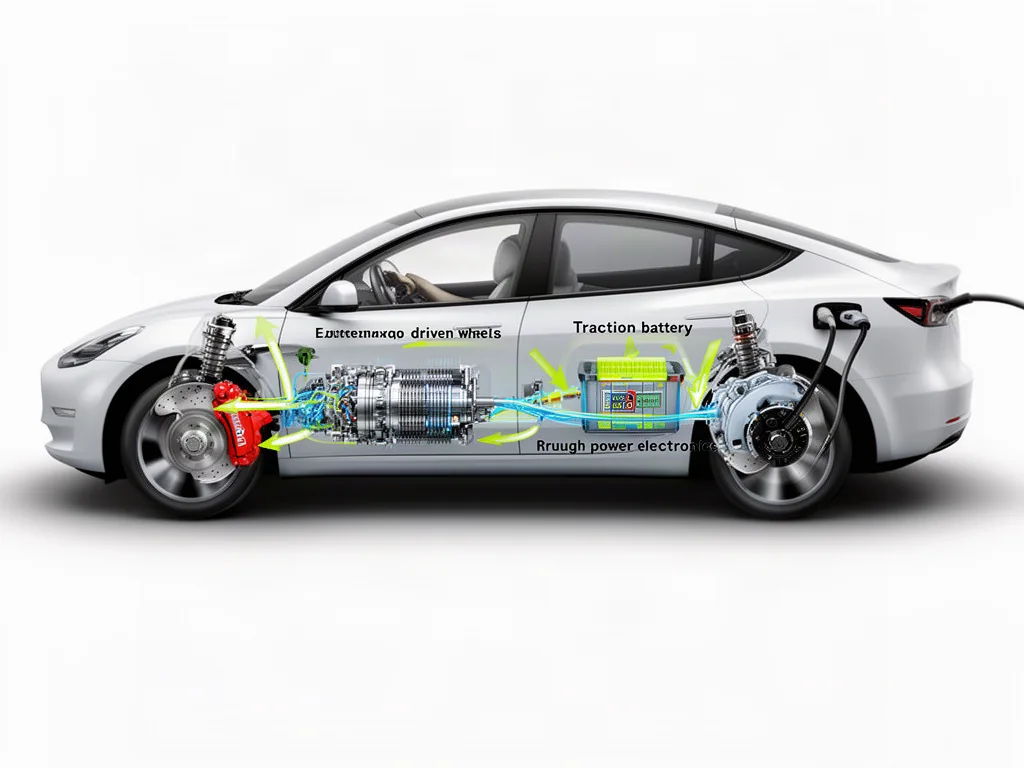
When a conventional car slows down, the energy it used to reach speed turns into heat at the brakes. Electric and hybrid cars can get back part of that energy through regenerative braking. This guide explains what the term means, how a motor works as a generator, which parts work together, when the system operates, how it feels to drive, and which vehicles use it.
What Regenerative Braking Means
Regenerative braking slows a vehicle by using its electric motor to turn some of the vehicle's motion into electricity. That motion is kinetic energy, which is simply the energy a car has because it is moving. The heavier the car and the faster it goes, the more kinetic energy it carries, and the more must be removed to slow it down. Friction brakes remove that energy by pressing pads against rotors. The energy becomes heat, spreads into the surrounding air, and is lost.
Regeneration does part of that job in a different way. When the motor generates electricity, it produces torque that resists the turning of the wheels. The same process that recovers energy therefore also slows the car. You can't have one without the other, because the braking effect comes from drawing energy out of the drivetrain. Recovery is always partial, though. Regenerative braking doesn't create free energy, and it doesn't remove the need to charge an electric car or refuel a hybrid. It only reclaims some energy that would otherwise become wasted heat.
How the Motor Recovers Energy During Deceleration
During deceleration, energy starts with the moving vehicle. Its momentum keeps the driven wheels turning, the wheels turn the drivetrain, and the drivetrain spins the motor. Normally the motor uses electricity to push the car forward. When the control system switches it into generating mode, the relationship reverses: the wheels drive the motor, and it works as a generator. Many people assume the motor has to spin backward for this to happen. It doesn't. It keeps turning in the same direction, and only the direction of its torque and electrical current changes.
That generating torque works against the wheels' rotation, and this is what slows the car. The raw electrical output can't go straight into the battery, so power electronics convert and regulate it. They then send it to the traction battery, as long as the battery can accept charge at that moment. Each step loses some energy through drivetrain friction, heat in the motor windings, and inefficiency in the electronics. Operating limits also cap how much power the system will take in. As a result, only part of the car's kinetic energy is actually stored.
The Components That Coordinate Regenerative Braking
A simple energy-flow diagram of a regenerative braking system looks like a chain: driven wheels, drivetrain, motor-generator, power electronics, and traction battery. The wheels and drivetrain supply mechanical energy, and the motor-generator turns it into electricity. The power electronics condition that current, and the battery stores it. The control electronics oversee the whole chain. They read driver inputs, such as accelerator position and brake pedal pressure, along with conditions such as vehicle speed and wheel behavior. From that information, they decide how much regenerative torque to request at each moment.
The battery management system has a large influence on that decision. It monitors the battery's condition and sets how much charging power the pack can safely accept, and regeneration can't go beyond that limit. Because regeneration can't always supply as much braking as the driver asks for, most vehicles use brake blending, also called cooperative braking. The system combines regenerative torque with the friction brakes to give the deceleration the driver requested, and it uses the friction brakes more when regeneration falls short. How smoothly this happens, and how the work is split, varies a lot between vehicles.
When Regenerative Braking Activates and What Limits It
Depending on how the manufacturer designed the system, regeneration can start when the driver lifts off the accelerator, when they press the brake pedal, or in both cases. Some vehicles apply noticeable regeneration as soon as the accelerator is released, while others save most of it for when the brake pedal is pressed. Energy is recovered whenever the system is actively reducing speed. It can also be recovered on a controlled descent, when the motor holds the car back instead of letting it speed up. Not every downhill stretch charges the battery, though. Coasting freely downhill recovers little or nothing.
Several conditions limit how much regeneration is available. A battery that is full or nearly full has little room left for more energy, and a very cold or very hot battery may accept charge only slowly. Speed matters as well, because at very low speeds the motor produces much less useful generating effect. Slippery roads can also reduce regeneration, since braking only the driven wheels on a low-grip surface could make the car unstable. Finally, stopping completely and holding the car still may depend on the friction brakes or other vehicle control functions.
What Drivers Feel and What Regenerative Braking Does
From the driver's seat, regenerative braking often feels like the car slowing on its own when you ease off the accelerator. It's similar to engine braking in a conventional car but often stronger. How strong it feels depends on the vehicle and can change with battery charge and temperature, so the same pedal movement won't always slow the car the same amount. One-pedal driving goes further and uses accelerator position to control both acceleration and slowing down. Whether the car can come to a full stop this way, or only slow down substantially, depends on the vehicle.
The practical benefit is that recovered energy can be reused to move the car, which helps overall efficiency, especially in stop-and-go traffic with frequent slowing. Because regenerative torque does part of the braking, the friction brakes may be used less in some situations. That doesn't guarantee a particular range gain or any change in brake maintenance. Drivers still need to be ready to press the brake pedal, because regeneration can weaken or stop with little warning. A dashboard display showing energy recovery also can't tell you whether the braking system itself is healthy.
Where Regenerative Braking Is Used in Electric and Hybrid Cars
Battery-electric cars make the most extensive use of regenerative braking. They have a traction motor and a large rechargeable traction battery, so the system has both a capable generator and plenty of room to store recovered energy. An electric car has no engine to provide engine braking, so regeneration usually produces much of the slowing drivers feel when they lift off the accelerator. The recovered energy goes back into the same battery that powers the motor. That helps the car travel farther on the energy it already has on board.
Hybrid and plug-in hybrid cars use the same principle. A motor-generator recovers energy and stores it for later electrical use, such as driving the car at low speeds or helping the engine. Some mild-hybrid systems also recover braking energy. Their motors and batteries are smaller, so what they can do depends heavily on their design. In every one of these categories, having regeneration doesn't tell you how a vehicle's brakes feel, whether it supports one-pedal driving, or what settings it offers. Those details differ from one vehicle to another.