What Is a Load Limiter in a Seat Belt?
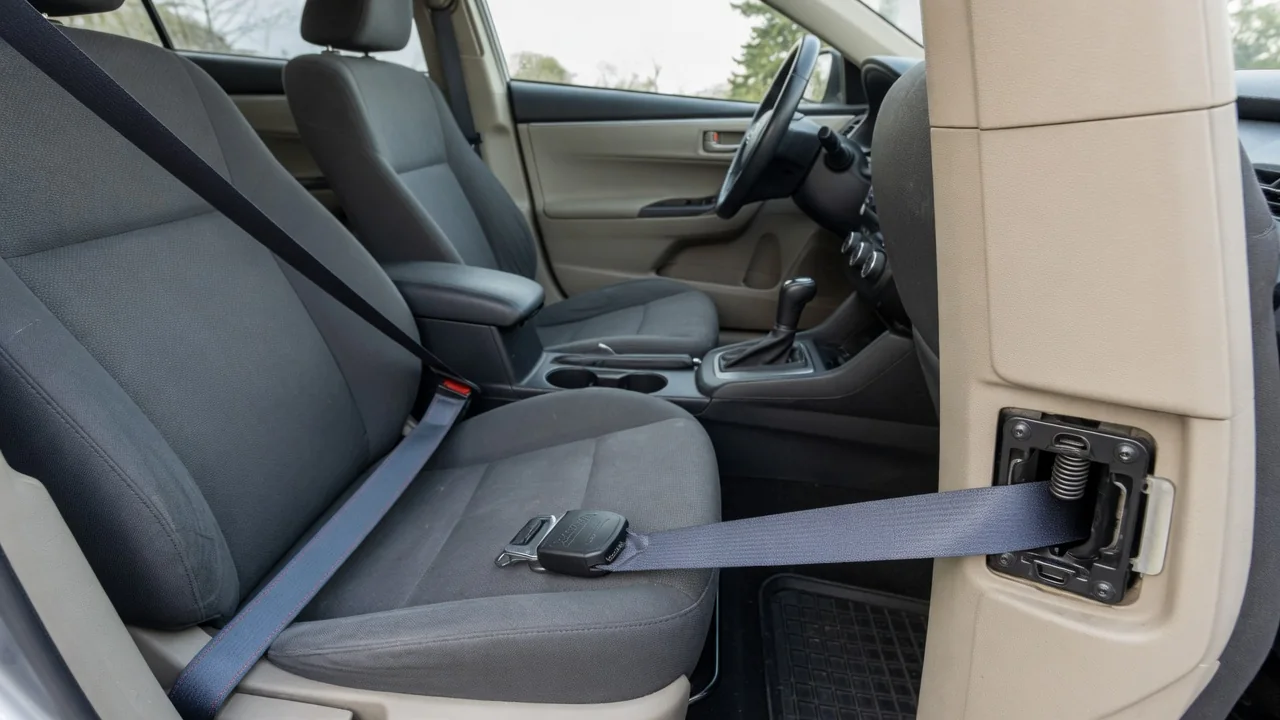
Anyone asking what is a load limiter in a seat belt is really asking how a belt can hold a person firmly without pressing too hard on the chest. A load limiter is a mechanism, usually built into the retractor, that lets the belt yield in a controlled way once crash forces climb past a designed threshold, managing the force the webbing applies to the body.
Belt payout
Belt payout is the controlled release of a small length of webbing during a severe collision. In normal locking, the retractor spool stops turning and the belt holds fast. With a load limiter, the spool is allowed to rotate a little further once tension in the webbing reaches a set level. That extra length lets the occupant's upper body move forward gradually instead of being stopped abruptly, which spreads the deceleration over a longer time and lowers the peak force on the ribs and collarbone.
A common design uses a torsion bar inside the retractor spool, a steel shaft that twists under high load and absorbs energy as it deforms. Older or simpler designs may use stitching in the webbing that tears in sequence, or a deformable plate at the anchor. Some vehicles use limiters with more than one force level. Which type is fitted depends on the manufacturer, the model, and often the seating position, so the service information for the specific vehicle is the only reliable guide.
Occupant restraint
A load limiter works as one part of a wider occupant restraint system rather than on its own. In many vehicles a pretensioner fires first, pulling slack out of the belt so the occupant is coupled to the seat early in the crash. As the body then loads the webbing, the limiter takes over and caps the belt force. The sequence is tighten, hold, then yield, with each stage timed to match how the vehicle structure crushes and slows down.
The airbag is the other half of that arrangement in front seats. Because the limiter permits some forward movement, the designer counts on the airbag to share the load across the head and chest once the belt begins to give. This is why limiter behavior is tuned for each seat, and why a rear seat without a frontal airbag may be set up differently from a driver's position. The belt, pretensioner, airbag, and seat are calibrated together, so parts are not interchangeable between positions.
Inspection after damage
After a collision, a load limiter that has done its job is permanently changed. A twisted torsion bar does not return to its original shape, and torn stitching cannot reset, so the assembly will not manage force the same way a second time. For that reason, belts that were worn during a significant crash are generally treated as replacement items rather than parts to be reused. The manufacturer's repair guidance for the vehicle states which components must be renewed after a given type of impact.
Some signs may be visible, though many are not. Webbing that looks stretched, glazed, or frayed, a belt that sits longer than before or will not retract fully, a retractor that feels rough or jammed, or an exposed warning label on designs that include one can all point to a belt that was heavily loaded. An illuminated airbag or restraint warning light is further evidence worth following up. Because the limiter sits inside the retractor, a clean appearance does not confirm it is intact, and a qualified inspection is the dependable route.
Everyday Use and Observations
In daily driving a load limiter does nothing a driver can feel. The force needed to make it yield is far above anything produced by hard braking, a sharp corner, or tugging on the belt by hand. What people notice in those moments is the ordinary locking function of the retractor, which stops the spool when the vehicle decelerates quickly or the webbing is pulled out fast. That locking is a separate mechanism, and it resets itself every time the tension is released.
How the belt is worn still shapes how well the limiter can work when it is needed. A lap portion low across the hips and a shoulder portion across the middle of the collarbone direct the load onto strong bone. Slack from a bulky coat, a twisted belt, or a shoulder strap tucked under the arm changes where and when force builds. Sitting upright and a sensible distance from the steering wheel also preserves the space that controlled payout is designed to use.
Limits and Next Steps
A load limiter has clear limits. It reduces peak belt force on the chest, but it does so by allowing more forward travel, so its benefit depends on available space and on the other restraints working as intended. It is designed for one serious event and is not adjustable or serviceable by the owner. It also cannot compensate for a poorly positioned belt, a reclined seat, or an occupant who is far out of the normal seating position when the impact occurs.
Sensible next steps are straightforward. The owner's manual usually describes the restraint features fitted to each seat, and a dealer or qualified repairer can confirm details for a particular vehicle. After any crash, or whenever a restraint warning light stays on, having the system checked professionally is the safe course, since stored fault codes are clues to interpret and need proper diagnosis before any part is blamed. Replacement belts should match the vehicle and seating position exactly, and retractors containing pretensioners should be handled only by trained technicians.