What causes inner CV joint failure
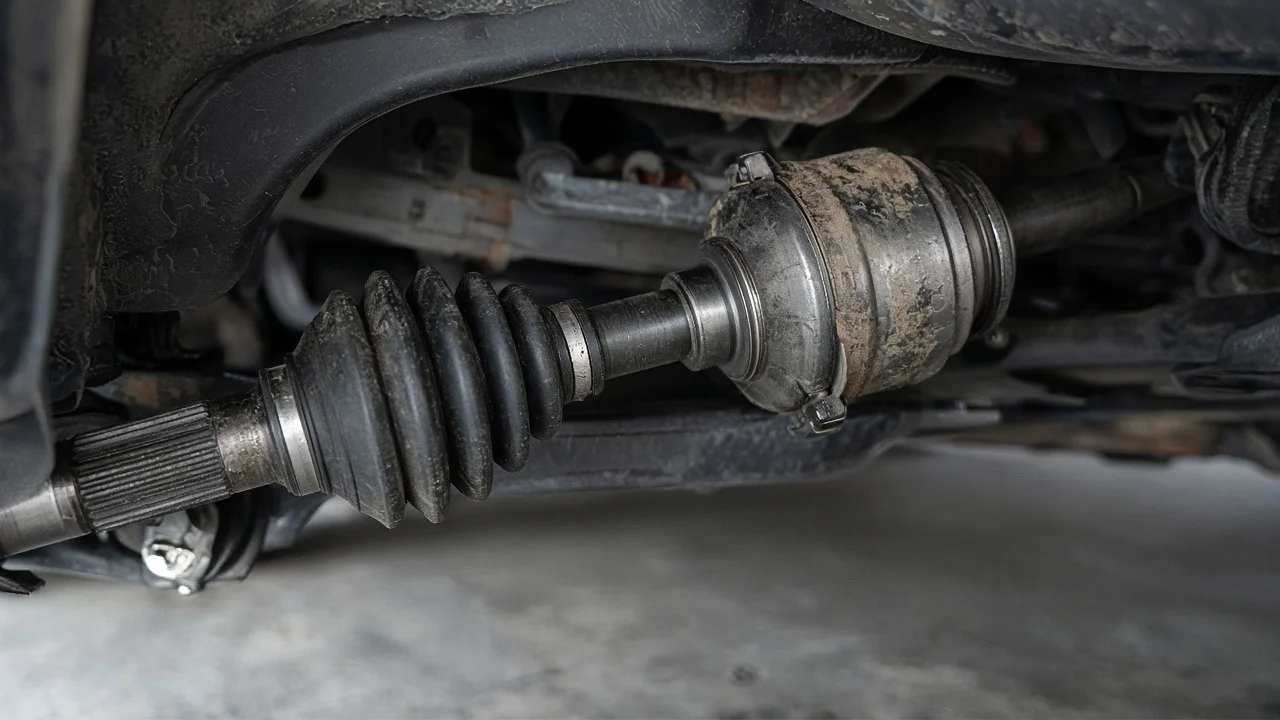
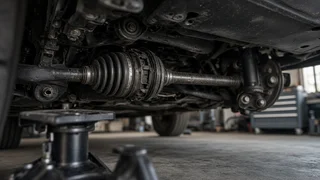
When a front-wheel-drive or all-wheel-drive vehicle develops a rhythmic click, vibration under acceleration, or torn grease slinging around the transaxle area, the inner constant velocity joint is often the suspect. Understanding what causes inner CV joint failure helps owners separate normal wear from damage caused by road conditions, suspension changes, or overlooked maintenance. The inner joint connects the axle shaft to the differential while allowing suspension travel and joint articulation, so its failure pattern often differs from the outer joint that handles steering angles.
Essential answer
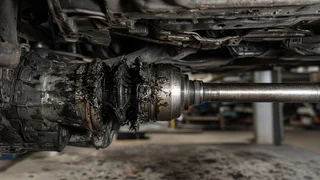
Inner CV joint failure is most commonly traced to loss of grease after a protective boot tears or slips off its mating surface. Once the boot opens, water, grit, and road debris enter the joint and accelerate wear on the balls, cage, and races. A failed inner joint may also produce a shudder during hard acceleration or a clunk when transitioning from coast to throttle, especially if the spline fit or retaining clip has worn.
The inner joint normally fails gradually, but a torn boot can shorten its life quickly. Lift-throttle clunks, vibration that changes with drivetrain loading, and visible grease around the transaxle or underbody point toward the inner joint rather than the outer one. Because the inner joint accommodates plunge motion as the suspension moves, damage there can also disturb the axle shaft alignment and create secondary noise.
How it works
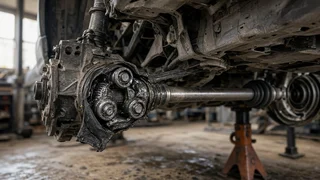
The inner constant velocity joint uses a tripod or ball-type design that transmits torque through the axle shaft while allowing length changes and angular movement. As the suspension compresses and rebounds, the joint plunges slightly along its axis, and the balls or rollers slide within their tracks. Grease retained by the flexible boot keeps these hard contact surfaces lubricated under high drivetrain loading.
The outer joint handles steering-related articulation, while the inner joint manages suspension travel and plunge motion. Both joints rely on the same basic principle of dividing torque among several rolling elements, but the inner unit sees different stress. Heat, friction, and contamination concentrate where the tripod bearings contact the housing, which is why a dry or abrasive-filled inner joint often develops a shudder or rumble before it locks or separates.
Strengths, limitations and suitability
A well-sealed inner CV joint is durable when the boot remains intact and the joint is operated within its designed angle and plunge range. Its compact design suits independent suspension layouts and supports smooth power delivery through changing suspension heights. Regular inspection of the boot and surrounding areas can catch early grease seepage before the joint internals suffer significant pitting or brinelling.
The main limitation is sensitivity to contamination and to angles beyond the original design. Lifted or lowered suspension changes the operating angle and plunge depth of the axle shaft, which can shift wear toward the boot edge, tripod housing, or retaining clip. Aggressive launches and sustained high torque also raise joint temperature, so a vehicle used for towing, track driving, or rough terrain may reveal a marginal inner joint sooner than normal street use.
Procedure
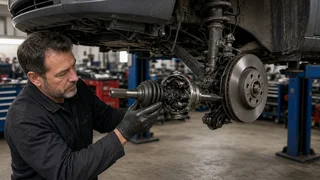
Inspection begins with safely raising the vehicle and checking each inner boot for cracks, splits, looseness, or grease streaks. Rotate the axle shaft by hand while feeling for roughness, binding, or excessive play at the inner joint. Compare movement from side to side, and listen for clicks or scraping when the suspension is slowly cycled through its available travel if the vehicle can be supported securely.
If the boot is damaged but the joint is still quiet and smooth, replacing the boot and grease may preserve the assembly in some cases. However, if contamination has already entered, the joint surfaces may continue to degrade. Replacement of the complete axle shaft is often the practical repair because it addresses the worn joint, fresh boot, and spline fit at both ends in one service operation. Manufacturer guidance should confirm the correct service approach.
Diagnosing a problem
A torn inner boot is the clearest starting point, but it is not the only cause of noise. A vibration under acceleration that smooths out when coasting can indicate inner joint wear, while a constant speed-related vibration may point to a wheel, tire, or axle balance concern instead. A clunk during gear changes or throttle transitions can also come from a worn retaining clip, loose axle nut, or failing engine mount, so the inner joint should be checked as part of the drivetrain system.
Compare the symptom during left and right turns, acceleration, deceleration, and suspension movement. If clicking worsens with steering angle, the outer joint is more likely involved. If the shudder or clunk follows throttle input and ride height changes, focus inspection on the inner plunge joint and its boot. Stop driving if the joint becomes severely loose, noisy, or if the axle shaft shows visible separation, because continued use can damage the transaxle case or cause loss of drive.