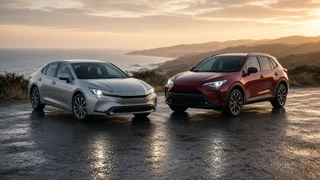
What cars Toyota makes

Toyota builds one of the broadest passenger-vehicle ranges sold in the United States, spanning small sedans, midsize family haulers, crossovers, trucks, and electrified models. A shopper asking what car Toyota makes is really choosing among several body styles, powertrain configurations, trim levels, and model generations that suit different budgets and duties. The lineup changes by model year and market specification, so a name may represent a single vehicle or an entire family with gasoline, hybrid, and sometimes all-wheel-drive variants. Understanding that structure makes the answer far more useful than a simple model list.
Essential answer
Toyota’s core U.S. range includes recognized passenger cars such as the Corolla, Camry, and Prius, alongside SUVs and crossovers like the RAV4, Highlander, and 4Runner. The brand also offers the Tacoma and Tundra pickups, the Sienna minivan, and several electrified models under the bZ and hybrid names. Availability depends on model year and regional market specification, and trim levels within each nameplate can create substantially different prices and equipment. A “car” may therefore mean a compact sedan, a midsize family vehicle, a sports coupe, or a crossover depending on how the term is used.
Many Toyota models span multiple generations, so a used Corolla from one model generation may differ greatly from the current version in platform, safety systems, and available powertrain configuration. The company also sells performance-oriented GR models and body-style variations such as hatchback and wagon forms in some markets. When researching the lineup, it helps to treat the brand as a collection of model families rather than a fixed catalog. That perspective explains why two shoppers asking what car Toyota makes can be looking at very different vehicles despite using the same broad question.
How it works
A modern Toyota model is organized around a shared platform that supports multiple body styles and powertrain configurations. Engineers select a unibody architecture for most cars and crossovers, while body-on-frame construction is used for tougher trucks and off-road-oriented SUVs. That difference affects ride comfort, towing behavior, interior packaging, and noise. For example, a Highlander and 4Runner may occupy similar exterior footprints, but their construction leads to different daily-driving manners and payload expectations.
Within each model family, a trim level organizes equipment, seating materials, wheel sizes, and driver-assistance content. The base trim may prioritize value, while upper grades add larger infotainment screens, ventilated seats, upgraded audio, or hands-free liftgates. Powertrain choice further changes the character of the vehicle. A Camry can be had with a conventional gasoline engine, a hybrid system, and in some model years all-wheel drive, so the same nameplate can serve a fuel-focused commuter or an all-weather family driver.
Strengths, limitations and suitability
Toyota’s strength is the breadth of its model range more than any single vehicle. A buyer can choose a small, efficient hybrid for urban driving, a three-row SUV for family travel, or a midsize truck for work and recreation without leaving the brand. Hybrid and plug-in options appear across several segments, which improves fuel economy and low-speed smoothness for drivers who spend time in traffic. For other buyers, traditional gasoline powertrains remain appealing because of lower initial cost and simpler long-term service expectations in regions with limited hybrid support.
The compromises usually involve driving character and specialized capability. Many mainstream models favor predictable handling, ride comfort, and interior durability over sporty response or maximum towing. Body-on-frame trucks and off-road trims trade some on-road refinement for trail durability and cargo capacity. A shopper should first identify body style and powertrain priorities, then compare trim levels within that narrowed group. That approach prevents the wide lineup from becoming overwhelming and helps connect a model generation’s strengths to the tasks it will actually perform.
Procedure
Researching a Toyota purchase starts with the primary use: passenger commuting, family transport, weekend towing, or mixed road and trail driving. From there, compare the relevant body style and powertrain configuration across the current model year and one or two recent model generations if buying used. For each candidate, note available trim levels and which safety, comfort, and drivetrain features are standard rather than optional. A short test drive should include highway merging, low-speed parking, and the typical road surface the vehicle will see most often.
Before finalizing a used vehicle, confirm the specific equipment rather than assuming a trim name means the same content every year. Check for open recalls, service history, and whether the model has factory or aftermarket accessories that affect warranty coverage or resale. For hybrid models, review battery condition through a qualified inspection when possible. Matching the market specification to the intended region also matters, since a model sold elsewhere may have different lighting, emissions, or driver-assistance features than the U.S. version.
Diagnosing a problem
If a particular Toyota model shows unexpected behavior, the first diagnostic step is identifying which model generation and powertrain configuration is involved. A rough idle, hesitation, or warning light in a hybrid has different likely causes than the same symptom in a conventional gasoline truck. Observe whether the issue appears only when cold, only under load, or only after long highway runs. That pattern can separate a routine maintenance concern from an intermittent sensor, intake, or drivetrain problem.
A diagnostic trouble code is a starting point rather than a parts replacement order. The same code can appear for a sensor, wiring, vacuum leak, or software issue depending on the vehicle. Manufacturer-dependent definitions and model-specific service guidance require confirmation against the correct model year and market specification. If a fault involves brake, steering, airbag, or high-voltage hybrid components, stop driving and seek qualified diagnosis. Otherwise, use the symptom pattern and vehicle history to decide whether a simple inspection, fluid service, or deeper electrical test is the next step.