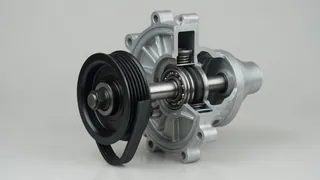
Water pump belt and pulley
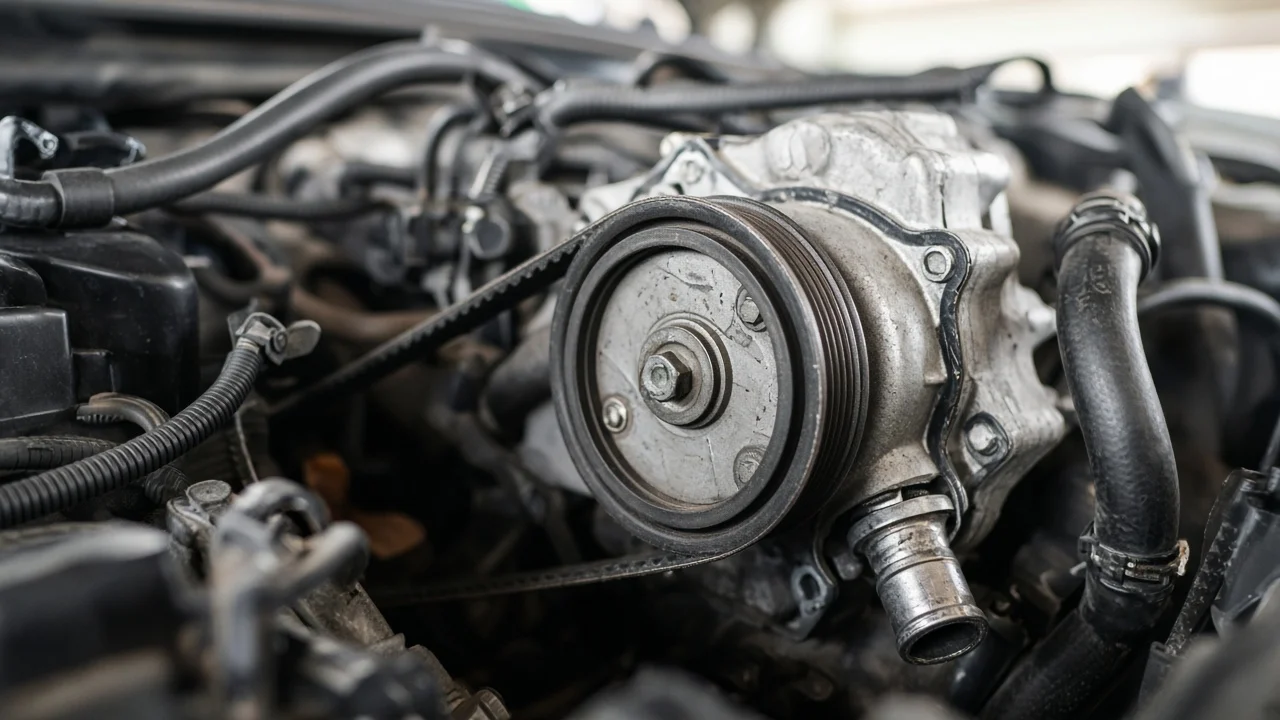
A belt-and-pulley setup remains one of the most common ways to spin an automotive water pump, yet it is often overlooked until the cooling circuit loses flow. Understanding the car water pump belt and the car water pump pulley together helps a driver interpret noise, leaks, or rising gauge readings before a minor issue becomes severe heat damage. The assembly converts crankshaft rotation into impeller movement while keeping the belt aligned under changing loads. Knowing how these parts interact, along with the thermostat, radiator, pressure cap, coolant concentration, and trapped air pockets, supports more confident maintenance choices.
Essential answer
A car water pump belt is the drive component that transfers rotational force from the engine, often through a crankshaft pulley, to the water pump shaft. The car water pump pulley mounts on the pump and gives that belt a stable track while helping control its speed. The essential answer is that belt and pulley form a power-delivery pair in the cooling circuit, but they are not the pump itself. Engine type, pulley diameter, and whether the belt is shared with the alternator or power steering affect how this system behaves.
The scope of this subject also includes belt routing and the way the pulley can reveal mechanical trouble. A cracked or glazed belt may slip, reducing impeller speed even if the pump bearings feel smooth. A wobbling pulley can indicate bearing wear, a bent hub, or an incorrect installation. Because cooling depends on continuous circulation through the radiator and thermostat, checking how the belt sits in the pulley grooves and how the pulley rotates under load is a practical diagnostic step. Air pockets and incorrect coolant concentration can create similar symptoms, so the entire cooling circuit should be interpreted together.