Washer Fluid Not Spraying: Nozzle, Fuse, Hose and Pump Checks
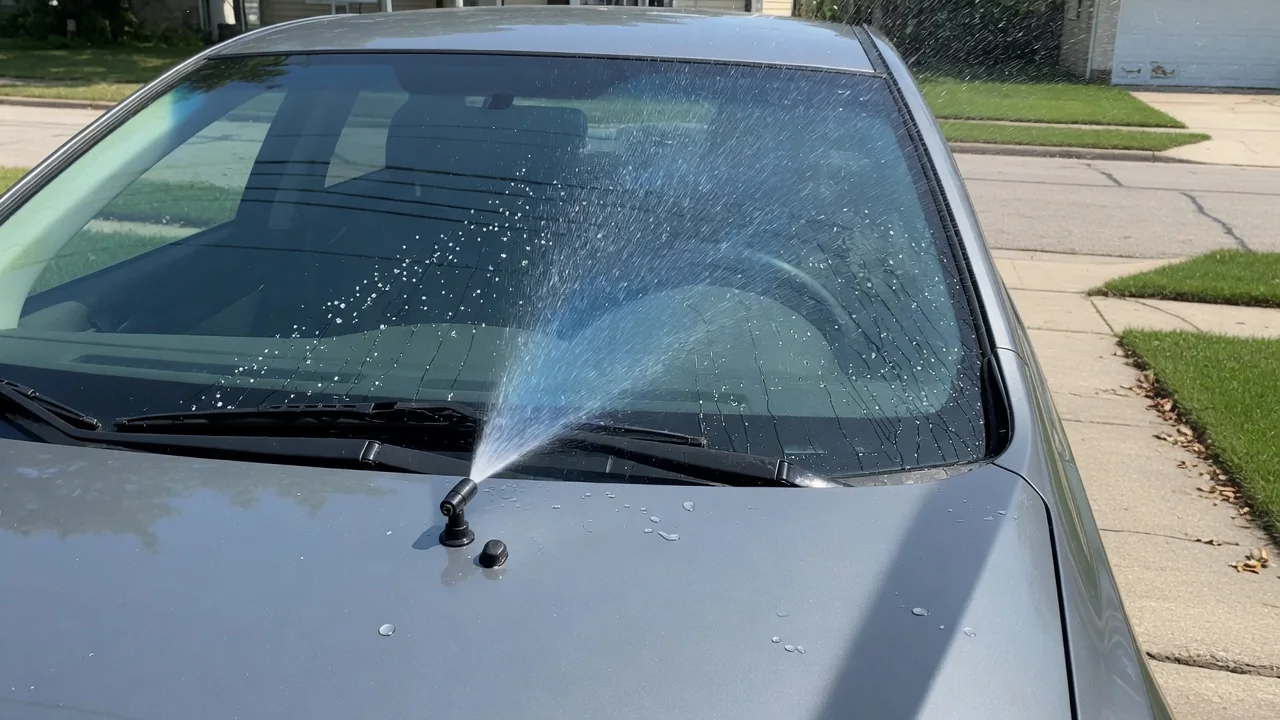
When windshield wiper fluid is not spraying, the cause can be anywhere between the washer fluid reservoir and the windshield wiper nozzles. A frozen line, a clogged washer nozzle, a split washer hose, a blown fuse or a failed wiper water pump can each leave the glass dry. Working through simple, safe checks in order helps you narrow down the problem before you spend money on parts.
Identify What Happens When You Activate the Washer
Start by separating two functions that share one stalk. The wiper motor sweeps the blades, while a separate washer pump pushes fluid through hoses to the windshield wiper sprayer. So wipers that move normally tell you nothing about whether the windshield wiper spray works. Park in a safe spot, activate the washer briefly and watch closely. Note whether fluid is completely missing, arrives as a weak dribble, comes and goes, or leaves one windshield wiper washer nozzle dry while the other sprays normally.
Listen as well. A hum or whir from the front of the car suggests the pump is getting power, while silence points toward the pump or its supply. Fluid dripping beneath the vehicle during the test hints at a leak. These are clues, not verdicts, because a humming pump can still deliver very little fluid. Avoid pressing the switch over and over when the reservoir is empty or the system is frozen, since running the pump dry can harm it. Don't drive if you cannot keep the windshield clear.
Check the Reservoir and Look for Freezing
The washer fluid reservoir is usually a translucent plastic tank under the hood. Its cap typically shows a windshield with a spray symbol. The owner's manual confirms where it is, which matters because some tanks are partly hidden and fill through a long neck. Check the visible fluid level, since an empty tank is a simple reason windshield wiper fluid is not coming out. Use washer fluid rated for the temperatures you expect and follow the vehicle's guidance. Plain water can freeze and leave deposits.
If the tank empties again quickly, adding fluid only hides a leak that still needs to be found. In cold weather, suspect freezing if the spray stopped after a cold night, the fluid looks slushy, or the tank still holds summer fluid. Temperature alone proves nothing, though, because a blocked nozzle can fail on a mild day too. Let frozen washer lines thaw in a heated garage or another warm place. Never pour boiling water on the system, use an open flame or rig up improvised heaters under the hood.
Inspect Nozzles for Debris and Spray Problems
Each windshield wiper nozzle has a tiny opening, so dirt, dried wax, road film or ice can easily restrict it. A partly blocked outlet may produce a thin stream or a spray pattern that veers off target. Sometimes fluid just dribbles onto the hood. Look closely at every windshield wiper fluid nozzle. Gently wipe the outside with a soft cloth or soft brush and warm, soapy water where the vehicle guidance allows. Don't force pins, wire or compressed air into the opening, which can enlarge or crack it.
Before trying to aim a windshield wiper sprayer nozzle, confirm whether it is adjustable at all. Some use a ball insert that can be repositioned. Many fan-style windshield wiper spray nozzles are fixed and can be damaged by prying. If cleaning does not restore a strong, well-placed spray, the nozzle itself may need service or replacement. Keep the bigger picture in mind. When both nozzles deliver nothing at all, the fault is more likely upstream in the hose, fuse or pump than in the nozzles.
Look for Accessible Hose Leaks and Disconnections
With the vehicle switched off and the engine cool, inspect the parts of the washer hose you can see without removing anything. Follow it from the reservoir toward the hood or cowl, looking for splits, kinks, chafed sections and connectors that have slipped apart. A hose pinched during earlier engine work can reduce flow, and a disconnected end can dump all the fluid into the engine bay instead of onto the glass. Don't pull hard on anything, because brittle plastic fittings break easily, especially in the cold.
Dampness, streaks or colored residue under the hood can show where fluid is escaping. Have a second person run the washer briefly while the car is parked, and you may see fluid appear at a joint or under the vehicle. Leaks can come from the reservoir, a hose, a pump seal or the spot where the pump enters the tank, so each one needs inspection before you blame a single part. Leave lines routed through hood insulation, behind trim or under the bumper to a professional.
Locate the Correct Washer Fuse Before Checking It
When the washer is completely silent, the windshield wiper pump fuse is worth checking, but only after you identify the correct circuit. Use the owner's manual or a fuse diagram for your specific vehicle. Some vehicles protect the washer with its own fuse, while others share one with the wipers or other circuits. Guessing wastes time and risks pulling the wrong fuse. Check only a fuse the owner is meant to reach, with the ignition off. Follow the manual for the fuse box location and the removal tool.
A blown fuse usually shows a broken element, although a visual check is not always conclusive. Any replacement must match the specified type and amperage exactly. Never bypass a fuse with wire or install a higher rating, because that removes the circuit's protection and can cause overheating. If a new fuse blows again, the circuit needs electrical diagnosis, since a seized pump or damaged wiring may be to blame. An intact fuse also doesn't prove that power reaches the pump. Connectors, switches or control modules can still interrupt it.
Recognize When the Washer Pump Needs Professional Testing
What many drivers call the wiper water pump is really the washer pump. It is a small electric motor, often mounted on the reservoir, that pushes fluid to the windshield wiper fluid sprayer. When the washer fluid is not working and the pump stays silent, the pump, its power supply or the control circuit could be at fault. A pump you can hear running may also be worn, clogged at its inlet or leaking at its seal. Noise alone doesn't confirm that enough fluid is reaching the glass.
A technician can check for power and ground at the pump connector, test the switch and control circuit, and confirm that fluid actually flows before recommending a new pump. That testing keeps you from buying parts the vehicle doesn't need. Get it serviced if the basic checks leave the windshield wiper spray not working, the leaks are out of reach or electrical faults keep coming back. After any repair, run a short parked test to confirm both nozzles give a strong, well-aimed spray and nothing drips underneath.