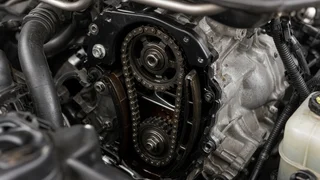
VW EA888 Timing Chain
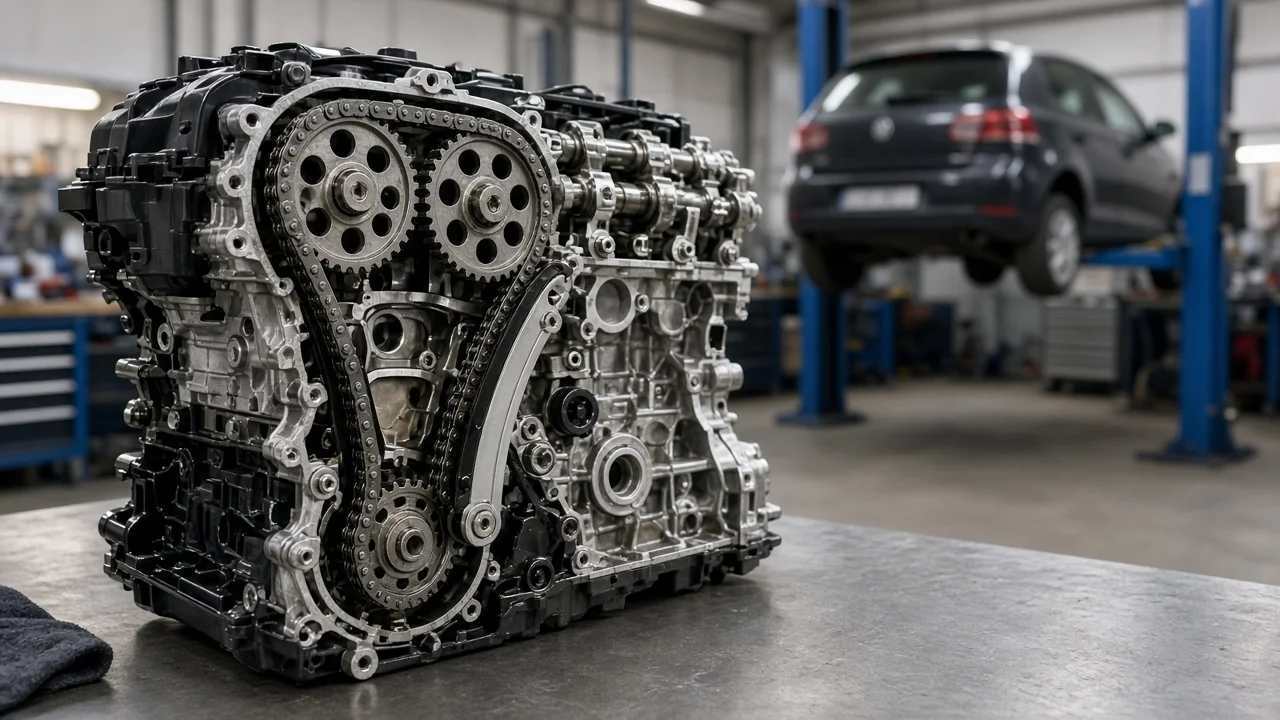
The VW EA888 engine family uses a timing chain instead of a rubber belt to synchronize the crankshaft and camshafts. Owners researching the EA888 engine timing chain often encounter mixed reports about wear, stretch, and tensioner behavior across different generations and service histories. Because the chain lives inside the front timing cover and depends on clean, full oil pressure, its condition is not obvious during ordinary driving. Early warning signs can be subtle, including cold-start rattle or diagnostic codes related to camshaft and crankshaft correlation. Understanding how the system works helps interpret these symptoms before a small guide or tensioner issue becomes expensive valve timing damage.
Essential answer
The EA888 engine timing chain is an internal metal link system that keeps the intake and exhaust camshafts aligned with the crankshaft as the pistons move. Unlike a timing belt with a fixed replacement interval, the chain is designed for long service but depends on oil condition, oil pressure, and the health of plastic guides and the hydraulic tensioner. A stretched chain effectively lengthens the distance between sprockets, allowing the camshaft timing to drift. The direct answer is not one simple failure date; it is a wear-sensitive system that should be evaluated by sound, scan data, and inspection rather than by mileage alone.
Diagnostic codes for camshaft position or correlation can support an inspection but do not prove the chain has failed. Sensor readings, wiring, oil control valves, or a weak tensioner can produce similar symptoms under certain operating conditions. Manufacturer-dependent codes require vehicle-specific confirmation because the same code can have different diagnostic paths across engine versions. Service history matters because neglected oil changes accelerate chain and guide wear. For a useful next step, compare the measured camshaft adjustment value with manufacturer specifications when the engine is fully warm, and listen for a brief metallic rasp or rattle immediately after a cold start.