Volvo Brake Pad Replacement: What It Involves and What Changes by Model
The short answer
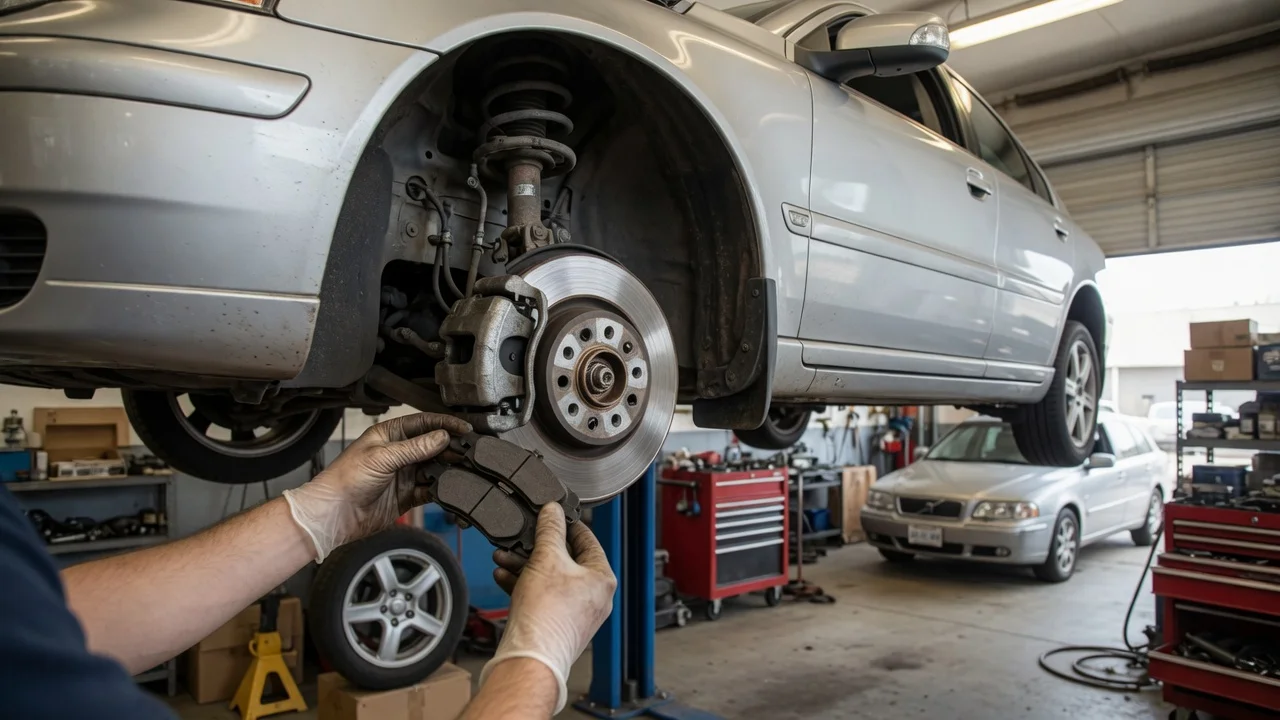
Replacing brake pads on a Volvo follows the same basic principle as on most cars. The caliper is unbolted or swung clear, the worn pads are removed, the caliper piston is pushed back to make room for thicker new pads, and the new pads are fitted with any required hardware before the caliper is refitted. On many recent Volvos, two details make the job different from older or simpler cars: rear brakes with an electronic parking brake, and electronic pad wear sensors. Whether either applies depends on the model, model year and axle, so confirm this for your specific car before starting or before accepting a quote.
What the answer depends on
Volvo's range covers several platforms and generations, and brake hardware differs between them. The main differences come from the front or rear axle, whether the car has a mechanical or electronic parking brake, whether a wear sensor is fitted, and the brake size or package specified for that engine, trim or market. A guide written for one Volvo may not match another, even within the same model name across generations.
Rear pads and the electronic parking brake
An electronic parking brake (EPB) uses electric motors at the rear calipers instead of a hand lever and cable. On Volvos with an EPB acting on the rear calipers, the rear pistons generally cannot be pushed back by hand the way a conventional piston can. The parking brake must first be put into a service or maintenance mode, which retracts the mechanism. Depending on the vehicle, this is done with a diagnostic tool, or on some models through an in-car procedure. Forcing the piston back without doing this risks damaging the caliper motor or mechanism. The exact procedure varies by model and software, and the supplied material does not detail it for individual cars, so check the service information for your vehicle.
Front pad replacement normally does not involve the parking brake. It is usually the more straightforward axle for that reason.
Brake pad wear sensors
Many Volvos have an electronic pad wear sensor on one or both axles. It triggers a dashboard warning once the pads wear to a set point. Where a sensor is fitted, it is commonly replaced along with the pads, especially if the warning has already come on. A warning that stays on after new pads are fitted often points to a sensor that has not been replaced or reconnected. Which axles carry a sensor varies by model, so check this rather than assuming.
Rotors: replace or reuse?
Pads and brake discs (rotors) are separate parts, but they are often inspected and sometimes replaced together. Whether a disc can be reused depends on its measured thickness against the manufacturer's minimum, plus its condition, such as scoring, lipping or uneven wear. The minimum thickness is typically stamped on the disc or listed in the service information. No model-specific limits were provided here, so measure the discs and compare them with the figure for your car rather than relying on a general rule.
Key steps at a glance
Identify the exact model, model year and axle, and get the correct pads (and sensor, if fitted) for that brake package. For rear pads on cars with an electronic parking brake, put the parking brake into service mode before working on the caliper. Remove the caliper or swing it clear, remove the old pads, and inspect the discs, slide pins and boots. Retract the piston using the method appropriate to that caliper. Fit the new pads, any shims or clips, and a new wear sensor where applicable. Refit the caliper using the torque values from the service information for your vehicle. On electronic parking brake cars, exit service mode and confirm the parking brake works and no warnings remain. Pump the brake pedal to bring the pads into contact before driving, then bed in the new pads as the pad maker recommends.
Torque specifications, fluid checks and bedding-in procedures are vehicle- and product-specific. The supplied material does not include them, so take them from the official service information and the pad manufacturer's instructions.
DIY or workshop?
This is an editorial judgment, not a tested finding. Front pad replacement on a Volvo is within reach of someone comfortable with conventional brake work and who has the correct tools and torque data. Rear pads on cars with an electronic parking brake add a step that may need a diagnostic tool or the correct in-car procedure. That makes it a reasonable point to use a workshop if you do not have either. Brakes are safety-critical, so if you have any doubt about the procedure for your car, have the work done or checked professionally.
Gaps in the available information
No model-specific data was supplied for this guide. It therefore does not state costs, labour times, pad or disc wear limits, torque figures, part numbers, or the exact service mode procedure for any particular Volvo. These vary by model, model year, brake package and market. Confirm them in the service information for your vehicle or with a Volvo dealer or qualified workshop.