Volkswagen Jetta diesel engine oil capacity
The short answer
No single oil capacity applies to every diesel Jetta. Volkswagen has fitted the Jetta with several generations of turbodiesel (TDI) engines, and the amount of oil each one holds depends on the engine design, the model year, the market and whether the oil filter is replaced at the same time. The correct figure for a specific car is the one in its owner's manual or in Volkswagen's service data for that engine code.
This guide does not quote a litre or quart figure. Verified capacity data for each Jetta diesel engine code was not available for this article, and a figure for the wrong engine could lead to underfilling or overfilling. The sections below explain why the answer varies and how to confirm the right amount for your car.
Why the capacity varies between Jetta diesels
Over several generations, the Jetta diesel moved from older 1.9-litre TDI engines to 2.0-litre TDI engines. Later 2.0-litre versions used common-rail injection, a system in which a shared high-pressure fuel line feeds all the injectors. Each engine family has its own sump (oil pan), oil passages and filter housing, so the volume needed to reach the full mark is not interchangeable between them.
Diesel Jetta availability also differed by region and year. In North America, Volkswagen stopped selling diesel Jettas after the 2015 model year. Other markets used different engine variants. When comparing figures from forums, parts catalogues or older manuals, check that the source matches your model year, generation, market and engine code.
How to confirm the correct oil capacity for your car
Check the owner's manual or maintenance booklet for the stated refill capacity, and note whether it includes a filter change. Find the engine code, a short letter code that identifies the exact engine. It is usually printed on the vehicle data label (often in the spare-wheel well or the service booklet) and stamped on the engine itself. Give the engine code and vehicle identification number (VIN) to a Volkswagen dealer's parts or service desk, which can look up the factory capacity and oil specification. Confirm the required Volkswagen oil specification as well as the volume. TDI engines, especially those with a diesel particulate filter, need oil that meets a specific Volkswagen approval standard.
Filling: use the dipstick as the final check
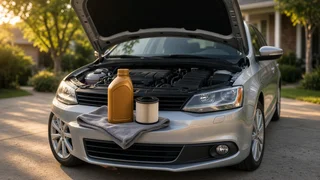
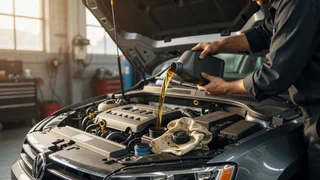
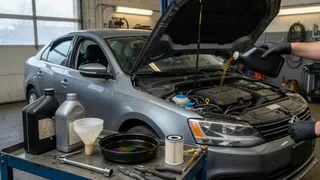
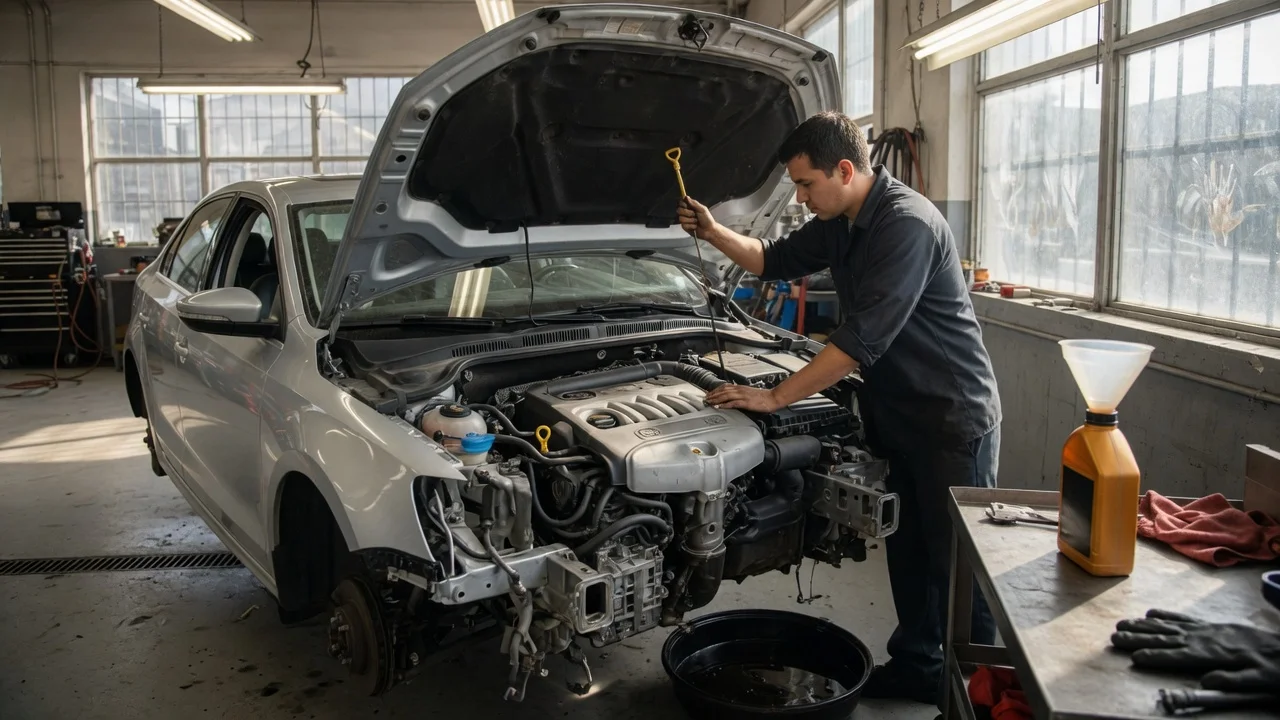
Even with the published capacity, an oil change can leave a small amount of old oil in the engine, so the amount the engine accepts may differ slightly from the book figure. A cautious approach is to add slightly less than the stated capacity, run the engine briefly, switch it off and let the oil drain back to the sump for a few minutes. Then check the dipstick with the car on level ground and top up in small amounts until the level sits within the marked range.
Avoid overfilling. Too much oil can cause aeration (foaming), which reduces lubrication, and may lead to oil being drawn into the intake or emissions components. On diesels with a particulate filter, that can cause additional problems. If the level is clearly above the maximum mark, drain the excess rather than driving on it.
What remains uncertain
This guide does not provide model-year-specific capacities, oil viscosity grades or Volkswagen specification numbers for individual Jetta diesel engines, because verified data for each variant was not available. Treat any figure you find elsewhere as reliable only if it is tied to your exact engine code, and confirm it with the owner's manual or a Volkswagen dealer before your next oil change.