Vehicle License Plates and Plate Numbers

The Short Answer
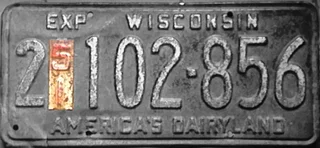
A vehicle license plate is the official registration marker that a government motor vehicle agency issues for a road vehicle. In the United States, that agency is usually called the DMV. The plate number is the combination of letters and numbers printed on that plate. It links the vehicle to a registration record held by the issuing jurisdiction. The plate shows that the vehicle is registered and lets officials and others identify it on the road.
The key qualification is that US plates are issued and regulated by individual states and territories, not by the federal government. The agency's name, the plate designs, the number formats, the display rules and the renewal procedures all vary by jurisdiction. Any specific requirement depends on where the vehicle is registered.
What the Plate Number Identifies
The plate number serves as a lookup key to the vehicle's registration with the issuing state. That record generally connects the vehicle to its registered owner and its registration status. The number itself is an assigned identifier. On standard plates it does not describe the vehicle's make, model or specifications.
Terminology differs by region. Americans usually say license plate or tag. Readers in other English-speaking countries may see licence plate, number plate or registration plate. In some markets, such as India, the term vehicle number board is common. These names all refer to the same basic item: a government-issued registration display.
How a Plate Differs From Related Identifiers
Plate numbers are often confused with the vehicle identification number (VIN) and with the registration itself. They serve different purposes:
Identifier | What it is | Who assigns it | Can it change? License plate number | Registration marker displayed on the vehicle | State or territorial motor vehicle agency | Yes, for example with replacement plates, specialty plates or a change of registration state; VIN | Unique code identifying the specific vehicle | The manufacturer, at production | Generally no; it stays with the vehicle for its life; Registration | The legal record authorizing the vehicle for road use | State or territorial motor vehicle agency | It is renewed periodically and updated when ownership or other details change
Rules That Vary by State
Several practical points depend on the jurisdiction. Check each one with your state's motor vehicle agency:
Whether plates must be displayed on both the front and rear of the vehicle, or only the rear. Whether plates stay with the owner or with the vehicle when it is sold. How registration renewal is shown, such as with a sticker or decal, and where it must be placed. Which optional plates are offered, such as personalized (vanity) or specialty designs, and what restrictions apply. The steps to replace plates that are lost, stolen or damaged.
Information Gaps
No confirmed state-specific evidence was available for this article. It therefore does not state fees, processing times, renewal intervals, number formats, display requirements or agency contact details for any jurisdiction. For an action such as renewing a registration, ordering a personalized plate or replacing a missing one, use the official motor vehicle agency for the state where the vehicle is registered as the authoritative source.