Vauxhall Corsa D steering angle sensor location

When the stability or traction warning light appears on a Vauxhall Corsa D, the steering angle sensor is often part of the diagnostic path. This component reports how far the steering wheel has turned relative to center, giving the electronic stability system a reference for yaw and cornering force. A missing or implausible position signal can switch off assistance features and leave a fault code that points toward calibration, wiring, or the sensor itself. Knowing where the unit is mounted helps with inspection, connector checks, and understanding why a scan tool may show a steering angle value that does not change smoothly.
Essential answer
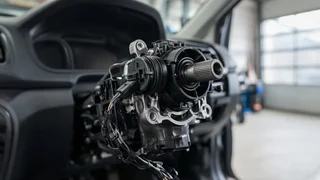
On the Corsa D, the steering angle sensor is typically integrated with the steering column rather than mounted under the hood or at the wheels. The sensor reads the rotation of the column shaft near the steering wheel, usually through a contact assembly or optical disk arrangement inside the column switch cluster. That placement lets the vehicle compare the driver's input with the shaft position reported by the electric power steering system, helping the stability program judge whether the car is following the intended path.
A fault does not automatically mean the sensor itself has failed. The system may store a code when the angle value is missing, out of range, or inconsistent after a battery disconnect. Because the Corsa D may label this component differently depending on the manufacturer diagnostic software, a stored identifier for plausibility, calibration, or internal fault should be confirmed against the specific vehicle configuration. The sensor's job is to supply a coherent position reading, not to act alone when the stability system reacts.
Identification and location
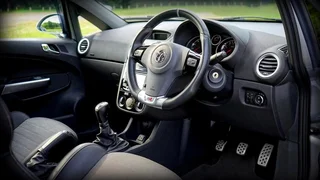
The most useful identification cue is the steering column switch housing directly behind the steering wheel. The angle sensor is often part of, or attached near, the combination switch assembly that contains the indicator, wiper, and clock spring wiring. To recognize it during inspection, look for a broad circular plastic unit surrounding the steering shaft with at least one electrical connector and, on some versions, a ribbon cable visible inside the housing. The unit does not sit at the steering rack, and it should not be confused with the torque sensor used by the power steering system.
Accessing the area usually requires pulling the steering column trim, removing the airbag and wheel, and separating the column switch assembly according to the applicable service instructions. Because the assembly contains the clock spring and airbag circuit, the work involves precautions beyond a routine connector check. Before disassembly, a scan tool can display the live steering angle signal while the wheel is turned slowly. A value that jumps, freezes, or fails to return to center supports a calibration problem or a sensor assembly issue, whereas a stable reading points the diagnosis toward wiring or another module.