Valley Propane and Fuels: LPG Refueling Availability
If you searched for Valley Propane and Fuels because you drive a propane-powered vehicle, the key question is whether the location can put fuel directly into a vehicle-mounted tank. A propane business does not automatically offer vehicle refueling. Many regional propane companies mainly deliver to homes and businesses, refill or exchange portable cylinders, or serve forklift fleets. Some also run a motor-fuel dispenser for autogas vehicles. This guide explains how to tell which kind of service a given Valley Propane and Fuels location offers and what to confirm before you drive there.
The short answer
No confirmed details about a specific Valley Propane and Fuels location's services, hours, prices or equipment are available for this article. Business names like this are common among regional propane and fuel distributors in the US, so the search may match more than one unrelated company in different areas. Contact the specific location you plan to use and ask whether it has a dispenser for filling vehicle-mounted LPG tanks. A cylinder refill station or bulk delivery service alone will not refuel a car or truck with a permanently installed propane tank.
Types of propane service and what each means for a vehicle
Propane retailers usually offer some mix of the services below. Only the first one is directly relevant to refueling an LPG vehicle.
Service type | What it does | Useful for a vehicle-mounted LPG tank? Autogas or motor-fuel dispenser | Pumps liquid propane through a hose and vehicle fill nozzle into a tank installed on a car, truck or van | Yes, this is the service you need; Portable cylinder refill | Fills grill-size or similar cylinders by weight or by volume at a fill station | No, unless your vehicle uses removable cylinders designed for that purpose; Cylinder exchange | Swaps an empty cylinder for a filled one | No, for permanently mounted tanks; Forklift cylinder service | Refills or exchanges industrial truck cylinders | Only for forklifts and similar equipment; Bulk delivery | A truck fills a stationary tank at a home or business | No, unless a fleet has its own on-site dispensing setup
How LPG vehicle refueling differs from CNG
LPG (liquefied petroleum gas, sold in the US mostly as propane) and CNG (compressed natural gas, mostly methane) are both gaseous fuels, but they are stored and dispensed differently and cannot be swapped. Propane is stored as a liquid under moderate pressure, and a propane dispenser transfers liquid into the vehicle tank. CNG is stored as a high-pressure gas and needs a dedicated compressor station and a different fill receptacle. A propane retailer generally does not sell CNG, so a CNG vehicle owner should look for a natural gas fueling station.
What to confirm before you go
Whether the location has a dispenser for vehicle-mounted tanks, not only a cylinder fill station; Which fill connector the dispenser uses, and whether it fits your vehicle's fill valve or needs an adapter; Operating hours for vehicle fueling, which may differ from office or delivery hours; Whether an attendant must perform the fill or a trained customer may self-serve, since local rules and company policy vary; Accepted payment methods and whether fleet accounts or fuel cards are available; Whether pricing for motor fuel differs from cylinder or delivery pricing; Whether the dispenser can serve your vehicle type and size, such as a light-duty conversion, a dedicated-fuel truck or a bus
What happens during an LPG fill
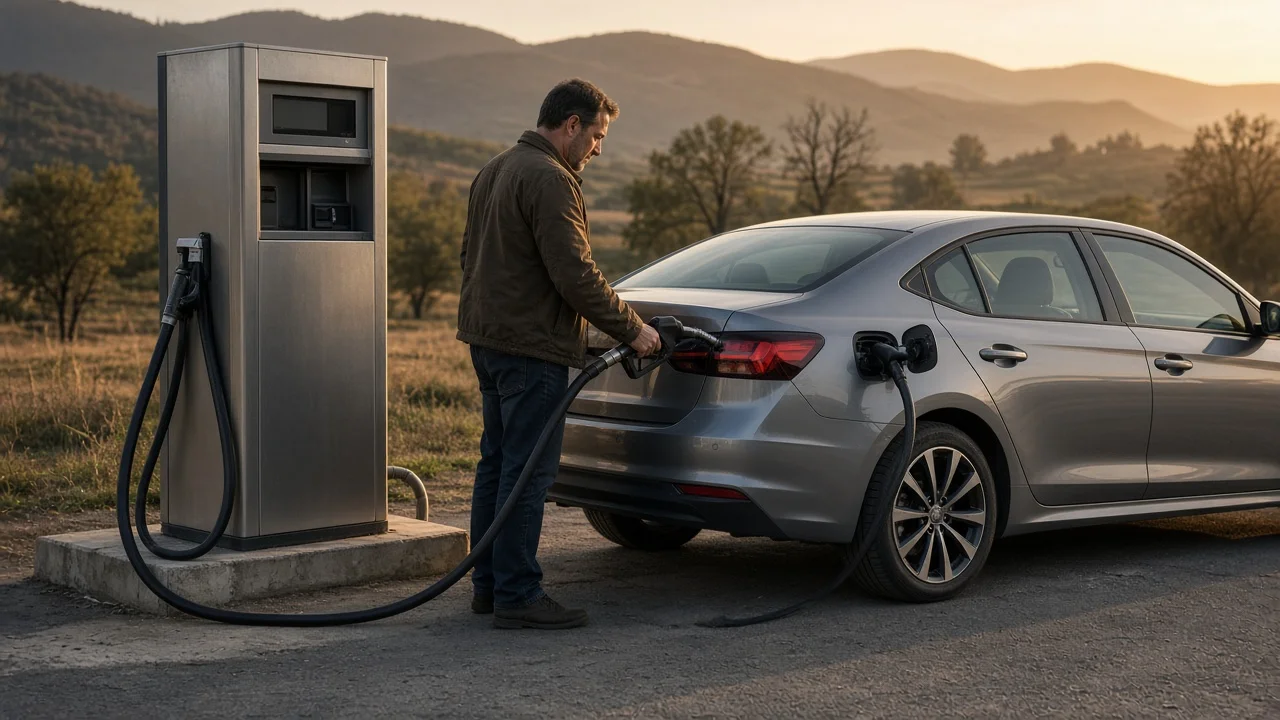
At an autogas dispenser, the nozzle connects to the vehicle's fill valve and liquid propane is pumped into the tank. Vehicle propane tanks use an automatic stop-fill or overfill protection device that typically ends the fill at about 80 percent of tank capacity. The remaining space allows the liquid to expand as temperature rises. So a fill that stops before the gauge reads full is normal. A brief release of vapor when the nozzle disconnects is also common. A persistent odor near the tank, lines or fill valve is not normal, and the vehicle should not be driven until it is checked.
Vehicle-side factors worth knowing
Fuel quality and system condition affect how an LPG vehicle runs after refueling. Propane sold for vehicles in the US is commonly specified as HD-5 grade, and a retailer can tell you what grade it dispenses. On the vehicle, the details depend on the engine configuration and the type of fuel system:
Vapor-injection and older mixer systems turn liquid propane into vapor through a vaporizer-regulator before it reaches the engine; Liquid-injection systems often use an in-tank fuel pump to keep fuel pressure high enough that propane stays liquid up to the injector; An LPG fuel filter traps contaminants and residue from the fuel; a restricted filter can reduce fuel pressure and cause hesitation or hard starting; On systems with engine computer control, persistent rich or lean fuel trim readings after switching fuel sources or refueling can point to fuel delivery, pressure regulation or injector problems; A periodic leak check of fittings, lines and valves, done by a qualified technician, is a normal part of LPG ownership
Maintenance intervals and pressure specifications vary with the conversion kit or factory system, the model year and the market. Use the documentation for your system rather than general figures.
If the location does not offer vehicle fueling
If the Valley Propane and Fuels location near you only handles delivery or cylinders, ask whether it knows of nearby autogas dispensers. Propane retailers often know which local sites serve vehicles. Fleet operators with steady fuel use can also ask about installing an on-site dispenser supplied by bulk delivery. Whether that makes sense depends on fuel volume, site permits and the supplier's terms. Dual-fuel vehicles that can also run on gasoline add flexibility when propane stations are sparse, but they still need a compatible dispenser to use propane.