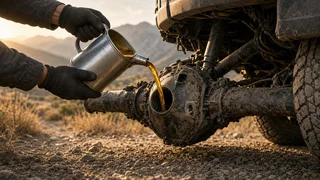
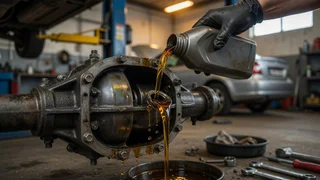
Using 75W-90 gear oil in an engine

When a bottle of 75W-90 gear oil is left over from a differential or manual transmission service, some owners wonder whether it can be used during an engine oil top-up or change. The short answer is that this lubricant is not formulated for crankcase service and should not replace an engine oil. Although both products lubricate metal parts, their additive chemistry, viscosity behavior, and intended operating environments are fundamentally different. This article explains why the substitution creates risk, what the grade actually means, and how to interpret the specification markings on a container before adding it to an engine. The information here assumes a standard passenger-car or light-truck gasoline engine in the United States unless a vehicle manufacturer states otherwise.
Essential answer
Putting 75W-90 gear oil in an engine is not a safe substitute for an appropriate motor oil. Gear oil is designed for enclosed, lower-speed, high-pressure contacts in differentials, transfer cases, and certain manual transmissions. Engine oil must remain pumpable at cold start, resist combustion byproducts, suspend soot, and flow rapidly through tight bearing clearances. The additive packages that help gear oil protect hypoid ring-and-pinion teeth can harm a crankcase environment.
The viscosity grade itself is misleading when compared across categories. A 75W-90 gear oil does not behave like an SAE 90 engine oil or a conventional 10W-40 motor oil under the same test conditions because gear-oil and engine-oil grades use different temperature and shear references. A container labeled only with a gear-oil grade should be treated as a gear lubricant, not as a thicker substitute for engine oil during a low oil level emergency or a scheduled service. Always confirm the required lubricant specification and fill quantity for the specific engine before adding any fluid.