Use Long Beach towing operations
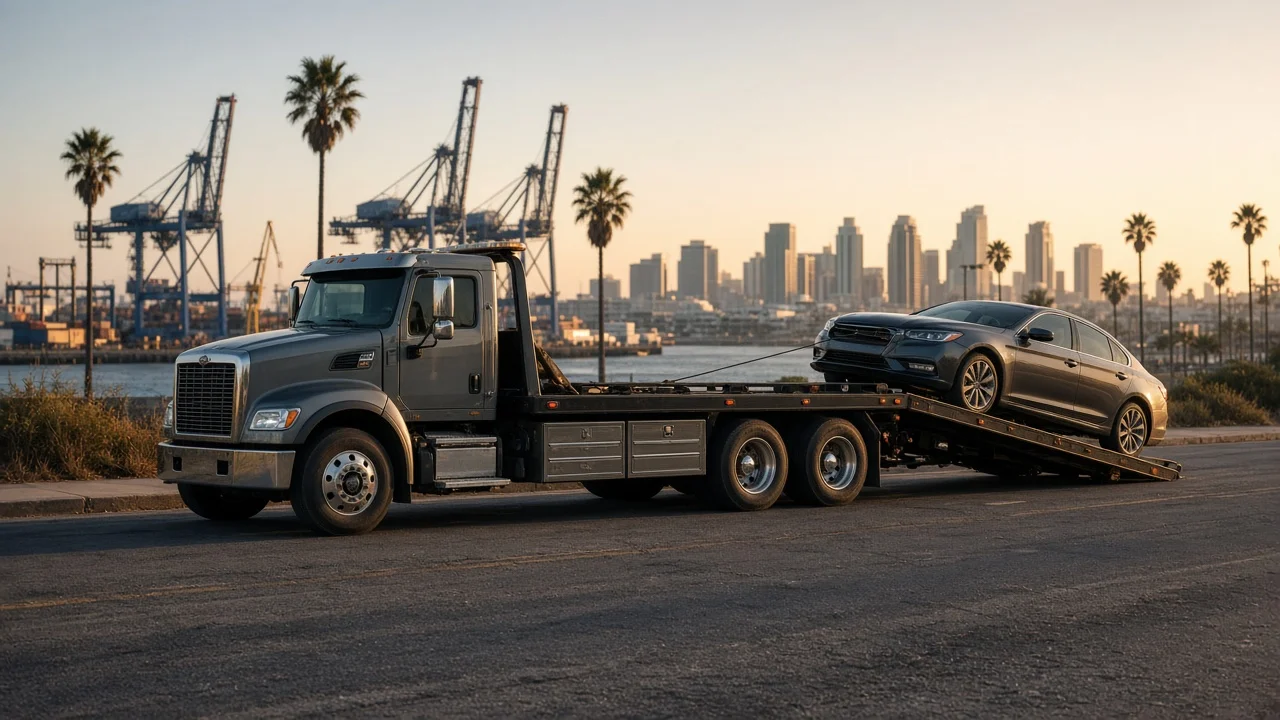
Choosing a towing operation in Long Beach, CA means matching the tow vehicle, trailer configuration, and the work it will actually perform. A commercial operator must respect payload, gross vehicle weight rating, combined weight rating, tongue weight, and axle rating before dispatching a truck. A tow company that treats these ratings as firm limits helps prevent drivetrain stress, brake fade, and unstable handling on the 710, 405, or surface streets near the port. This guide explains how to evaluate the towing operation behind the service rather than only comparing a phone quote.
The direct answer
The most suitable Long Beach towing operation is one whose truck and trailer combination is rated for your vehicle or load and whose staff can explain that fit in plain terms. A passenger car, a loaded cargo van, and a low-clearance vehicle may require different wheel-lift, flatbed, or dolly configurations, so the answer can change with vehicle condition and location. Ask the dispatcher which equipment will arrive and whether the operator carries documentation for the truck's current gross vehicle weight rating and combined rating, not just a towing license.
A towing operation should also confirm load placement before departure. The towed vehicle's position on a flatbed changes tongue weight and front-axle loading, while a wheel-lift alters how much weight remains on the casualty vehicle's rear axle. If the operator cannot state the limiting rating for the job, treat that as a reason to call another service. In Long Beach, where ramps, railroad crossings, and warehouse traffic create frequent braking events, choosing a company that works within rated limits is more important than the lowest initial dispatch fee.
Function and background
Towing ratings describe limits for different parts of the system, not one universal number. Gross vehicle weight rating is the maximum allowable loaded weight of a truck or trailer by itself, while combined weight rating covers the tow vehicle, trailer or towed vehicle, occupants, fuel, and equipment moving together. Axle rating sets the limit for a specific axle assembly and its tires, springs, and brakes. A truck may have spare combined capacity while one rear axle is already near its design limit, particularly when a heavy pickup or cargo van is lifted from the front.
Tongue weight matters when a trailer is used, but equivalent forces appear on wheel-lift and under-reach systems. Too little load on the hitch or lift can allow sway, while too much can unload the tow truck's steering axle and reduce front tire grip. Payload includes the driver, passenger, chains, dollies, tools, fuel, and any cargo carried in the tow truck. A business that regularly dispatches trucks near these limits needs more careful dispatch, better brake inspection, and clearer refusal standards for overweight loads than an operation that only handles lightweight passenger cars.
Choosing and buying
Before committing to a Long Beach tow, describe your vehicle accurately: year, model, drive type, approximate loaded weight, tire condition, and whether it is stuck, damaged, or parked in a structure. Then compare how each company answers the same job. Useful signals include a specific truck class, flatbed or wheel-lift choice, estimated response window, and whether the operator will inspect tie-down points before moving. Avoid accepting a vague promise that 'we tow everything'; that often means the dispatcher has not yet calculated whether the load fits a rated configuration.
Evaluate the total transaction rather than the hook fee alone. Confirm what is included for after-hours, freeway, impound, or port-area access, and make sure the final destination is clear before the truck leaves. Ask whether the driver can provide the tow truck's current registration and weight information at the scene. This is especially relevant in commercial areas where a disabled box truck, delivery van, or loaded service vehicle may push a medium-duty wrecker beyond its rear axle or combined weight rating even when the visible size looks manageable.
Understanding a problem
If a towing company says a job cannot be performed safely, the limiting factor is usually a specific rating rather than a general refusal. Examples include a truck that would exceed its rear axle rating when lifting a loaded cargo van, a flatbed that cannot achieve a safe load angle for a disabled sports car, or a combined weight rating that leaves no reserve for a steep transition. These are equipment constraints, not merely service failures, and they should lead to dispatching a larger or differently configured truck instead of improvising.
Watch for practices that change the load calculation after dispatch. Adding a second vehicle, loading heavy cargo into the casualty truck, or using a dolly to lift only two wheels can shift forces and invalidate the operator's original plan. If the driver seems uncertain about tongue weight, axle loading, or attachment points, stop the operation and request a supervisor or a different unit. Continued movement with a poorly distributed load can damage the towed vehicle's drivetrain and chassis, and it can create a control problem for the wrecker in Long Beach traffic.