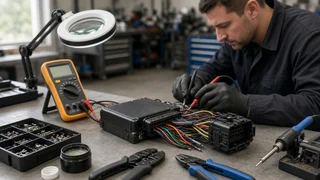
Understand a vehicle ECM
Most drivers encounter the letters ECM only after a dashboard warning appears or a shop mentions engine diagnosis. In a modern vehicle, the ECM is the central computer that coordinates spark timing, fuel delivery, and several emissions-related functions using continuous sensor input. Recognizing what this module does helps you interpret diagnostic trouble codes, reduced power warnings, or throttle control complaints without assuming the computer itself has failed. The following explanation gives a practical overview of how an ECM vehicle manages engine operation and why symptoms should be read as clues rather than final proof of a bad module.
Essential answer
At its core, the engine control module is an onboard controller that reads conditions such as crankshaft position, coolant temperature, intake airflow, and accelerator demand. It adjusts fuel injector pulses, ignition events, and sometimes camshaft or electronic throttle positions to keep combustion stable. When one of these sensor inputs falls outside an expected range, the controller may set a diagnostic trouble code, illuminate a warning lamp, or enter a protective operating mode that limits engine output until conditions return to a calibrated range.
The important qualification is scope: the ECM is not a single sensor, fuse, or wiring connector. It is the logic center that interprets those inputs, but a fault code tied to it does not automatically prove the module has failed. Corroded terminals, poor grounds, failing actuators, or interrupted power can produce similar codes. Manufacturer-dependent definitions also vary, so vehicle-specific confirmation from a scan tool or service information is needed before treating a code as an internal computer failure.