Two-Cycle Engine Oil Mix Ratio: How to Find and Measure the Right Mix
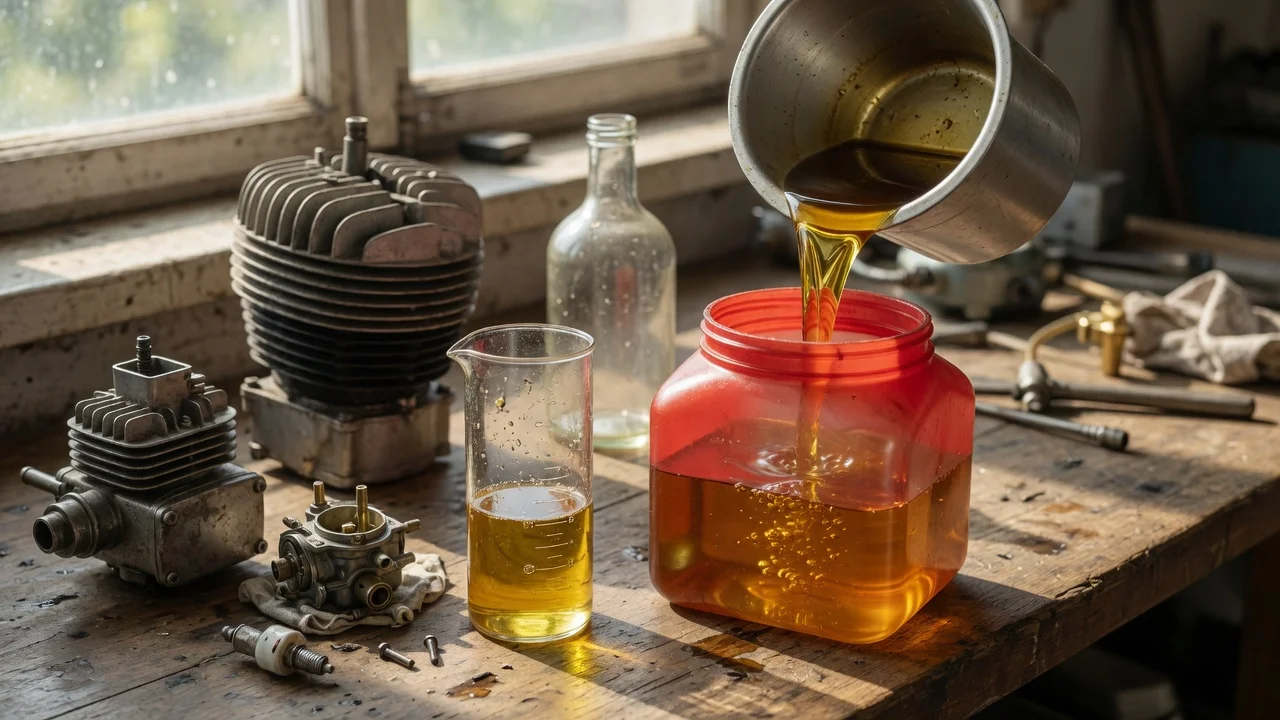
Most two-cycle (two-stroke) engines have no separate oil sump. They are lubricated by oil mixed into the fuel, so the oil-to-fuel ratio directly affects engine protection and running quality. The short answer: use the ratio your engine's manufacturer specifies. The rest of this guide explains where to find that figure, how to read it and how to measure it.
The Direct Answer
The correct ratio is whatever the owner's manual, the fuel cap or the label on the engine states for that specific engine. Common figures include 50:1, 40:1, 32:1 and 25:1. No single ratio is correct for every two-cycle engine. The right number depends on the manufacturer, the model and sometimes the model year, so a ratio that suits one string trimmer or chainsaw may not suit another, even from the same brand.
A ratio such as 50:1 means 50 parts gasoline to 1 part two-cycle oil by volume. The larger the first number, the less oil goes into the mix.
When Premixing Does Not Apply
Some two-stroke engines, including certain motorcycles, outboard motors and other equipment, use an oil-injection system. These engines meter oil from a separate tank into the engine automatically. Premixing fuel for an oil-injected engine is generally not required unless the manufacturer says otherwise, for example during break-in. Check the manual to confirm which system your engine uses.
String Trimmer Oil Ratio
People searching for a trimmer oil ratio are usually working with a handheld two-cycle string trimmer. The same rule applies: follow the manufacturer's stated ratio. Many trimmers print it near the fuel cap or on the housing. If the marking is missing or worn, use the owner's manual or contact the manufacturer with the model number. Do not guess. Some trimmers use four-stroke engines, which take plain gasoline and oil in a separate crankcase, so confirm the engine type before mixing anything.
How Much Oil to Add
The amounts below are calculated from the ratios and rounded for practical measuring. One US gallon equals 128 US fluid ounces.
Ratio | Oil per 1 US gallon of gasoline | Oil per 1 liter of gasoline; 50:1 | about 2.6 fl oz | 20 ml; 40:1 | 3.2 fl oz | 25 ml; 32:1 | 4.0 fl oz | about 31 ml; 25:1 | about 5.1 fl oz | 40 ml
To calculate other amounts, divide the volume of gasoline by the first number of the ratio. For example, 5 liters of gasoline at 50:1 needs 5,000 ml divided by 50, or 100 ml of oil.
Choosing and Mixing the Oil
Use oil labeled for two-cycle or two-stroke engines. Do not use four-stroke engine oil. Match the oil to the engine type. Air-cooled equipment such as trimmers and chainsaws typically calls for air-cooled two-stroke oil, often rated to standards such as JASO FD or ISO-L-EGD. Water-cooled outboards commonly specify oil rated NMMA TC-W3. Follow the manual if it names a standard. Some oil makers state that their oil can be used at a particular ratio. The engine manufacturer's specification still takes priority. Mix in a clean, approved fuel container rather than in the equipment's tank, then shake to blend before fueling. Use the gasoline grade and ethanol content the manufacturer allows.
Why the Exact Ratio Matters
Too little oil reduces lubrication and raises the risk of internal wear or engine seizure. Too much oil can cause heavy smoke, carbon buildup, fouled spark plugs and poor running. Because both errors can cause harm, measure carefully rather than estimating.
Limits of This Guide
This guide does not list model-specific ratios, because those figures vary by manufacturer, model and model year. It also does not cover how long premixed fuel stays usable. For any particular engine, the owner's manual is the authoritative source.