Transmission Fluid vs Engine Oil: What’s the Difference?
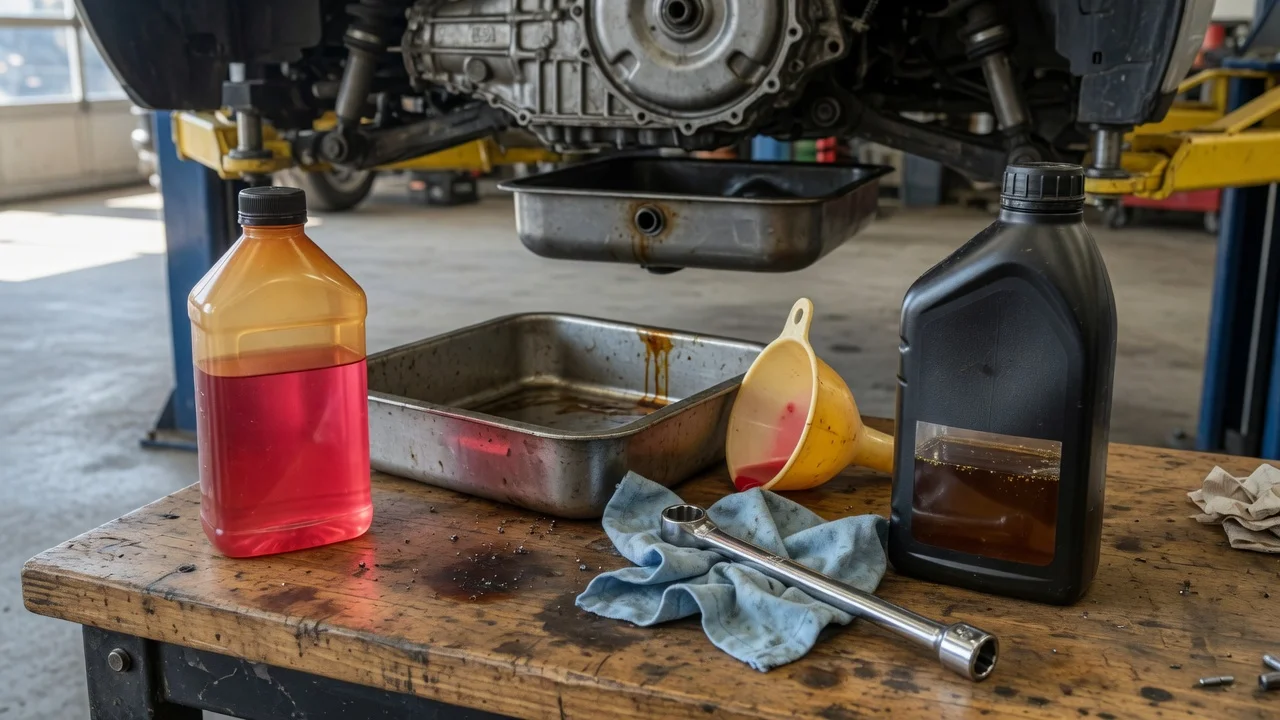
Engine oil lubricates the engine; transmission fluid serves the transmission. They usually are not interchangeable. Use the fluid specified for the particular engine or transmission, because the correct choice depends on the vehicle and its components.
What each fluid does
Engine oil reduces friction and carries heat away from moving engine parts. It also helps manage contaminants produced during engine operation.
Transmission fluid lubricates transmission components. In an automatic transmission, it can also transmit hydraulic pressure used to operate the transmission and must provide the friction characteristics its design requires. Manual transmissions have different requirements and may specify a dedicated manual transmission fluid, gear oil, automatic transmission fluid or, in some cases, engine oil.
Which one should you use?
Check the owner’s manual or the manufacturer’s service information for the specified fluid and procedure before topping up or changing either one. The words “transmission fluid” and “engine oil” alone do not identify a suitable product: specifications can differ between vehicles and transmissions. Without the vehicle’s year, model, engine and transmission, a particular fluid or grade cannot be recommended.
If you have put a fluid in the wrong fill point, avoid driving until a qualified technician has identified what was added and assessed the appropriate remedy. The next step depends on the component, the fluid and whether the vehicle has been operated.