Transmission Adaptation Reset: When It Is Needed
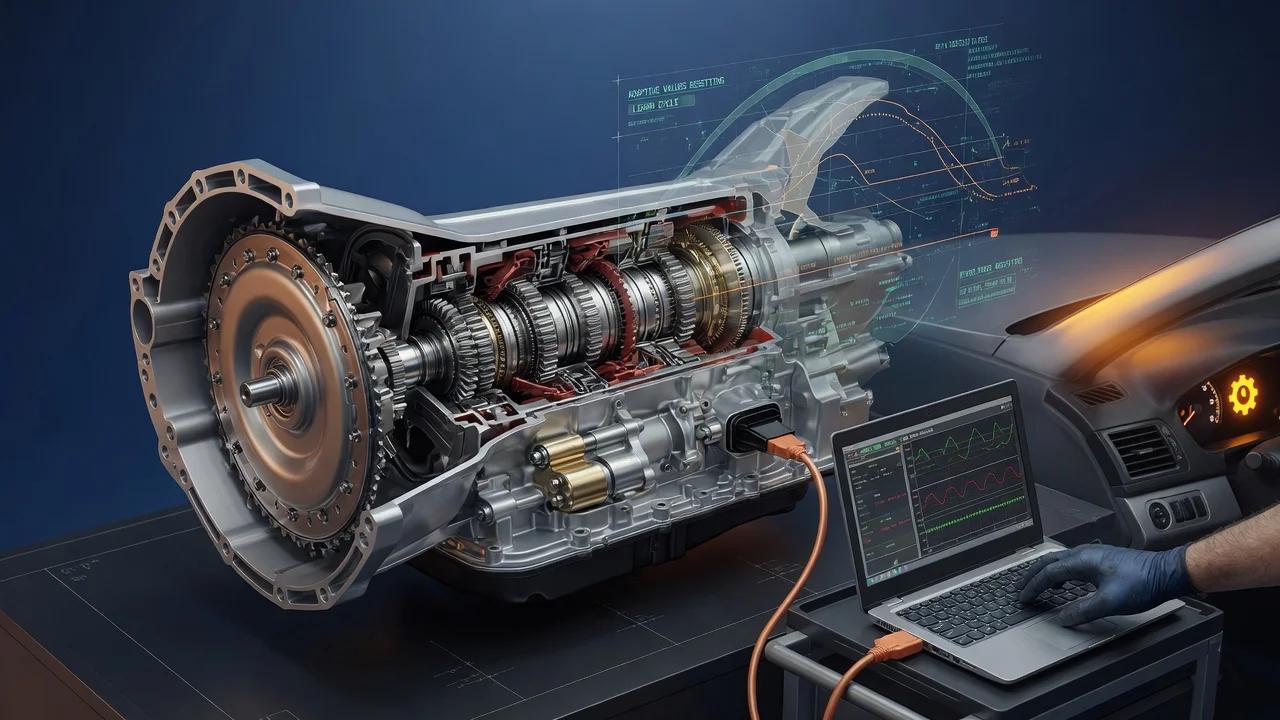
A transmission adaptation reset clears the shift and clutch pressure corrections that an automatic transmission's control module has learned over time. It is a useful step after certain repairs, but it does not cure every rough or delayed shift. Whether you need one, and how it is done, depends on the transmission type, the vehicle's software and the work that has been performed.
When an Adaptation Reset Is Needed
A reset generally makes sense when the hardware described by the learned values has changed. Typical cases include replacing the valve body, mechatronic unit or shift solenoids, replacing or reprogramming the transmission control module, rebuilding the transmission, and replacing clutch packs or the torque converter. On some transmissions, the manufacturer also calls for a reset after a fluid exchange. In each case, the old corrections were tuned to parts or conditions that no longer exist. Until the module relearns, it can produce harsh engagements, flare between gears or slow shifts.
A reset is not the right first step when shift behavior changed without any repair. Clearing adaptations may briefly hide a symptom while the underlying cause remains. That cause could be low fluid, worn clutches, a faulty speed sensor, a wiring fault or an internal pressure leak. A reset can also make diagnosis harder, because the learned values are evidence: unusually large corrections on one clutch can point toward a specific problem area. Have the diagnostic codes read first. If the scan tool can display adaptation values, record them before clearing anything.
How Adaptive Shift Learning Works
A modern automatic controls each shift by commanding hydraulic pressure that applies one clutch and releases another. Manufacturing tolerances, normal wear and fluid condition mean the same command does not always produce the same result. The control module compares input and output shaft speeds to measure how long each shift takes and how smoothly it completes. It then adjusts clutch fill time and pressure to keep shifts within its targets. These stored corrections are the adaptive values.
An adaptive reset returns those values to their base settings, and the transmission starts learning again. Until relearning is complete, shifts may feel firmer, softer or less consistent than usual. Some systems relearn passively during ordinary driving. Others require a guided routine with a scan tool. Such routines often need a specific fluid temperature and a defined sequence of conditions, such as stationary engagement tests or repeated light-throttle upshifts.
What Changes the Procedure and the Result
Transmission type matters most. Conventional torque converter automatics, dual-clutch transmissions and CVTs learn different things. A dual-clutch unit typically learns clutch engagement points and often needs a dedicated basic settings routine after clutch or mechatronic work. A CVT learns pulley and clutch behavior and may have its own relearn procedure. The same model name can cover different transmissions depending on engine, drive layout and model year. Confirm the exact unit from build data, the transmission identification tag or service documentation before following any procedure.
Software and tooling also differ. Some vehicles allow a reset through a capable aftermarket scan tool, while others require manufacturer-level software. On some older vehicles, disconnecting the battery clears adaptations. On many modern vehicles it does not, and it can erase other settings. Fluid specification is another factor. An incorrect fluid changes friction characteristics, and adaptation may not fully compensate, so a reset performed on the wrong fluid can lead to persistent shift complaints.
ZF Transmission Adaptation Reset
ZF automatic transmissions are fitted by several vehicle manufacturers. The reset and relearn procedure is defined by each vehicle maker's software, not by ZF alone. On many ZF eight-speed applications, service after fluid or mechatronic work involves checking the fluid level at a specified temperature with the engine running, then resetting adaptations with a capable scan tool and completing a relearn. Exact steps, tool support and drive requirements vary by brand and model year.
These units are sensitive to correct fluid level, and the level check depends on temperature. An adaptation performed with an incorrect fill can produce poor shift quality that looks like a failed relearn. Follow the procedure for the specific vehicle, including its fluid temperature window. Do not assume that a routine written for one brand applies unchanged to another brand using the same transmission family.
What the Owner Can Do
Before any reset, describe the symptom precisely. Note which shift is affected, whether it happens cold or hot, at light or heavy throttle, when it started, and whether any work was done shortly before. Gather the service history, including fluid changes, software updates and repairs. Have the codes read and recorded rather than simply cleared. If your transmission has an owner-accessible dipstick, check fluid level and condition as the owner's manual describes. Many current units are sealed and need a shop procedure instead.
After a reset, drive in a varied but gentle way once the transmission reaches normal operating temperature. Use a mix of light and moderate acceleration and gradual stops. Avoid judging shift quality during the first short drive. If the procedure calls for a guided routine, complete every step. If harsh shifts persist well beyond the relearn period or codes return, treat that as diagnostic information rather than a reason to reset again.
If a valve body, mechatronic unit or control module was replaced, confirm correct fitment. That means the right part number and software level, and coding if the manufacturer requires it. Adaptation cannot correct for a mismatched or incorrectly programmed part.
Limitations and Next Step
A reset only clears learned compensation. It does not repair worn friction material, a slipping torque converter clutch, a leaking seal, a weak solenoid or damaged wiring. Suspect another cause if a reset gives only a short-lived improvement, or if shifts were fine before a repair and poor afterward. A symptom such as a harsh shift between two particular gears can have several causes, so the outcome of a reset does not by itself confirm that any part has failed.
For the exact procedure, use the manufacturer's service information or a shop that has the right tool and experience with your transmission type. Consult a transmission specialist when codes indicate ratio errors, slipping or overheating, or when the fluid is dark, smells burnt or contains debris. Bring your service history and symptom notes so the shop can compare repair options rather than repeating a reset.