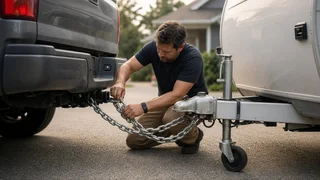
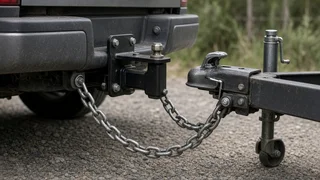
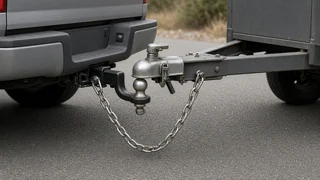
Trailer safety cables VS chains
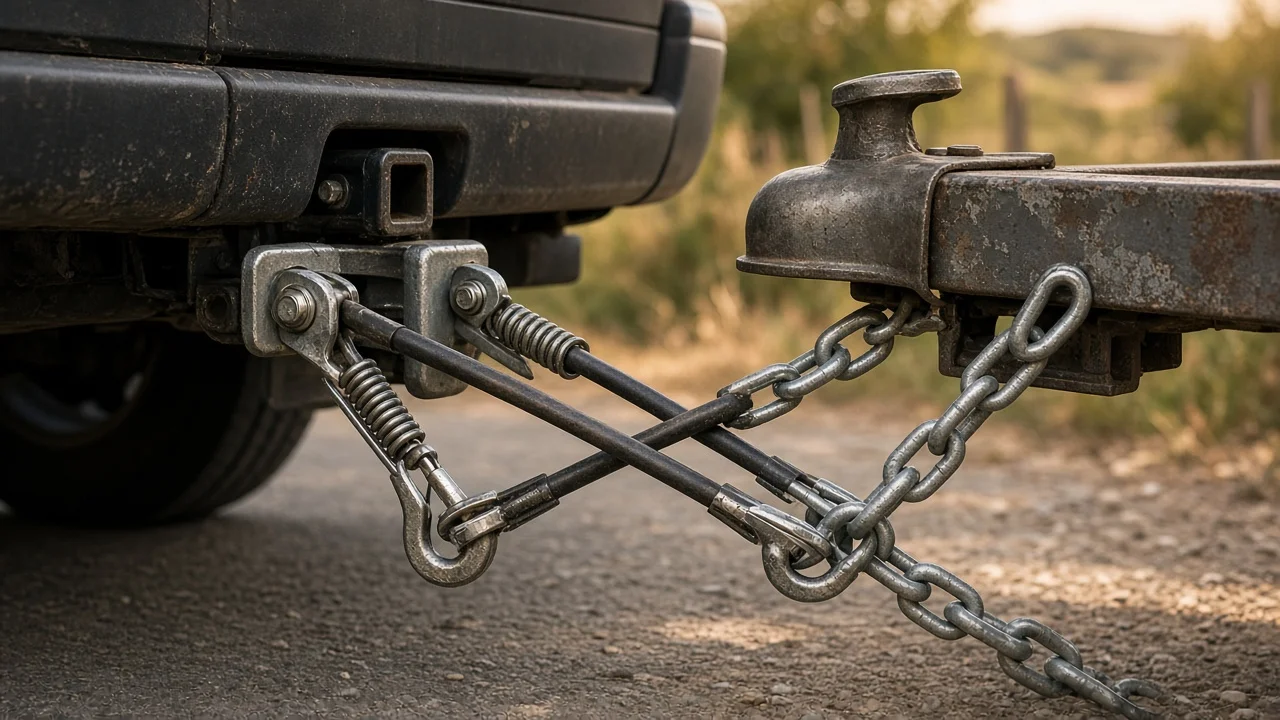
Choosing between trailer safety cables and chains means weighing breakaway security against everyday towing behavior. Each option forms the critical backup link between the tow vehicle and trailer coupler, keeping a detached trailer under partial control rather than crossing into traffic. The right choice depends on trailer configuration, tongue weight, gross vehicle weight rating, combined weight rating, and how the rig behaves over rough pavement. Understanding those factors helps a driver match the connection to the load and the legal safety stop it must perform.
Direct answer
For many light and medium trailers, high-strength safety cables offer a cleaner coil that resists dragging and reduces sudden jerk when slack tightens. Chains remain common on heavier trailers because their thick links tolerate road abrasion and can be crossed under the tongue to form a cradle. Neither option removes the need to size the breakaway connection to the loaded trailer weight and hitch configuration.
Cables often suit setups where a low coupler or surge brake actuator leaves little room for bulky hooks, while chains provide a visibly durable choice for open-deck or utility trailers that scrape over uneven ground. The practical decision is not simply cable versus chain, but which backup connection remains secure, properly rated, and short enough to catch the coupler without binding during normal turns and suspension movement.