Trailer Hub Oil: What It Is, When You Need It and How to Choose It
The short answer
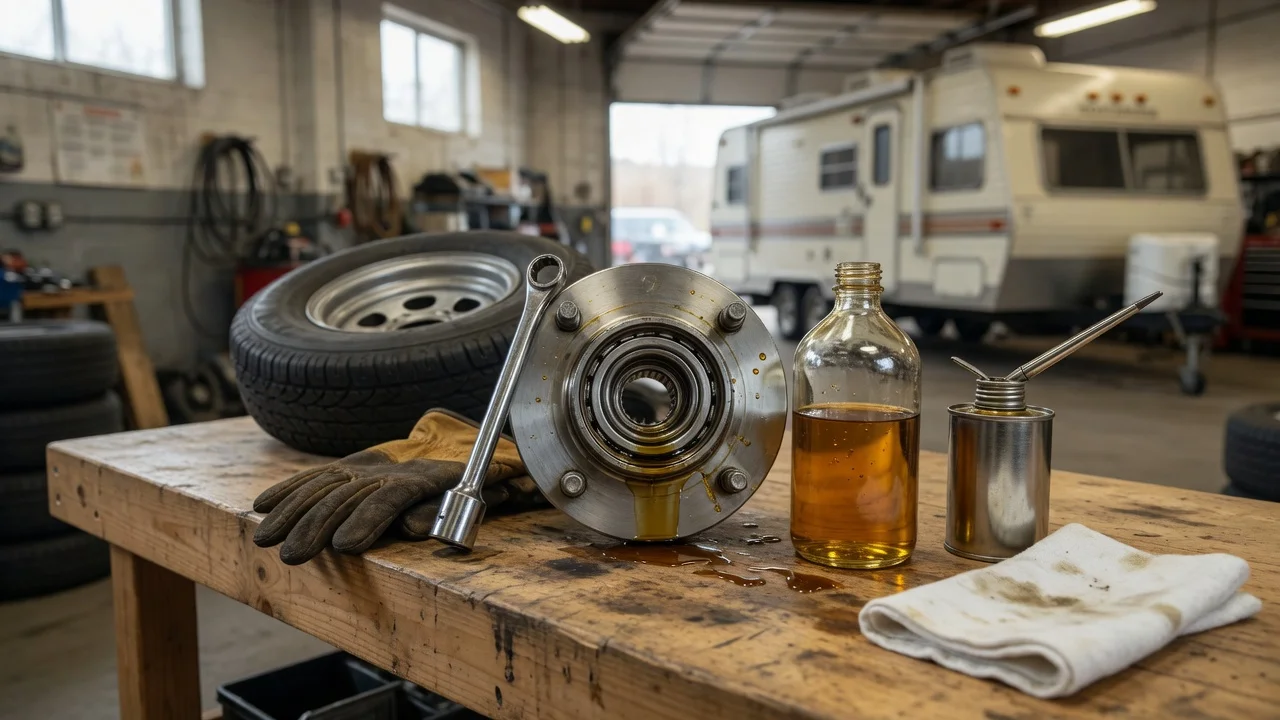
Trailer hub oil is the lubricant used in oil-bath hubs. In these hubs, the wheel bearings run in a reservoir of oil sealed inside the hub, rather than being packed with grease. If your trailer has oil-bath hubs, use the oil type and grade specified by the axle or hub manufacturer. That is usually a gear oil, and owners often see multigrade grades such as 80W-90 or 75W-90 mentioned. If your hubs are grease-packed, hub oil does not apply, and you should not add oil to them.
The most important qualification is that requirements vary by axle maker, hub design, axle capacity and model year. A general guide cannot confirm the correct oil for a specific trailer. The manufacturer's manual, the hub cap markings or the axle maker's published lubrication chart is the authority for your equipment.
How to tell whether your hubs use oil
Oil-bath hubs usually have a clear or windowed hub cap, often called a sight glass. It lets you see the oil inside, and many caps have a fill plug and a level mark. Grease-lubricated hubs typically have a solid metal dust cap. Some have a grease fitting, a design often found on hubs that can be greased without removal.
Common signs of an oil-bath hub: • A transparent or windowed hub cap through which oil is visible; • A rubber or threaded fill plug in the cap; • A level line or marking on the cap; • Owner documentation that refers to oil lubrication rather than bearing grease
If the cap is opaque and you cannot confirm the design, check the axle's identification tag or the trailer manual before adding any lubricant. Mixing lubrication methods, such as adding oil to a grease-packed hub, is not a substitute for the correct service.
Choosing the right oil
Gear oils are classified by viscosity grade, such as 80W-90, and by a performance category, such as the API GL ratings. Hub manufacturers specify one or both. Some axle makers publish a list of approved oils or allow synthetic gear oil, while others call for a specific product. Some hub designs use a semi-fluid grease instead of oil. Because these specifications differ across manufacturers and product lines, follow the documented requirement for your hub rather than a general recommendation.
No manufacturer specifications, approved-product lists or test data were provided for this guide. It therefore does not name a single correct brand, grade or fill quantity. Treat the grades mentioned above as common examples, not as a confirmed specification for any particular axle.
Checking and maintaining the oil level
Hubs with a sight glass let you check the level visually without disassembly. Check the level against the cap marking with the trailer parked on level ground. Fill only to the mark, using the specified oil. Milky or discolored oil can indicate water intrusion, and a falling level or oil on the wheel or tire can indicate a leaking seal. Both call for inspection rather than simply topping up.
Service intervals, the correct fill procedure and seal replacement steps depend on the hub manufacturer and how the trailer is used. Boat trailers that are submerged during launching, for example, face more water exposure. Use the manufacturer's maintenance schedule for exact intervals.
Bottom line
Trailer hub oil matters only if your trailer has oil-bath hubs. In that case, the correct choice is the lubricant your axle or hub manufacturer specifies, which is typically a gear oil of a stated grade. Confirm your hub type first, then match the oil to the manufacturer's documentation for your specific axle.