Trailer brake controller switch
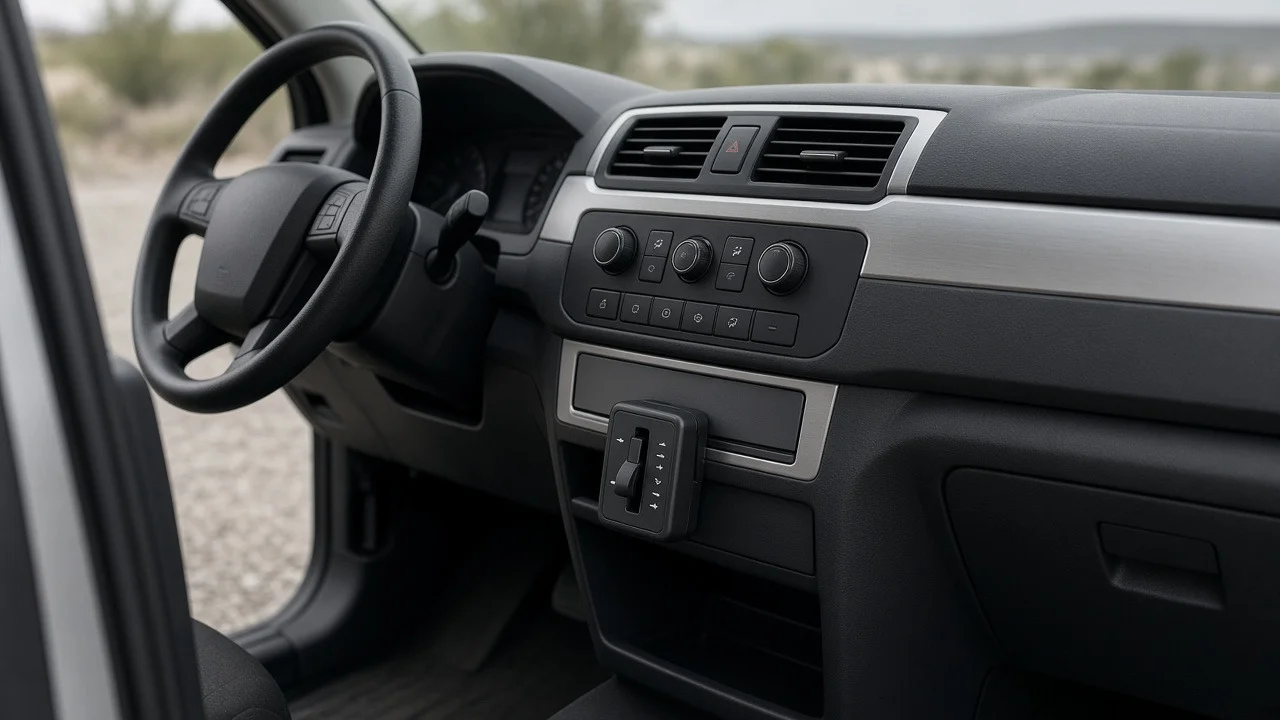
A trailer brake controller switch is the driver’s manual interface for applying or adjusting the electric brakes on a towed trailer, separate from the tow vehicle’s brake pedal. It typically combines a hand-operated slide or button with gain and boost settings. Understanding this control helps clarify how trailer braking force is modulated, why the switch matters during sway events, and how its behavior differs from the hydraulic brake system that stops the truck or SUV.
Essential answer
The essential answer is that the switch is the adjustment and override point for a proportional or time-delayed trailer brake controller. In a proportional system, the controller reads the tow vehicle’s deceleration and sends a matching voltage signal to the trailer’s electric brake magnets. The switch lets the driver manually increase or decrease that output, often through a sliding lever or plus and minus buttons, so trailer braking feels balanced with the truck.
On many controllers, squeezing a manual slide applies trailer brakes independently of the tow vehicle’s brake pedal. This function can help settle trailer sway by adding drag at the rear, though it must be used with care. The switch also provides access to gain, which scales overall braking force for trailer weight, and sometimes boost, which changes initial brake response. Unlike brake pads, rotors, and calipers that generate friction hydraulically on the tow vehicle, this switch addresses electric actuation and requires correct vehicle fitment to function as intended.