Trailer brake controller for Nissan Frontier
Choosing a trailer brake controller for a Nissan Frontier means matching the truck's towing setup to the trailer's brake type before spending money. A Frontier used for occasional utility hauling has different needs than one towing a tandem-axle camper or car hauler. The truck's existing connector, cabin layout, and factory tow package affect how easily a controller installs and how predictably it applies the trailer's electric brakes. Understanding that relationship helps you avoid controllers that fit poorly, feel abrupt, or cannot communicate with the trailer's braking system. The direct answer below identifies the key compatibility checks and the main conditions that change which style is appropriate.
The direct answer
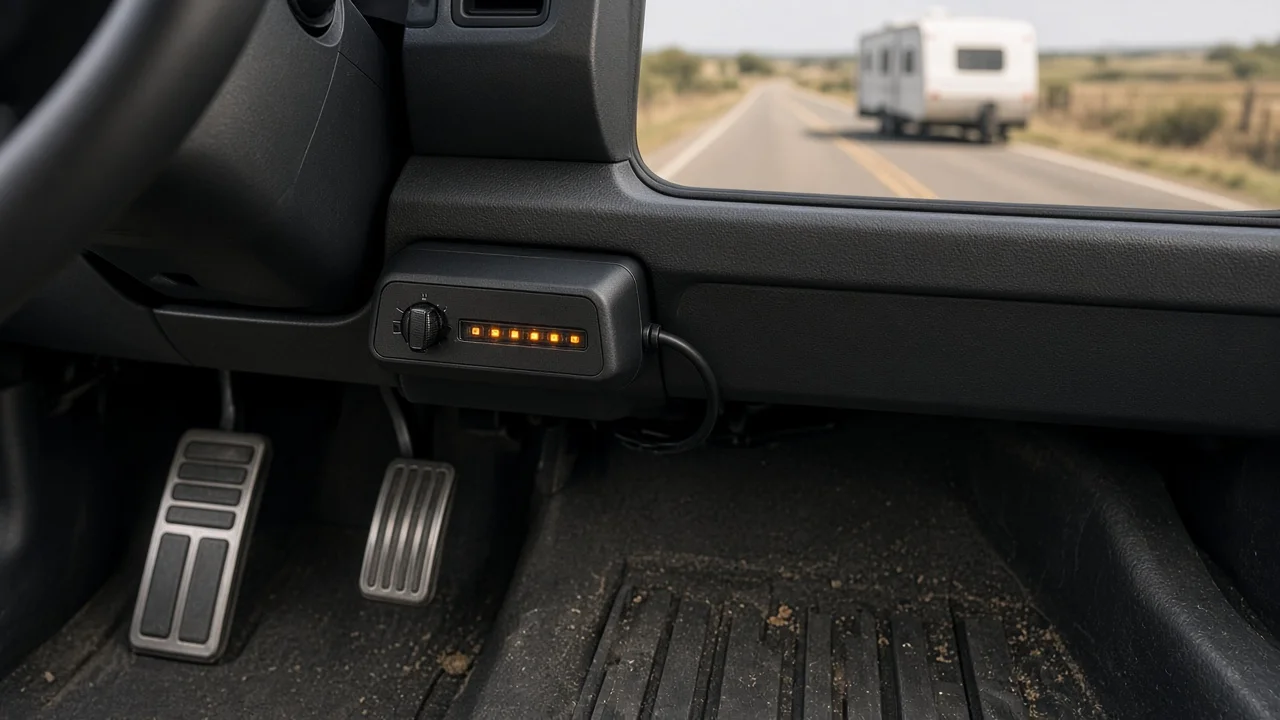
A proportional trailer brake controller is usually the best match for a Nissan Frontier because it uses a decelerometer to sense how quickly the truck is slowing and sends a matching signal to the trailer brakes. That produces smoother stops than a time-delayed unit, which ramps voltage based on a set rate rather than actual motion. The condition that changes this answer is the trailer itself: a single-axle utility trailer with electric brakes may feel acceptable with a lower-cost time-delayed controller, while a heavier travel trailer benefits strongly from the proportional response and finer low-speed modulation.
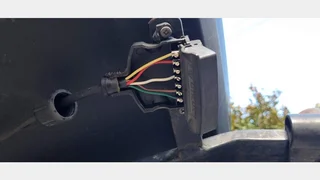
Before buying, confirm whether the Frontier already has a factory tow package connector under the dash. Many late-model trucks include a plug that accepts a vehicle-specific wiring adapter, which reduces splicing and helps the controller communicate with the brake light circuit, stop lamp switch, and 12-volt supply. If that plug is absent, a universal harness with reliable ground and a fused power feed becomes more important. Also verify the trailer's plug style and brake type, because a controller intended for electric-over-hydraulic brakes differs from one designed only for electric drum brakes.