How to Choose and Use a Tractor Tire Bead Breaker
The short answer
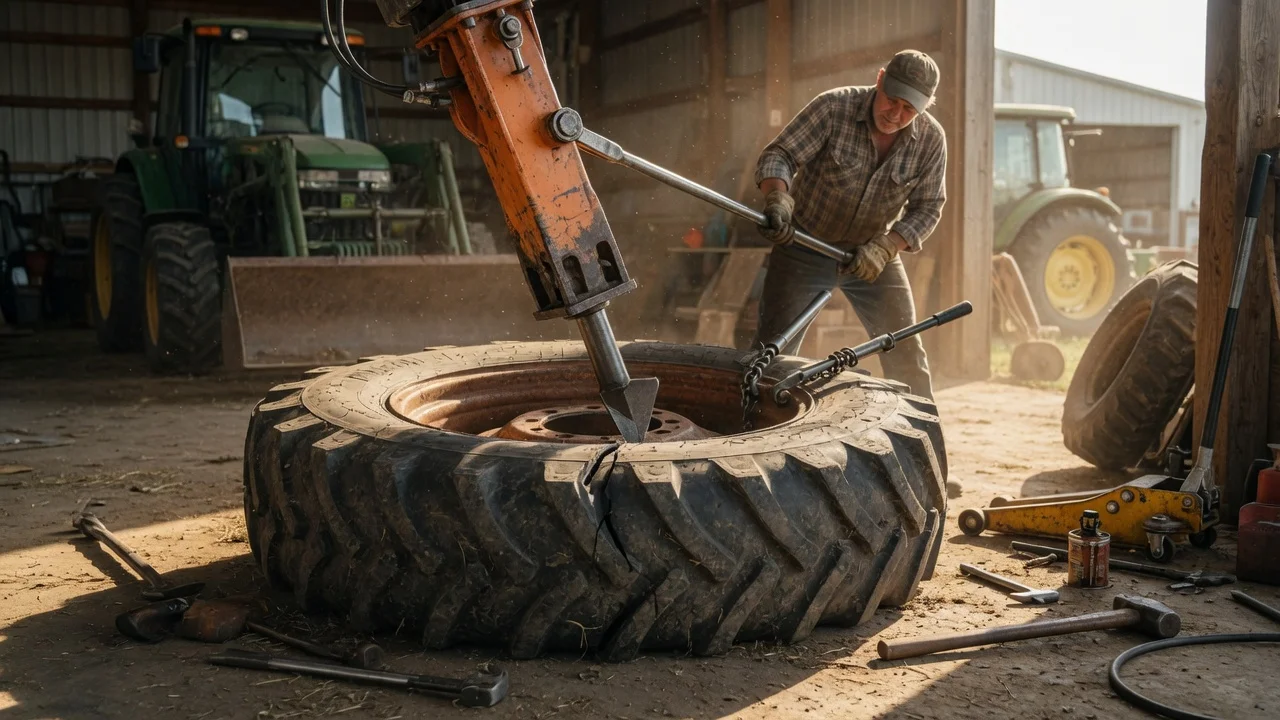
A tractor tire bead breaker is a tool that separates the tire bead from the wheel rim so the tire can be removed or repaired. The right choice depends mainly on the wheel size, whether the tire has fluid ballast, and how often you do this work. For occasional farm use, a manual slide-hammer or screw-type breaker is usually enough. For frequent service or large rear tractor tires, a hydraulic or air-hydraulic breaker saves significant labor and reduces the chance of rim damage.
What a bead breaker actually does
A tire bead is the reinforced inner edge of the tire that seats tightly against the wheel rim. Over time, corrosion, dried tire sealant, rust, and the tire’s own tension can bond the bead to the rim. A bead breaker applies concentrated force at a narrow point near the rim flange to push the bead inward and break that bond. Doing this without the right tool can mean striking the tire with a hammer, driving over the sidewall, or using a loader bucket, all of which can bend the rim or tear the bead.
Main types of tractor tire bead breakers
Type|How it works|Best for; Manual slide hammer|A sliding weight is driven along a bar into a wedge or shoe against the bead.|Small front tractor tires, occasional use, low cost. Screw or clamp type|A threaded screw or lever presses a blade into the bead area.|Medium tractor tires, shop use where air or hydraulics are unavailable. Hydraulic bottle-jack style|A hydraulic ram pushes a wedge between bead and rim.|Stubborn beads, larger rear tires, moderate shop use. Air-hydraulic|Compressed air drives a hydraulic pump and ram.|Repeated service, large ag tires, tire shops and busy fleet maintenance.
Choosing the right breaker for your tractor
Check the wheel diameter and rim width range stated by the tool maker. A breaker sized for passenger car or light truck wheels may not reach far enough into a deep tractor rim. Front tractor tires are commonly smaller and easier to handle, while loaded rear tires with calcium chloride or liquid ballast are heavier and often have the most stubborn beads. If you service loaded tires, consider a breaker that can operate while the tire is still on the tractor or while the wheel is laid flat and supported.
Rim size and offset: make sure the tool’s reach clears the rim flange. Bead condition: rust, old sealant, or dried ballast increases the force needed. Frequency of use: occasional repairs favor manual tools; regular tire work favors air-hydraulic. Air supply: air-hydraulic breakers need adequate compressor volume and pressure. Portability: manual slide-hammer tools are easy to carry to a field repair; hydraulic shop units are not.
Safe use procedure
Before applying force, deflate the tire completely. Remove the valve core and make sure no air pressure remains. If the tire contains liquid ballast, position the valve stem at the top before removing the core so liquid does not spray out under pressure. Support the wheel so it cannot fall or shift. Place the breaker shoe against the tire sidewall as close to the rim as the tool design allows, not against the rim itself. Apply force gradually and reposition the breaker around the circumference if the bead does not release at the first point.
A bead breaker should move the tire, not the rim. If the tool is making contact with the rim flange, stop and reposition it.
What to look for when buying
Look for a tool with replaceable wear parts, especially the shoe or wedge. Pneumatic and hydraulic models should have a guarded release to prevent sudden movement if a hose fails. Manual slide-hammer tools should have a handle long enough to keep your hands away from the impact point. If you are considering a particular model, confirm its maximum rim width and wheel diameter rather than relying on a general “tractor tire” description. Inventory and pricing change frequently, so compare current local and online listings at the time of purchase.
Gaps to confirm before purchase
The supplied coverage does not include current prices, exact model availability, or test data for specific bead breaker brands. Specifications such as maximum rim width, minimum wheel diameter, required air pressure, and hydraulic force vary by model and market. Check the manufacturer’s specification sheet for your specific wheel size and service conditions before buying.