TPMS Valve Stems, Service Kits, and Caps: A Service Guide
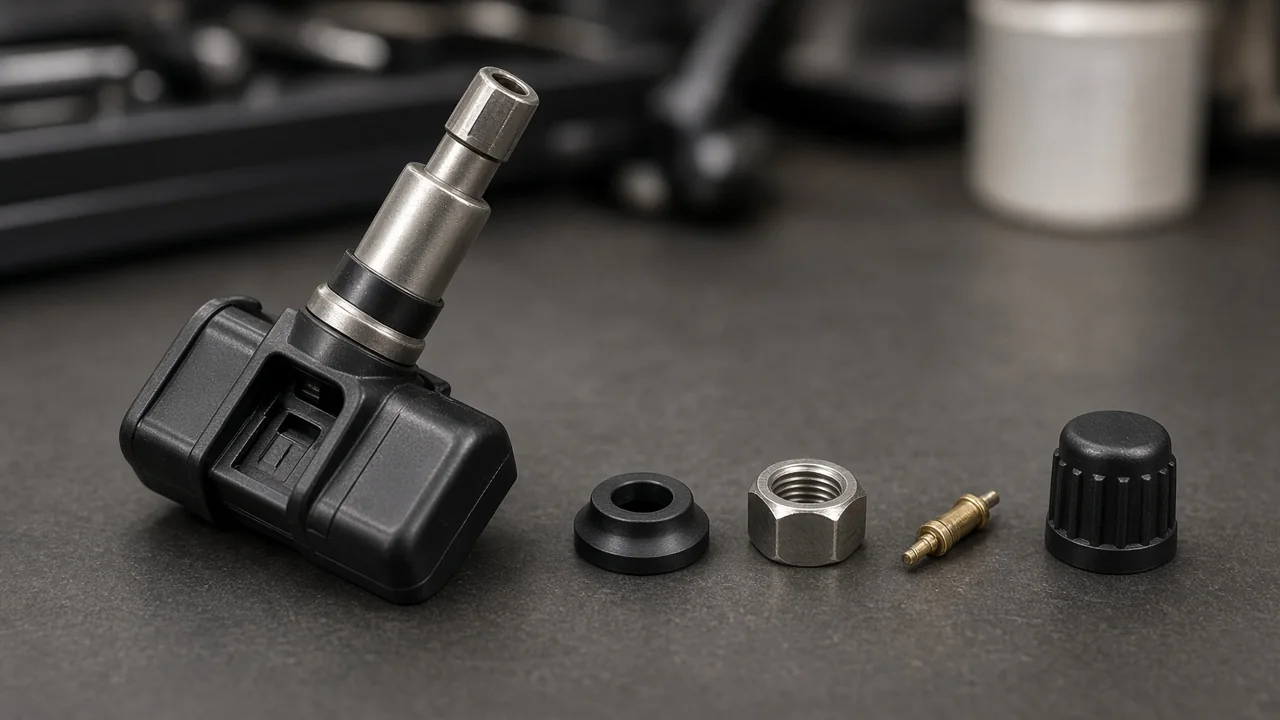
A TPMS maintenance kit covers the valve hardware that holds air on a wheel with a direct TPMS sensor. Choosing a service kit, rebuild kit, replacement valve stem, or TPMS valve caps depends on stem design, sensor condition, and tire-change work. The following sections explain how those parts work, when a stem can be serviced, and how to protect the sensor.
How the Valve Stem Connects to a Direct TPMS Sensor
On a direct TPMS sensor, the TPMS valve stem is the air path through the wheel and the mechanical mount for the in-wheel sensor. Tire pressure is held by the valve core, valve stem seal, and the interface between the stem and the rim. A TPMS valve cap covers the core, while a sealing grommet, retaining nut, and other attachment hardware keep the stem seated. Those parts join a sensor housing that sits inside the tire. Construction of TPMS valves varies by sensor design, so the same wheel appearance does not identify the internal layout.
Two design families are a rubber snap-in stem and a metal clamp-in stem. A rubber snap-in stem typically seats in the rim hole with an elastomeric body, while a metal clamp-in stem uses a rigid body and a retaining nut to clamp against the wheel. Neither look nor material alone proves a valve stem for TPMS will fit a given sensor. This stem-and-sensor service applies only to direct TPMS. An indirect system estimates pressure from wheel-speed data and does not use an in-wheel pressure sensor, so there is no valve stem with TPMS electronics to service.
What a TPMS Service or Rebuild Kit Contains
Labels such as TPMS maintenance kit, TPMS service kit, TPMS rebuild kit, or TPMS service pack usually describe replaceable sealing or attachment parts rather than a complete electronic sensor. Contents of TPMS service kits and TPMS rebuild kits vary by application. A kit may include a sealing grommet, retaining nut, valve core, TPMS valve cap, or a replaceable stem. Not every TPMS kit includes every item, and some TPMS kits are only hardware while others add a stem. Matching the pack to the installed sensor matters more than the product name.
Servicing those components can stop an identified air leak at the valve stem seal or rim interface, but it does not restore failed sensor electronics or a depleted sealed battery inside the sensor housing. A TPMS rebuild kit is not a substitute for a new sensor when the transmitter itself has failed. Before buying any TPMS service kits, compare the listed parts with the sensor manufacturer's service requirements and the hardware already on the wheel. Using the wrong valve core, nut, or grommet can leave a leak path even after the old parts are discarded.
Confirm What a TPMS Replacement Kit Actually Fits
A product labeled TPMS kit, TPMS kits, or TPMS sensor replacement kit may contain service hardware, a stem assembly, complete sensors, or a larger bundle. The box name does not tell you whether you are buying a TPMS replacement valve stem, a hardware pack, or a full sensor. Confirm fit using the vehicle application, installed sensor identification, stem design, and manufacturer documentation. A listing for the wrong valve stem on a TPMS sensor can look correct and still use the wrong sealing grommet, thread, or clamp geometry for the wheel and sensor on the car.
Sensors already replaced after the original equipment may need hardware different from the factory stem and nut. Aftermarket housings, clamp-in conversions, and later service parts can change which replacement TPMS valve stem and seals belong on that wheel. When a TPMS sensor replacement kit includes a sensor, confirm vehicle communication compatibility and any programming or sensor relearn the car requires after installation. A physically similar TPMS valve does not guarantee the module will report pressure to that vehicle. Manufacturer documentation for the installed unit is the check, not the catalog title alone.
When a TPMS Valve Stem Can Be Replaced
Some sensor designs allow you to replace a TPMS valve stem when the sensor remains functional and its attachment to the housing is intact. In those cases a replacement valve stem for TPMS, or TPMS sensor valve stem replacement hardware, can restore the air path without discarding a working transmitter. Other designs have a nonserviceable stem connection, so replacing the TPMS valve stem is not offered as a separate repair. A damaged sensor housing, a broken mount, or confirmed electronic failure also points to a complete sensor assembly rather than stem-only service.
Owners can report recurring pressure loss, visible stem cracks or corrosion, and a damaged or missing cap. Those observations help a technician decide between TPMS valve stem replacement, a hardware refresh, or a full sensor. A warning light or an air leak alone cannot identify the failed part; professional leak testing and sensor checks establish whether the core, grommet, stem, or electronics is at fault. Valve stem replacement with TPMS hardware still requires tire-service equipment because the wheel must be depressurized and the tire unseated. Keep the decision at that service level rather than attempting internal access at home.
What to Request During a Tire Change
During a tire change, ask the shop to assess sensor operation and inspect the TPMS valve stems and sealing components with the wheel apart. Disturbed seals and designated single-use hardware should be renewed according to the applicable sensor service instructions, often with a TPMS service kit rather than reused grommets or nuts. That is the practical moment to replace a TPMS valve stem if the rubber body is cracked, the metal stem is corroded, or the core will not seal. Reusing aged hardware after dismounting can reopen a slow air leak.
The shop should protect the sensor housing during tire removal and installation and use specified hardware and tightening procedures for that stem. After mounting, request a leak check at the valve and rim, then confirmation that TPMS operation is restored, including any sensor relearn the vehicle and the work require. Ask for an itemized explanation of service parts, stem replacement, and sensor replacement so you know whether a TPMS maintenance kit, a replacement stem, or a new sensor was authorized. That record helps the next shop identify the TPMS valve stems already fitted.
Choose Valve Caps That Protect the Stem
A correctly fitted TPMS valve cap helps keep moisture and debris away from the valve core. Caps do not stop an underlying valve leak at the core, grommet, or rim seat, so a new cap is not a repair for pressure loss. Use the cap specified for the installed stem. Suitable plastic caps are commonly specified for aluminum TPMS stems because they avoid a galvanic couple at the threads. Valve caps for TPMS should match that stem material and thread; a generic metal cap from another valve may look interchangeable and still be the wrong part.
Incompatible metal caps can promote valve cap corrosion and seize on the stem, which makes later pressure checks difficult and can twist the TPMS valve if someone forces the cap. Decorative appearance does not establish that a cap belongs on that stem. If a cap is stuck or corrosion is visible, report it to a tire professional rather than forcing removal or twisting the stem. During routine pressure checks, look for missing or damaged TPMS valve caps and replace them with approved parts so the core stays covered between services.