TPMS Valve Stems and Service Kits: Why They Need Attention at Tire Changes
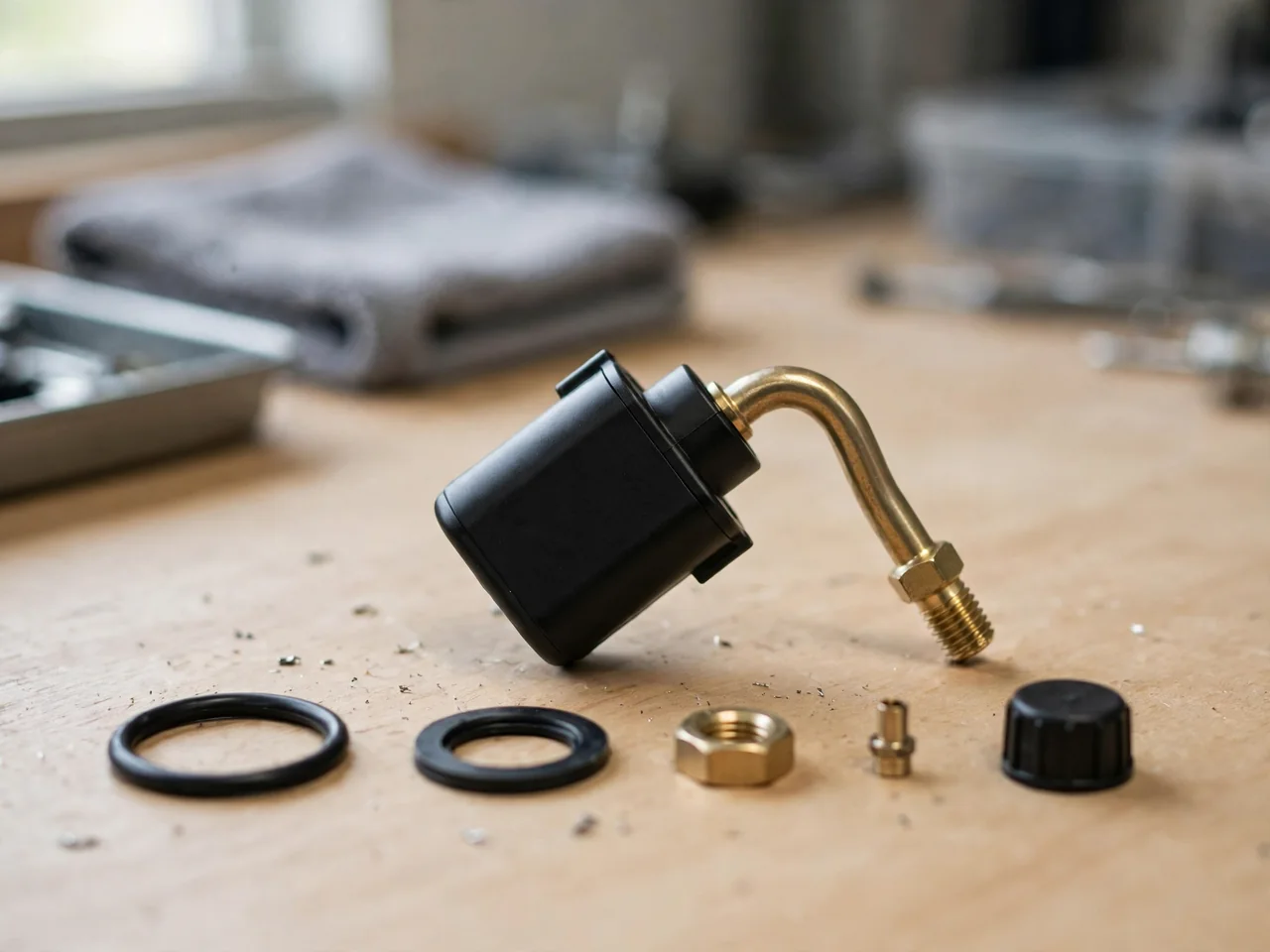
A tire pressure monitor valve stem is more than a place to add air. In a direct tire pressure monitoring system, it is the inflation path through the wheel and, on many assemblies, the hardware that locates the sensor. Rubber, metal, grommets, and cores age. When a tire comes off, shops often renew those parts with a service kit rather than replacing the entire sensor.
How the Valve Stem Fits Into a Direct TPMS Assembly
On a direct tire pressure monitoring system valve stem, air still enters and leaves the tire through the stem bore, just as it would on a conventional valve. Many clamp-in designs also use that stem as the mount that holds the sensor body on the inside of the rim. The stem passes through the wheel opening, and sealing surfaces at the hole keep inflation from leaking around the metal or rubber body. Other assemblies use a snap-in rubber stem with the sensor attached at the inner end, so construction is not universal.
A tire pressure sensor valve stem can be serviced without discarding the electronics. When the grommet, nut, and related hardware are renewed, the existing sensor body often stays in service if it still reports correctly. That is the point of a tire pressure sensor service kit: it restores sealing and attachment parts, not the battery inside the transmitter. A rebuild of the stem does not reset battery life, so a shop may still recommend a full sensor later if the unit is already near the end of its useful life.
What a TPMS Service or Rebuild Kit Contains
A typical tire pressure sensor service kit is a small hardware pack, not a new transmitter. Contents often include a sealing grommet that sits against the wheel, a retaining nut that clamps a metal stem from the outside, a valve core, and a valve cap. Some kits add washers, seals, or fasteners that match a particular sensor family. Those pieces restore the airtight path and the mechanical hold on the rim. They do not recode the sensor or restore its internal power supply.
A tire pressure monitoring system rebuild kit and a tire pressure sensor rebuild kit usually mean the same class of work: replace the wearable sealing and attachment parts on an existing assembly. Applications that use a rubber snap-in stem may instead receive a complete new stem, because the rubber body itself is the seal in the wheel hole. Kit contents follow the installed design, so a clamp-in metal stem does not use the same pack as a snap-in rubber valve stem for a tire pressure sensor.
Why Tire Service Is a Common Time to Renew Stem Components
Rubber hardens and takes a set. A sealing grommet that has been compressed against the wheel for years may not reseal cleanly once the nut is loosened. Valve cores and caps also age, and an air leak can start at any of those joints. Dismounting a tire is often the first time a technician can see the inner side of the assembly, check the sensor body, and decide which service parts to renew. That access is why stem work is commonly bundled with tire replacement rather than treated as a separate visit.
That does not mean every tire pressure monitoring valve stem must be rebuilt at every tire change. The installed sensor, the stem design, and the service information for that assembly determine which parts, if any, should be replaced. Some instructions call for a new grommet and nut whenever the stem is disturbed; others allow inspection and reuse of specific hardware. Wheel rotation, by contrast, leaves the tire on the rim, so the stem seals are not ordinarily loosened. Mixing those two jobs leads to unnecessary parts or missed leaks.
How Corrosion Affects the Stem, Core, and Cap
Moisture and road salt collect around the valve stem tire pressure monitor because the stem sits in the well of the wheel, where spray and debris stay. On metal stems, that environment can corrode the stem, seize the retaining nut, or pit the threads that hold the valve core. Unsuitable cores or caps can accelerate that attack if their metals do not match the stem. The specified valve core and valve cap materials matter for that reason, especially on aluminum or other metal stems, but the correct combination is application-specific rather than a single universal set.
Visible corrosion, a cracked rubber body, or a damaged cap are reasons to inspect the assembly, not proof that every internal seal has failed. Hidden grommets and inner interfaces can be sound when the outside looks poor, or the reverse. A seized cap or a damaged stem should be left to a professional rather than forced. Twisting a frozen cap can snap the stem or tear the sensor from its mount, turning a service-kit job into a full sensor replacement. Corrosion is a condition to evaluate, not a cue to pry hardware loose in the parking lot.
How a Shop Selects the Correct Stem and Kit
Selecting a valve stem for tire pressure sensor work starts with identifying what is on the wheel now, not what left the factory. A previous tire shop may have fitted a different stem, a different sensor, or a mixed set of hardware. Attachment style, sealing geometry, and materials have to match that installed assembly. Two metal stems can look similar and still use different grommet shapes, nut threads, or sensor interfaces. Appearance alone cannot establish fit, which is why catalogs and the sensor identity matter more than a glance at the rim.
If the stem is a replaceable part and the sensor body is intact, a shop can often install a new TPMS valve stem or a matching service kit and keep the original electronics. Whether that is possible depends on how the stem joins the sensor and on the condition of threads, housings, and sealing faces. A bent, cracked, or heavily corroded assembly may not accept new hardware. Tightening values, orientation, and core installation belong with a qualified technician using the applicable service information, because overtightening a retaining nut can crush a grommet or distort the stem.
What Pressure Loss and TPMS Warnings Can Tell You
Recurring low pressure, a damaged-looking stem, or a drop that shows up soon after tire work are useful observations. They still do not pinpoint an air leak. A tire pressure monitoring system warning lamp reports that a sensor saw a pressure or communication problem; it does not say the valve stem is the cause. The tire, the bead, the wheel, and the valve assembly can all lose air. Professional testing is what separates a slow leak at the core from a puncture or a bead that never seated.
When tires are cold, compare inflation with the vehicle placard, not a generic chart. Rapid pressure loss or a visibly flat tire needs prompt professional help rather than repeated topping off. After stem service, it is reasonable to ask which components were renewed, whether the assembly passed a leak check, and whether sensor operation was verified. Those questions confirm that a valve stem tire pressure sensor job addressed sealing, not only that a kit was opened. A warning that returns after service still needs diagnosis; it is evidence to interpret, not proof a part has failed.